

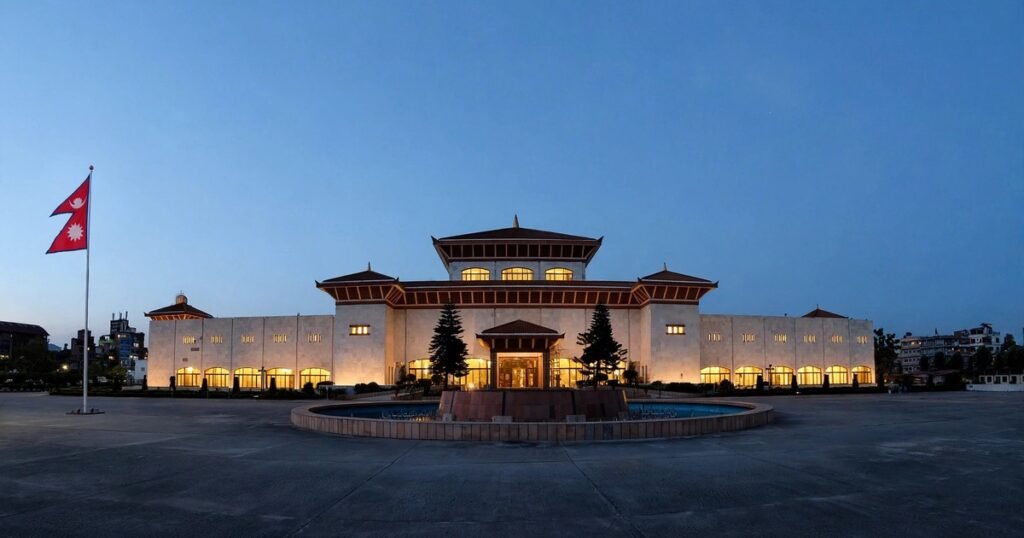
How Nepal budget is made is a question with an answer written into law. Every year, on the same date — 15 Jestha, in late May — the finance minister stands before a joint sitting of Parliament and reads out how the government plans to earn and spend roughly two trillion rupees. But that one afternoon is only the visible end of a process that starts six months earlier, in ministry offices, planning commission meetings, and public consultations across the country. This explainer follows the money from the first ceiling to the final vote, and explains what happens when the plan meets reality.
Table of Contents
- How Nepal Budget Is Made: The Calendar in One Page
- Step 1: How Nepal Budget Is Made Starts with a Three-Year Plan
- Step 2: How Nepal Budget Is Made Within a Ceiling
- Step 3: How Nepal Budget Is Made Inside the Ministries
- Step 4: How Nepal Budget Is Made Public Before Budget Day
- Step 5: How Nepal Budget Is Made Law on 15 Jestha
- Step 6: How Nepal Budget Is Made Law in Parliament
- Step 7: How Nepal Budget Is Made Real After the Speech
- How Nepal Budget Is Made at Province and Local Level
- Why Budgets Shrink: How Nepal Budget Is Made vs How It Is Spent
- Frequently Asked Questions
How Nepal Budget Is Made: The Calendar in One Page
Nepal’s fiscal year runs from 1 Shrawan to the end of Asar — roughly mid-July to mid-July. The budget for the next fiscal year is built in the six months before it starts, on a timetable fixed by the Constitution of Nepal 2015 and the Financial Procedure and Fiscal Responsibility Act, 2076 (2019). The dates below are the statutory deadlines and the timetable the Ministry of Finance used for the fiscal year 2082/83 budget; the exact consultation dates shift slightly each year, but the sequence does not.
- Poush (Dec–Jan): Ministries prepare their three-year spending plans; provinces and local levels send their revenue and spending estimates to the federal finance ministry
- Magh (Jan–Feb): The Resource Estimation Committee fixes how much money will be available and the spending ceiling, by Magh 15; ceilings and guidelines go to ministries by the end of Magh; the mid-year review of the current budget is published by the end of Magh
- Falgun (Feb–Mar): The committee’s report reaches the finance minister by Falgun 7; provinces and local levels learn their equalisation grant figures by the end of Falgun
- Chaitra (Mar–Apr): Ministries submit their budget proposals; public consultation opens; the Inter-Governmental Finance Council meets
- Baisakh (Apr–May): The budget’s principles and priorities go to Parliament; public consultation closes
- Jestha (May–Jun): The Economic Survey is tabled on 14 Jestha; the budget is presented on 15 Jestha
- Asar (Jun–Jul): Provincial budgets by 1 Asar; local budgets by 10 Asar; Parliament must pass the Appropriation Bill before the new fiscal year begins
- Shrawan (Jul–Aug): The new fiscal year begins on 1 Shrawan; Nepal Rastra Bank releases its monetary policy
Step 1: How Nepal Budget Is Made Starts with a Three-Year Plan
How Nepal budget is made begins not with money, but with a plan. Under Section 6 of the Financial Procedure and Fiscal Responsibility Act, the National Planning Commission prepares a Medium-Term Expenditure Framework — a three-year spending plan — every year, in line with the periodic plan and sectoral policies. Each ministry prepares its own three-year framework and sends it to the Planning Commission and the Ministry of Finance.
The point of the three-year view is to stop the budget from being rebuilt from zero each year. That framework is the first answer to how Nepal budget is made: the annual budget is a slice of a longer plan, not a fresh invention. A road, a hospital, or a hydropower project takes years to finish, so the framework records what is already committed and what the next three years will cost. When a ministry asks for money in the annual budget, it is asking within a framework that already exists — or it has to explain why the framework should change.
The periodic plan is the longer horizon behind all of this. Nepal’s current planning cycle runs in five-year plans, and the budget is supposed to be the annual slice of that plan. In practice, the link is looser than the law intends — new governments announce new priorities, and the framework is revised — but the framework is the starting document, and every ministry’s proposal is measured against it.
Step 2: How Nepal Budget Is Made Within a Ceiling
The most important number in the whole process is fixed before any ministry writes a proposal: the ceiling. The National Resource Estimation Committee, chaired by the vice-chairperson of the National Planning Commission and working with the Ministry of Finance, estimates how much money the country will have and sets the maximum the government can spend, for the next three years. Under the Act, that estimate must be completed by Magh 15, and the committee’s report reaches the finance minister by Falgun 7.
The committee looks at the whole picture: how much tax revenue is expected, how much foreign aid and loans will come in, how much the government can borrow at home, and what the economy is doing. Its estimate covers all three tiers of government — federal, provincial, and local — because the federal budget has to leave room for the grants that flow downwards.
Once the ceiling is set, the National Planning Commission sends it to every ministry, commission, and secretariat by the end of Magh, along with budget preparation guidelines. The guidelines tell ministries how to write their proposals and remind them of the multi-year commitments — including national pride projects — that must be funded first. A ministry cannot simply ask for whatever it wants; it must fit its plans inside the ceiling it has been given. This is the step that makes the budget a real exercise in choosing, rather than a wish list — and it is the step most citizens never see, even though it shapes how Nepal budget is made more than the speech does.
Step 3: How Nepal Budget Is Made Inside the Ministries
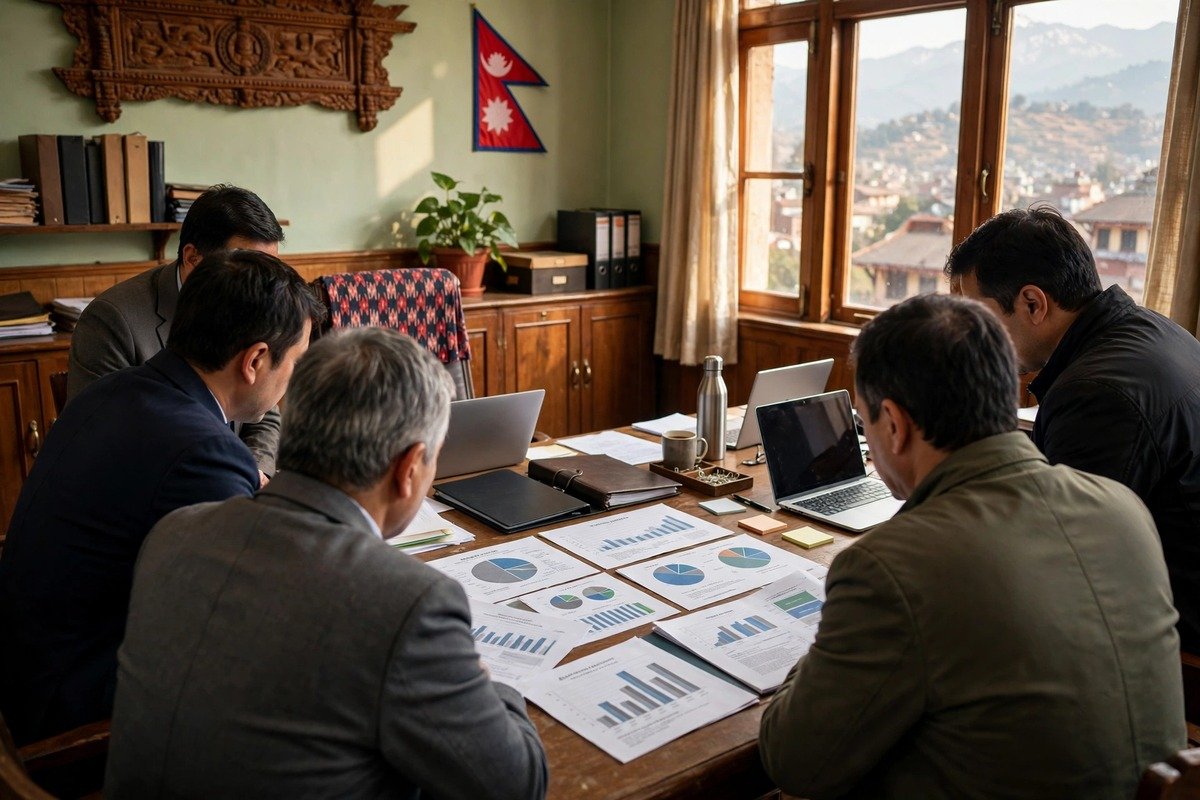
With ceilings in hand, the ministries get to work. In the timetable the Ministry of Finance used for the fiscal year 2082/83 budget, ministries had to submit detailed proposals — policies, programmes, and expected outcomes — to the Ministry of Finance and the National Planning Commission between Chaitra 1 and Chaitra 20. The account responsible officer of each ministry, usually its secretary, prepares the proposal and is answerable for it.
Then comes the negotiation. The Ministry of Finance holds discussions with each ministry about its proposal, and the Planning Commission holds its own discussions on policies and programmes. In the 2082/83 calendar, Planning Commission discussions ran from Chaitra 16 to 22, and ministry-by-ministry budget discussions ran from Chaitra 24 to Baisakh 15. This is where most of the real decisions are made: a ministry’s request is cut, a programme is merged with another, a new idea is sent back for costing.
The public gets a say too. The same calendar ran a public consultation from Chaitra 15 to Baisakh 10, collecting suggestions on budget priorities from citizens, businesses, and experts. The finance ministry also consults political parties, former finance ministers, governors, secretaries, economists, and experts — in the 2082/83 calendar, those consultations ran from Chaitra 26 to Baisakh 25. And the three tiers of government talk to each other: the Inter-Governmental Finance Council, which brings the federal, provincial, and local governments together, met by Chaitra 28 to discuss the budget’s objectives, priorities, and key programmes.
Meanwhile, a separate body works on the revenue side. The Revenue Consultation Committee studies tax policy and submits its report to the finance minister by Jestha 1. Its recommendations shape the Finance Bill — the part of the budget that changes tax rates and rules. If you want to know why a tax rate moved in the budget, this committee’s report is usually where the change started. Our explainer on Nepal’s tax slabs for 2026/27 shows what those changes look like once they reach your payslip.
Step 4: How Nepal Budget Is Made Public Before Budget Day
Before the budget speech itself, Parliament gets a preview. Under the Financial Procedure and Fiscal Responsibility Act, the finance minister must present the budget’s principles and priorities to Parliament before the Appropriation Bill is tabled — in the 2082/83 calendar, the principles and priorities were finalised by Baisakh 10 and submitted to both houses by Baisakh 15, about six weeks before budget day. Parliament debates them and can send back suggestions, directives, and topics to include or remove.
The final fortnight is a sprint. The first draft of the budget speech is ready around the start of Jestha. The finance minister briefs the President on Jestha 10. The final version is approved by Jestha 13, and on Jestha 14 it goes to the Cabinet and the National Planning Commission, while the accompanying bills — the Economic Bill, the Appropriation Bill, the National Debt Bill, and the Loan and Guarantee Bill — are sent for printing.
The day before the budget, on 14 Jestha, the government tables the Economic Survey. This is the official report card on the economy: growth, inflation, revenue, trade, employment, and the state of every major sector. It is published so that Parliament and the public can judge the new budget against the economy as it actually is, not as the government wishes it to be. For the fiscal year 2083/84 budget, the Economic Survey showed an economy growing at around 7 percent with inflation near 5.5 percent — the targets the new budget was then built around.
Step 5: How Nepal Budget Is Made Law on 15 Jestha
How Nepal budget is made reaches its most public moment on 15 Jestha. Article 119 of the Constitution requires the finance minister to present the annual estimates of revenue and expenditure to a joint sitting of both houses of the Federal Parliament on that date, every year. The estimates must show three things: an estimate of revenues, the money needed to meet charges on the Federal Consolidated Fund, and the money to be spent under the Appropriation Act. The presentation must also be accompanied by a statement of what each ministry spent in the previous year and whether the objectives of that spending were achieved.
On 29 May 2026 — 15 Jestha 2083 — Finance Minister Dr Swarnim Wagle presented the budget for fiscal year 2083/84 (2026/27): a total of Rs 2,124.34 billion. It was divided into the three familiar parts: Rs 1,270.58 billion (59.8 percent) for recurrent spending such as salaries, pensions, and day-to-day running costs; Rs 431.10 billion (20.3 percent) for capital spending on roads, schools, hospitals, and other infrastructure; and Rs 422.64 billion (19.9 percent) for financial management, mostly repaying old loans. The money to pay for it was to come from Rs 1,405.31 billion in revenue, Rs 61.74 billion in foreign grants, Rs 247.28 billion in foreign loans, and Rs 410 billion in domestic borrowing. Our plain-language guide to Nepal’s budget for 2026/27 explains that budget line by line.
The budget speech is not a law by itself, and that distinction matters for how Nepal budget is made. It arrives with bills that give it legal force: the Appropriation Bill, which authorises the spending; the Finance Bill (also called the Economic Bill), which changes tax rates; and the National Debt and Loan and Guarantee Bills, which authorise borrowing. No money can be taken out of the Federal Consolidated Fund without an Appropriation Act, except for charges the Constitution itself authorises, such as the President’s salary and debt servicing.
The tradition is older than the republic. Nepal’s first budget was presented on 21 Magh 2008 BS by Finance Minister Subarna Shumsher Rana, and it totalled just Rs 52.5 lakh — about Rs 5.25 million. The figure has grown roughly 400,000 times since then, but the ritual — a finance minister, a speech, a date fixed by law — has stayed the same.
Step 6: How Nepal Budget Is Made Law in Parliament
Presenting the budget is the beginning of Parliament’s work, not the end of it. The House of Representatives discusses the budget ministry by ministry, and members can propose cuts to individual demands for grants. The National Assembly, as the upper house, debates a money bill but must return it within 15 days — it cannot hold the budget hostage the way it can an ordinary bill, which it may keep for two months. For the full parliamentary procedure, see our explainer on how a bill becomes a law in Nepal.
The Appropriation Bill must be passed before the new fiscal year begins on 1 Shrawan. If Parliament is still debating when the year starts, the Constitution has a safety valve: Article 122 allows a Vote on Account, a law that authorises spending in advance while the Appropriation Bill is under consideration. A vote on account cannot exceed one-third of the year’s estimated expenditure, and it can only be introduced after the estimates have been presented under Article 119. The money spent under it is then included in the Appropriation Bill when it passes.
There are two other tools for when the plan changes. Article 121 allows supplementary estimates — extra money, presented to the House of Representatives, when the amount authorised turns out to be insufficient or a new need arises. And Article 117 allows a Vote of Credit, a bill that gives only a description of expenditure, for extraordinary circumstances such as a natural disaster, when it is impractical to specify the details in advance. Together, these four articles — 119, 120, 121, and 122 — are the constitutional skeleton of the whole process.
Step 7: How Nepal Budget Is Made Real After the Speech
How Nepal budget is made does not end with the speech. A budget is only a promise until the money moves. From 1 Shrawan, ministries spend against the allocations Parliament approved, and the Financial Comptroller General Office publishes monthly figures showing how much has actually been spent. Citizens can follow that spending with the tools in our guide to checking government spending in Nepal.
Halfway through the year, the government has to face the numbers. The Financial Procedure and Fiscal Responsibility Act requires the Ministry of Finance to publish a mid-year review of the budget and programmes by the end of Magh, covering the first six months from Shrawan to Poush. The review compares actual revenue and spending with the targets, and it usually revises the budget downwards. In the mid-year review of the fiscal year 2082/83 budget, the government cut the total from Rs 1,964.11 billion to Rs 1,688 billion — a reduction of 14.04 percent — with capital spending cut hardest, from Rs 407.89 billion to Rs 243.30 billion, and the revenue target cut from Rs 1,480 billion to Rs 1,298 billion. The previous year’s review was similar: the fiscal year 2081/82 budget was revised from Rs 1,860.33 billion to Rs 1,692.73 billion, about 91 percent of the original.
After the year ends, the Auditor General audits the accounts and reports to Parliament — the 63rd annual report, covering fiscal year 2024/25, found fresh irregularities of Rs 88.09 billion. The audit closes the circle: the budget that was made in Chaitra and Jestha is finally judged, in rupees and in findings, a year and a half later.
How Nepal Budget Is Made at Province and Local Level
How Nepal budget is made does not stop at Singha Durbar. Nepal has three tiers of government, and each makes its own budget on its own timetable, under the Intergovernmental Fiscal Arrangement Act, 2074. Provinces must present their budgets by 1 Asar, and local levels — the 753 municipalities and rural municipalities — by 10 Asar, so that their budgets are ready before the federal fiscal year begins.
The coordination runs through the same calendar. Provinces and local levels send their revenue and expenditure estimates to the federal finance ministry by the end of Poush, and the federal government tells them their fiscal equalisation grant figures by the end of Falgun, so they know how much federal money to count on. The federal budget for 2083/84 sends about Rs 314.62 billion — 14.81 percent of the total — to local levels, and our explainer on how local governments spend your tax money follows that money to the ward level. For the provinces’ own powers and spending, see our guide to what Nepal’s provinces actually do.
Why Budgets Shrink: How Nepal Budget Is Made vs How It Is Spent
If you read one pattern into the process, it is this: the budget that is announced is almost never the budget that is spent. The mid-year review has cut the total in each of the last several years, and capital spending — the roads, bridges, and buildings — is cut the most. That gap between the announcement and the outturn is the hardest part of how Nepal budget is made to accept, because it is built into the calendar itself. In the first six months of fiscal year 2081/82, the government had spent only 35.89 percent of its annual target, and capital spending was at just 16.16 percent of its allocation.
There are structural reasons. Ministries propose more than the ceiling allows, and the ceiling itself depends on revenue forecasts that are often optimistic. Projects are announced before land is acquired or designs are ready, so money allocated in Jestha cannot be spent by Poush. And the spending year is effectively shorter than twelve months: the budget is approved just before Shrawan, but procurement, tendering, and the monsoon eat into the months when construction could actually happen. Our explainer on fiscal federalism in Nepal explains why the provinces face the same problem from the other side — money arrives late and with conditions attached.
None of this makes the process meaningless. The ceiling, the timetable, and the constitutional deadline exist precisely because, without them, the budget would be whatever the government of the day felt like announcing. The dates are fixed, the documents are public, and the audit follows. A citizen who knows the calendar — Magh 15 for the ceiling, 15 Jestha for the speech, the end of Magh for the mid-year review — can check each step as it happens, rather than waiting for the next budget to find out what went wrong with the last one.
Frequently Asked Questions
When is Nepal’s budget presented?
How Nepal budget is made is fixed by the Constitution: Article 119 requires the finance minister to present the annual estimates of revenue and expenditure to a joint sitting of both houses of Parliament on 15 Jestha every year — in late May. For fiscal year 2083/84, that was 29 May 2026.
Who decides how much money each ministry gets?
The National Resource Estimation Committee, chaired by the vice-chairperson of the National Planning Commission, sets the overall spending ceiling by Magh 15. The Planning Commission then sends each ministry its ceiling by the end of Magh. Ministries propose within that ceiling, and the Ministry of Finance negotiates the final allocations.
What is the Medium-Term Expenditure Framework?
It is a three-year spending plan, prepared each year by the National Planning Commission and each ministry under the Financial Procedure and Fiscal Responsibility Act. It records what is already committed — such as multi-year projects — so the annual budget is built on what the next three years will cost, not from zero.
What happens if Parliament does not pass the budget on time?
The Appropriation Bill must pass before the fiscal year begins on 1 Shrawan. If it is still under consideration, Article 122 of the Constitution allows a Vote on Account — a law authorising spending in advance, up to one-third of the year’s estimated expenditure — so the government can keep running while Parliament finishes debating. That safety valve is part of how Nepal budget is made work in practice, not just on paper.
What is the difference between the budget and the Appropriation Bill?
The budget speech is the government’s plan. The Appropriation Bill is the law that authorises the spending in it, under Article 120 of the Constitution. No money can leave the Federal Consolidated Fund without an Appropriation Act, except for charges the Constitution itself authorises.
When are provincial and local budgets presented?
Provincial governments must present their budgets by 1 Asar, and local levels by 10 Asar, under the Intergovernmental Fiscal Arrangement Act, 2074. Both tiers send their estimates to the federal finance ministry by the end of Poush and learn their equalisation grant figures by the end of Falgun.
Sources
- Constitution of Nepal, 2015, Part 10 (Federal Financial Procedures), Articles 117, 119–122 — the constitutional timetable and the vote-on-account, supplementary-estimate, and vote-of-credit rules.
- Financial Procedure and Fiscal Responsibility Act, 2076 (2019), Sections 6–8 — the Medium-Term Expenditure Framework, the Resource Estimation Committee, and the budget ceiling timetable.
- Ministry of Finance, Budget Speech, Fiscal Year 2083/84 (29 May 2026) — Rs 2,124.34 billion total; recurrent Rs 1,270.58 billion; capital Rs 431.10 billion; financial management Rs 422.64 billion; revenue Rs 1,405.31 billion; grants Rs 61.74 billion; foreign loans Rs 247.28 billion; domestic borrowing Rs 410 billion.
- Ministry of Finance, Budget Speech, Fiscal Year 2082/83 (29 May 2025) — Rs 1,964.11 billion total; recurrent Rs 1,180.98 billion; capital Rs 407.89 billion; financial management Rs 375.24 billion.
- Ministry of Finance, budget preparation calendar for fiscal year 2082/83, as reported by Fiscal Nepal, 2 March 2025 — ministry proposals Chaitra 1–20, public consultation Chaitra 15–Baisakh 10, principles and priorities by Baisakh 15, Revenue Consultation Committee report by Jestha 1.
- Ministry of Finance, mid-year review of the fiscal year 2082/83 budget, as reported by HimalPress — budget cut 14.04 percent to Rs 1,688 billion; capital spending revised to Rs 243.30 billion; revenue target cut to Rs 1,298 billion.
- Office of the Comptroller General / Nepal News, half-yearly review of the fiscal year 2081/82 budget — total revised to Rs 1,692.73 billion (90.99 percent); 35.89 percent spent by the end of Poush; capital spending at 16.16 percent of allocation.
- Intergovernmental Fiscal Arrangement Act, 2074 — provincial budgets by 1 Asar, local budgets by 10 Asar; estimates by the end of Poush; equalisation grant figures by the end of Falgun.
- Office of the Auditor General, 63rd annual report, fiscal year 2024/25 — fresh irregularities of Rs 88.09 billion.