

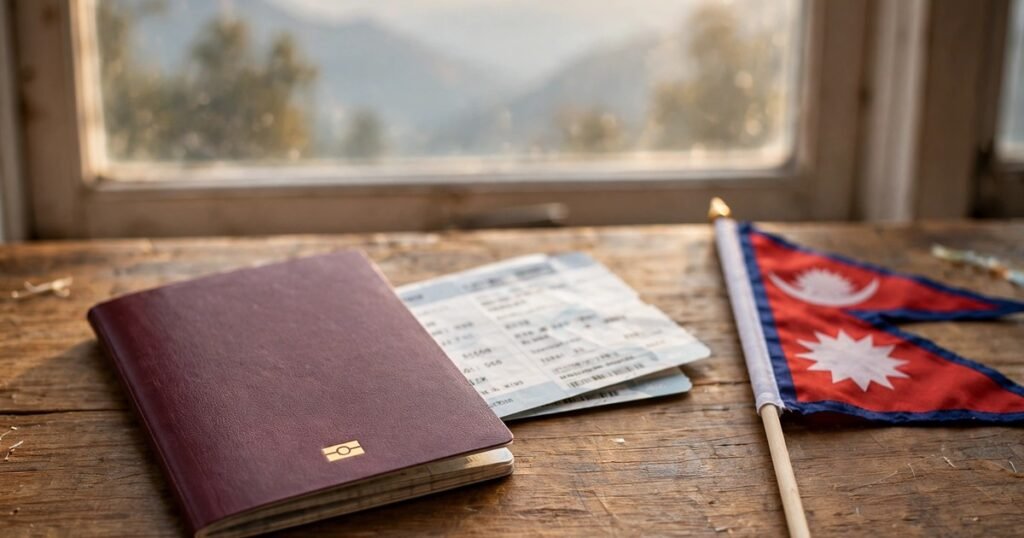
Nepal passport explained simply: it is the biometric e-passport every Nepali citizen now receives when they apply for a travel document, and getting one is a two-part process — an online form first, then a short visit to an office for verification, a photograph and fingerprints. There is no agent you must hire, no queue you must pay to skip, and no separate “express” office in the districts. This guide walks through the whole process in plain language: what the e-passport is, who can apply, the documents you need, the fees in 2026, how renewal works, and what to do if you are applying from abroad.
Table of Contents
- Nepal Passport Explained: What the E-Passport Is
- Nepal Passport Explained: Who Can Apply
- Nepal Passport Explained: How to Apply, Step by Step
- Nepal Passport Explained: Documents You Need
- Nepal Passport Explained: Fees in 2026
- Nepal Passport Explained: Renewal, Validity, and Lost Passports
- Nepal Passport Explained: Applying From Abroad
- Nepal Passport Explained: Common Mistakes to Avoid
- Nepal Passport Explained: Frequently Asked Questions
Nepal Passport Explained: What the E-Passport Is
Nepal has issued e-passports since 17 November 2021. An e-passport is an ordinary passport with a small electronic chip embedded in it. The chip stores the holder’s photograph, fingerprints and personal details, and it follows the International Civil Aviation Organization’s Doc 9303 standard — the same standard used by passports worldwide. That is why the e-passport is read faster at airports and harder to forge than the old machine-readable passport (MRP) it replaced. Every new passport and every renewal issued today is an e-passport; the MRP is no longer issued.
The passport is issued by the Department of Passports, under the Ministry of Foreign Affairs. The law behind it is the Passport Act 2076 (2019) and the Passport Rules 2077 (2020), which set out who can apply, how long a passport lasts, and what it costs.
You can choose between two booklets: a 34-page passport, which suits most travellers, and a 66-page passport, which suits people who travel often and collect many visas and entry stamps. Both are the same document in every other way — the same chip, the same validity, the same application process. The only difference is the number of pages and the fee.
An adult passport is valid for ten years from the date of issue. A passport issued to a child under ten is valid for five years. When a passport is renewed, the holder gets a brand-new passport with a new number — the old number is not carried over.
Nepal Passport Explained: Who Can Apply
Any Nepali citizen holding a valid citizenship certificate can apply for an ordinary passport. The citizenship certificate — the nagarikta — is the foundation of the whole process. Without it, no passport can be issued, so if you do not yet have citizenship, that is the first step. Our guide to Nepali citizenship explains the four types of citizenship and how to get the certificate.
Children can also get passports. A child under 16 applies with a minor identity card instead of a citizenship certificate, and a parent or guardian applies together with the child. A child born abroad to Nepali parents can apply through a Nepali diplomatic mission, using a birth registration or temporary registration number issued by the mission — the details are in the section on applying from abroad below.
Two rules are worth knowing before you start. First, Nepal does not allow dual citizenship: a Nepali who voluntarily takes another country’s citizenship automatically loses Nepali citizenship, and a foreigner who wants to naturalise must first give up their old citizenship. Second, your passport will follow your citizenship certificate exactly — the name, date of birth and other details on the passport come from the citizenship document, not from what you type into the form. If something on your citizenship certificate is wrong, get it corrected at your District Administration Office first, then apply for the passport.
Nepal Passport Explained: How to Apply, Step by Step
Nepal passport explained as a process, the application has two parts: an online pre-enrolment form, and an in-person visit for verification and biometrics. Here is how it works.
Step 1: Fill in the online pre-enrolment form. Go to the Department of Passports portal at nepalpassport.gov.np and choose your application type — first passport, renewal, lost or stolen, damaged, or a correction to your details. Enter your name, date of birth and address exactly as they appear on your citizenship certificate. Choose 34 or 66 pages, and choose where you will attend for enrolment. When you submit the form you receive a copy with a barcode and QR code — print it, or keep the digital copy on your phone.
Step 2: Pay the fee. Pay the applicable fee and keep the bank voucher or digital receipt. The fee depends on the number of pages, your age, and whether you choose regular or fast-track service — the full table is in the fees section below.
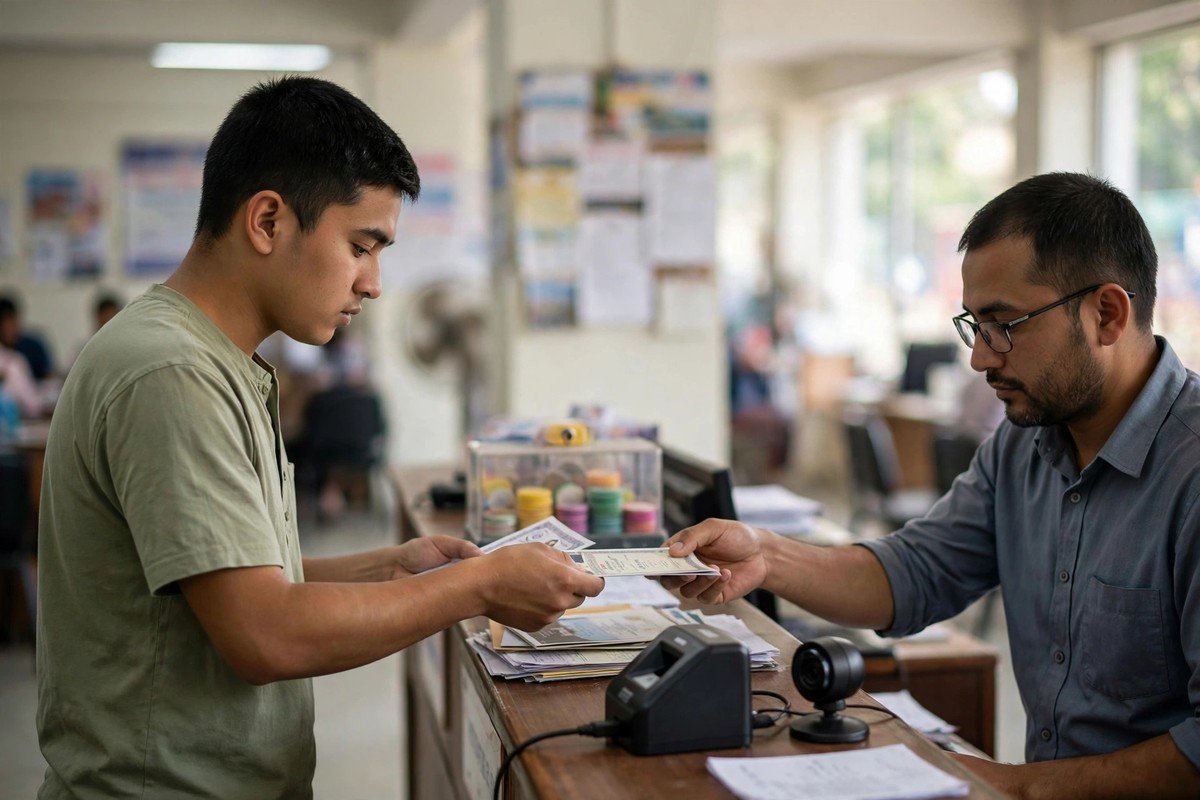
Step 3: Attend your enrolment office. For regular service, go to the District Administration Office (DAO) or Area Administration Office (AAO) from where your citizenship certificate — or minor identity card — was issued. Take the printed form, your original citizenship certificate, your National Identity Card or its number, your old passport if you have one, and the payment receipt. At the counter your documents are verified, a live photograph is taken, and your fingerprints are captured.
Step 4: Wait for processing, then collect. Passports applied for through a DAO or AAO are typically issued within 10 to 30 days, depending on the distance from the Department and transport. You can check the status of your application on the Department’s portal. When it is ready, collect it from the office where you enrolled — or follow the collection instructions the office gives you.
If you need the passport urgently, there is a separate fast-track route: apply directly at the Department of Passports in Tripureshwor, Kathmandu. Under fast-track service, passports are typically issued within two working days after enrolment, for an additional fee. Note the split clearly — district and area offices and Nepali missions abroad offer regular service only, while the Department in Kathmandu offers fast-track service only. You cannot get regular service at the Department, and you cannot get fast-track service at a district office.
Nepal Passport Explained: Documents You Need
For an adult applying inside Nepal, the Department of Passports asks for:
- The application form with its barcode and QR code, printed if possible (a digital copy is accepted).
- Your original Nepali citizenship certificate.
- Your National Identity Card, or your National Identity Card number. Applicants aged 16 or over applying inside Nepal must provide this — if you do not have a National Identity Card number yet, register for one first. Our guide to the National Identity Card explains how.
- Your current or expired passport, if you have held one before.
- The bank voucher or cash receipt proving you paid the fee.
For a child under 16, extra documents are needed: verification of the minor identity card from the relevant district or area administration office, and the citizenship certificates of the child’s parents or guardian. Both parents should be present at enrolment where possible.
A few special cases come up often enough to mention. If the date of birth on your citizenship certificate differs from the one on your SEE/SLC or higher education certificate, and you want the passport to use the education certificate’s date, bring that certificate. If you are a married woman who wants your husband’s surname added to the passport alongside the name on your citizenship certificate, bring your marriage registration certificate and your husband’s citizenship certificate. If you are a divorced woman who wants a husband’s surname removed from the passport after divorce, bring the divorce certificate.
Nepal Passport Explained: Fees in 2026
The fee depends on the number of pages, your age, the type of application, and whether you choose regular or fast-track service. These are the published amounts:
| Application | 34 pages | 66 pages |
|---|---|---|
| Regular service, district or area office | Rs 5,000 | Rs 10,000 |
| Fast-track service, Department of Passports | Rs 12,000 | Rs 20,000 |
| Child under 10, regular service | Rs 2,500 | Rs 5,000 |
| Child under 10, fast-track service | Rs 9,500 | Rs 14,500 |
| Lost or damaged, fast-track service | Rs 17,000 | Rs 25,000 |
A lost or damaged passport costs Rs 5,000 more than a new or renewal application in the same category. The Department describes the fast-track premium as an additional Rs 7,000 for a 34-page passport and Rs 12,000 for a 66-page passport on top of the regular fee.
Fees for Nepalis abroad are charged in US dollars or euros, and they vary by region rather than following one flat rate. In the Americas, Australia, New Zealand, Japan, South Korea and Hong Kong, a 34-page passport costs USD 150 and a 66-page passport USD 200. Other regions have different bands, so confirm the exact amount with your local Nepali mission before paying.
Fees can change by government notice, so always confirm the current schedule on the Department of Passports website — nepalpassport.gov.np — before you pay. Pay only through the official channel named on the portal, and keep the receipt: it is one of the documents you must show at enrolment.
Nepal Passport Explained: Renewal, Validity, and Lost Passports
Nepal passport explained on renewal starts with a simple point: there is no separate renewal form. Renewal is the same application process as a first passport — online pre-enrolment, then a visit with your documents, including your current or expired passport. The renewed passport gets a new number.
The law normally prevents a second passport while more than one year of validity remains on the current one. So the practical window for renewal is the last year before expiry — or earlier, if you have a valid reason. Earlier replacement is allowed for a lost or damaged passport, unreadable or incorrect data, pages that have run out, a surname change, a significant change in appearance, or a changed emergency contact.
If your passport is lost or stolen, report it promptly and do not try to travel on it — a passport reported lost or stolen must not be used for travel, even if you later find it again. A replacement costs Rs 5,000 more than the standard fee, and at the Department the lost-or-damaged amounts are Rs 17,000 for a 34-page passport and Rs 25,000 for a 66-page one.
One more practical detail: check your passport’s expiry date before you book travel, not after. Many countries require a passport to be valid for at least six months beyond your planned stay, so a passport that is technically still valid can still be refused at the border. If your passport expires within a year, renew it before you plan a trip.
Nepal Passport Explained: Applying From Abroad
Nepalis living abroad apply through the nearest Nepali diplomatic mission — an embassy or consulate. The process is the same at its core: fill in the online pre-enrolment form, then attend the mission with your original citizenship certificate or minor identity card, your current passport, and the payment receipt. Missions offer regular service only; there is no fast-track service abroad, so apply well before you need to travel.
Children born abroad to Nepali parents who do not have a minor identity card can still apply through the mission. The embassy or consulate issues a birth registration certificate or assigns a temporary registration number, which is entered in the citizenship-number field of the application form. For this, the mission needs copies of both parents’ citizenship certificates and passports, the parents’ marriage registration certificate, the child’s original birth registration certificate, and two recent passport-size photographs of the child. Once a passport has been issued under this provision, getting a minor identity card from the District or Area Administration Office in Nepal is mandatory before any future renewal.
Nepal Passport Explained: Common Mistakes to Avoid
Most passport delays are not caused by the system — they are caused by small mismatches that could have been caught at home. The most common ones:
- A name or date of birth that does not match your citizenship certificate. The passport copies the citizenship record. Check every letter before you submit the online form.
- Applying at the wrong office. Regular service is handled by the DAO or AAO that issued your citizenship certificate or minor identity card. If you have moved district, you may need a migration certificate and proof of residence — check with the office first.
- No National Identity Card number. Applicants aged 16 or over need one for applications inside Nepal. Register for the National ID before you start the passport process, not after.
- Expecting fast-track service at a district office. Fast-track is only at the Department of Passports in Tripureshwor. If you need a passport in two days, that is where you must go.
- Paying someone to “speed up” the process. There is no official paid queue-jumping service. The only official ways to get a passport faster are the fast-track fee at the Department and applying early.
- Travelling on a passport reported lost. Once reported, it stays invalid even if you find it in a drawer a month later.
Nepal Passport Explained: Frequently Asked Questions
How long does it take to get a passport in Nepal?
Through a District or Area Administration Office, a regular application is typically issued within 10 to 30 days. Fast-track service at the Department of Passports in Tripureshwor typically takes two working days after enrolment.
How much does a Nepali passport cost?
A regular 34-page passport costs Rs 5,000 at a district or area office, and a 66-page passport costs Rs 10,000. Fast-track service at the Department costs Rs 12,000 and Rs 20,000 respectively. Children under ten pay half the regular fee at a district office.
What documents do I need for a Nepali passport?
The online pre-enrolment form with its barcode, your original citizenship certificate, your National Identity Card or its number, your old passport if you have one, and the fee payment receipt. Children under 16 need a minor identity card and their parents’ citizenship certificates as well.
How long is a Nepali passport valid?
Ten years for adults, and five years for a passport issued to a child under ten. A renewed passport gets a new number.
Can I apply for a Nepali passport from abroad?
Yes — through the nearest Nepali embassy or consulate, which offers regular service. Fill in the online pre-enrolment form first, then attend the mission with your citizenship certificate, current passport and payment receipt.
Do I still need a passport to travel to India?
No. Under the open border between Nepal and India, Nepali citizens do not need a passport — or a visa — to travel to India. A passport is needed for travel to every other country.
Sources: Department of Passports, Government of Nepal — application process, documents and fees (nepalpassport.gov.np); Passport Act 2076 (2019) and Passport Rules 2077 (2020), including the fee schedule as amended by the Second Amendment Regulations 2081; Ministry of Foreign Affairs, Government of Nepal. Fees and processing times should be confirmed on nepalpassport.gov.np before applying, as they can change by government notice.