


How NEPSE works is simpler than it looks: it is the one place in Nepal where shares of listed companies are bought and sold, through licensed brokers, on an electronic system, between 11 in the morning and 3 in the afternoon on weekdays. If you have ever wondered what the NEPSE index on the evening news actually measures, or how ordinary Nepalis buy shares of a bank or a hydropower company, this guide explains the whole market in plain language — who runs it, how a trading day unfolds, what it costs, and what can go wrong. By the end, you will know how NEPSE works well enough to open your first accounts with confidence.
Table of Contents
- How NEPSE Works: The Short Version
- A Short History of NEPSE
- Who Runs the Market
- How NEPSE Works in a Trading Day
- How NEPSE Works for a Beginner: The Four Accounts
- How NEPSE Works: IPOs and the Primary Market
- What the NEPSE Index Actually Measures
- What Trading Costs: Fees and Tax
- The Risks Beginners Should Know
- Frequently Asked Questions
- Sources
How NEPSE Works: The Short Version
NEPSE is short for the Nepal Stock Exchange Limited, the only stock exchange in Nepal — the single organised market where shares of publicly listed companies change hands. Around 300 companies are listed on it, from commercial banks and hydropower developers to insurers, hotels and manufacturers. Their combined market value was about Rs 4.48 trillion in mid-February 2026, equal to roughly 73% of GDP, according to Nepal Rastra Bank.
How NEPSE works at its core is this. A company that wants to raise money lists its shares on the exchange. Investors place buy orders; existing shareholders place sell orders. Everything happens electronically, on the NEPSE Automated Trading System, which matches orders by price and time. There is no trading floor any more — the market is a computer system, and you reach it through a licensed stockbroker.
More than 8.13 million Demat accounts — the electronic accounts that hold shares — had been opened by early August 2026, according to Central Depository System data reported by Kantipur, with roughly 4,200 new accounts opening every day. In fiscal year 2025/26, shares worth more than Rs 1.6 trillion changed hands on the exchange. Yet most of those accounts belong to people who rarely trade. Understanding how NEPSE works before putting money in is what separates an investor from a spectator.
A Short History of NEPSE
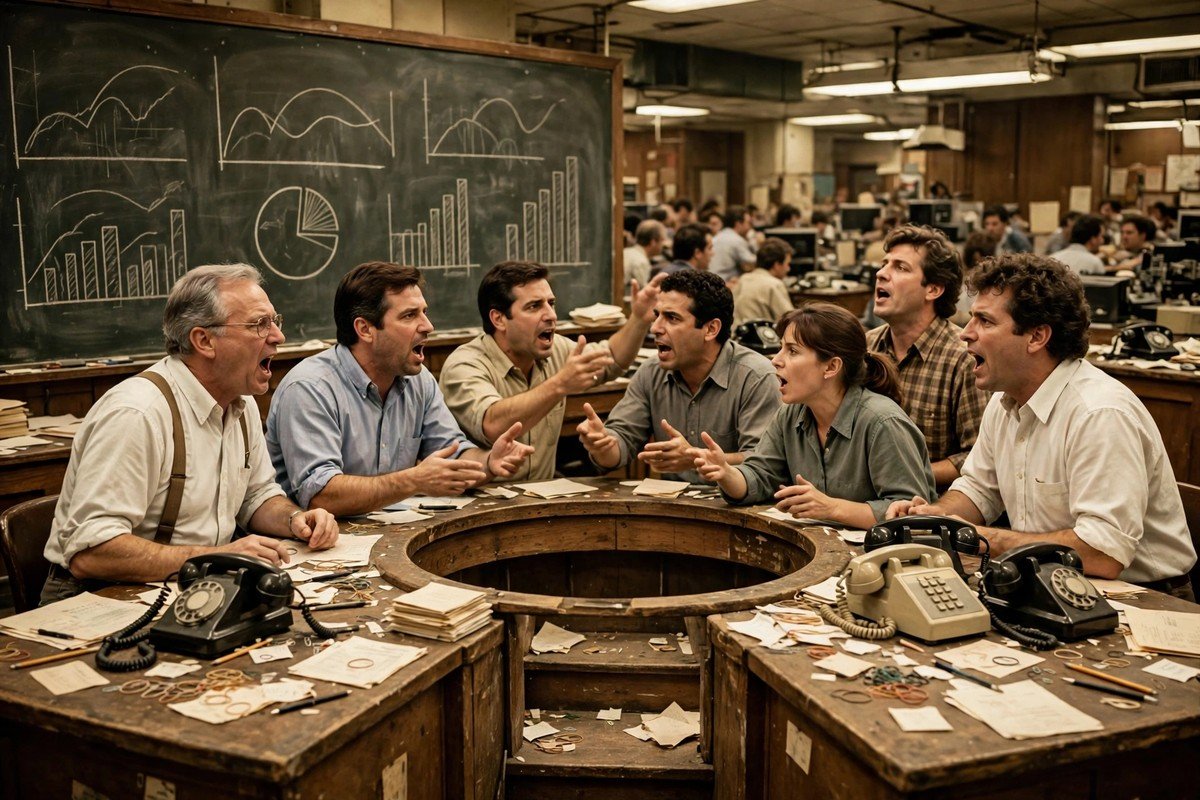
Nepal’s share market began with a Securities Exchange Center set up in 1976, converted into the Nepal Stock Exchange under the Securities Exchange Act, 1983. The trading floor opened on 13 January 1994, with brokers shouting orders across a room; over the following decades the floor gave way to screens, and trading is now fully electronic.
NEPSE itself is partly government-owned: the Government of Nepal, Nepal Rastra Bank and the Employees Provident Fund together hold roughly 78% of the exchange. Its head office is at Singha Durbar Plaza in Kathmandu. NEPSE is a market operator, not a government department — it earns its income from listing and trading fees, and its job is to run a fair, orderly market.
Who Runs the Market
Four institutions do most of the work, and knowing which does what is the first step in understanding how NEPSE works.
SEBON — the Securities Board of Nepal — is the regulator. Established on 7 June 1993, it operates under the Securities Act, 2006. It approves public issues such as IPOs, licenses brokers and other market intermediaries, writes the trading rules, and can suspend trading to protect investors — as it did in September 2025, when it halted the market for several days during the political crisis. Its official site is sebon.gov.np.
NEPSE — the Nepal Stock Exchange — is the operator. It runs the trading system, lists companies, publishes the daily index and the floorsheet of trades, and sets the trading calendar. That is how NEPSE works as an operator: it provides the venue, not the prices. It does not set the price of any share; prices come from the orders investors place.
CDSC — the Central Depository System and Clearing Limited — is the record-keeper. A subsidiary of NEPSE, it holds every listed share electronically in Demat accounts, settles trades, and runs MeroShare, the system through which Nepalis apply for IPOs and check allotments. Think of it this way: NEPSE is the marketplace, CDSC is the vault and the cashier.
Stockbrokers are the gatekeepers. Only licensed brokers can place orders on the exchange — about 90 are licensed by SEBON. You cannot trade directly with NEPSE. You open a trading account with a broker, and the broker gives you a login to the Trade Management System (TMS), the web platform connected to NEPSE’s trading engine.
How NEPSE Works in a Trading Day
How NEPSE works on any given day follows a fixed timetable, and 2026 changed it more than any year in recent memory.
Trading now runs Monday to Friday. The change took effect on 6 April 2026, when the government moved to a Saturday–Sunday weekend and NEPSE’s board aligned the market with it. Before that, NEPSE had traded Sunday to Thursday for decades. The market is closed on Saturdays, Sundays and public holidays, so always check NEPSE’s published holiday calendar rather than assuming a date is a trading day.
Within a trading day, the sessions are:
- Pre-open session, 10:30–10:45 AM. Orders are collected and an opening price is found, within a 5% band of the previous close.
- Regular trading, 11:00 AM–3:00 PM. Orders are matched continuously as they arrive.
- After-market orders, 5:00 PM–10:00 AM. Since 13 August 2026, the TMS accepts orders outside trading hours; they are sent to the market at the next open.
Two safety mechanisms limit how far prices can move. First, an individual share can rise or fall by at most 15% of its previous close in a single day — the limit was widened from 10% on 20 April 2026. Second, market-wide circuit breakers halt trading if the NEPSE index itself moves sharply: a 5% move in the first two hours stops trading for 15 minutes, and an 8% move suspends trading for the rest of the day.
Settlement takes two working days (T+2): shares bought on Monday arrive in your Demat account on Wednesday, and only then can you sell them. That is why intraday trading — buying and selling the same share on the same day — is not possible on NEPSE yet. SEBON published a concept paper on intraday trading on 24 September 2026, but it is a proposal, not a live facility.
How NEPSE Works for a Beginner: The Four Accounts
To buy your first share, you need four accounts, opened in this order:
- A bank account. Your money moves in and out of the market through it, and your broker settles payments against it.
- A Demat account. This holds your shares electronically instead of as paper certificates. You open one through a licensed depository participant — usually a bank or finance company — and a National ID is now required. Demat accounts crossed 8.13 million in early August 2026, roughly a quarter of Nepal’s population.
- A MeroShare account. Run by CDSC, this is where you apply for IPOs, check allotments, and authorise share transfers when you sell (through EDIS, the electronic delivery instruction slip). About 5.15 million people were active MeroShare users in July 2026.
- A TMS account with a licensed broker. This is the trading account itself — your login to place buy and sell orders on NEPSE during trading hours.
Once the four are open, the mechanics are straightforward: log in to your broker’s TMS, pick a company by its symbol, enter the number of shares and the price you will pay, and submit. If a sell order matches your price, the trade executes, and the shares arrive in your Demat account two working days later.
How NEPSE Works: IPOs and the Primary Market
Most Nepalis first meet the market through an IPO — an initial public offering — and that is often their first lesson in how NEPSE works. There are two markets in shares, and the distinction matters.
The primary market is where new shares are sold for the first time. In an IPO, a follow-on offer (FPO) or a rights issue, a company sells shares at a fixed price — typically a par value of Rs 100. You apply through MeroShare, and if the issue is oversubscribed, shares are allotted by lottery. This is where companies raise fresh money.
The secondary market is NEPSE itself. Once shares are listed, they trade between investors at prices set by supply and demand. The company receives no money from these trades — the money passes from buyer to seller. The secondary market is what gives the primary market its value: nobody would buy in an IPO if they could never sell afterwards.
That is also why IPO prices and market prices differ. A share issued at Rs 100 in an IPO can open for trading far above or below that price, depending on what investors are willing to pay on listing day.
What the NEPSE Index Actually Measures
Understanding how NEPSE works means understanding its headline number. When the news says “NEPSE rose 12 points today”, it means the NEPSE index — the exchange’s headline benchmark. It is a value-weighted index, calculated from the total market capitalisation of all listed companies relative to a base period. When the combined value of listed companies rises, the index rises; when it falls, the index falls. It is a single number that summarises the whole market.
The index has a dramatic history. Its all-time closing high was 3,198.60 points on 18 August 2021, at the peak of the pandemic-era bull run. It then fell to 1,848.28 points in June 2022 — a drop of more than 40%. On 17 November 2026 it stood at 2,636.10 points, still about 18% below that record. That arc is the most useful fact a beginner can carry: the market can stay below its peak for years.
NEPSE also publishes the Sensitive Index (selected large companies), the Float Index and Sensitive Float Index (built only from shares actually available for trading), and 13 sector sub-indices.
The market is lopsided: banks, financial institutions and insurance together made up 51.7% of total market capitalisation in mid-February 2026, with hydropower at 16%. Interest rates set by Nepal Rastra Bank therefore move the market more than almost anything else — our guide to how Nepal Rastra Bank sets interest rates explains the mechanism, and our explainer on Nepal’s monetary policy covers the policy rate behind it. Remittance inflows also feed the market’s liquidity, as our guide to remittance in Nepal explains.

What Trading Costs: Fees and Tax
How NEPSE works includes its costs: trading is not free, and the charges are small but fixed — they apply whether you profit or lose.
- Broker commission: 0.24% to 0.36% of the transaction value, within a range set by SEBON. On a Rs 100,000 trade, that is Rs 240 to Rs 360.
- SEBON fee: 0.015% of the transaction value.
- DP charge: Rs 25 per trade, paid to the depository participant.
The bigger cost is tax. Capital gains tax on listed shares is 10% of the profit if you held the shares for 365 days or less, and 7.5% if you held them for more than a year. The higher rates took effect on 17 July 2026 and are a final tax — holding a share for more than a year still saves you a quarter of the tax. Your broker deducts the tax when you sell, so you do not file it separately.
The Risks Beginners Should Know
How NEPSE works includes the part nobody advertises: you can lose money, sometimes a lot of it. The index fell more than 40% from its 2021 peak to its 2022 low, and investors who bought at the top waited years to recover. Share prices move on rumours, politics and interest rates as much as on company results, and a single company can fall 15% in one day — the daily limit cuts both ways.
Only invest money you can afford to leave alone for years. Do not borrow to buy shares. Treat tips from social media groups and “sure-shot” recommendations with suspicion — SEBON regularly warns against rumour-based trading. Read a company’s financial statements before buying it, not after. And remember the T+2 rule: you cannot exit a position the same day you enter it.
That is how NEPSE works — one electronic market, four institutions, and prices set by the orders investors place.
This article is an explainer, not investment advice. It describes how the market works; it does not tell you what to buy.
Frequently Asked Questions
What is NEPSE?
NEPSE is the Nepal Stock Exchange, the only stock exchange in Nepal. Around 300 companies are listed on it, and their shares are bought and sold electronically, Monday to Friday, through licensed stockbrokers. The NEPSE index tracks the combined value of all listed companies.
When does NEPSE trade?
NEPSE trades Monday to Friday since 6 April 2026. The pre-open session runs from 10:30 to 10:45 AM and regular trading from 11:00 AM to 3:00 PM. The market is closed on Saturdays, Sundays and public holidays.
How do I start investing in NEPSE?
How NEPSE works for a new investor starts with four accounts, opened in order: a bank account, a Demat account, a MeroShare account, and a TMS trading account with a licensed broker. Many beginners start by applying for IPOs through MeroShare, then buy listed shares through the broker’s TMS.
What is the minimum amount needed to invest in NEPSE?
There is no fixed minimum set by NEPSE. Shares are normally traded in lots of 10, so the entry cost is the price of 10 shares plus fees — for a low-priced share, that can be a few thousand rupees. The real minimum is what you can afford to leave invested for years.
Can you lose money in NEPSE?
Yes. The NEPSE index fell more than 40% from its all-time high of 3,198.60 in August 2021 to 1,848.28 in June 2022, and individual shares can fall 15% in a single day. Share prices are not guaranteed, and past performance does not predict future returns.
Do I need a broker to trade on NEPSE?
Yes. Only licensed stockbrokers — about 90 of them — can place orders on the exchange. You trade through a broker’s Trade Management System (TMS), and the broker charges a commission of 0.24% to 0.36% on each trade.
Sources
- Nepal Stock Exchange (NEPSE), market data, trading calendar and trading rules — nepalstock.com.np
- Securities Board of Nepal (SEBON) — sebon.gov.np; established 7 June 1993; Securities Act, 2006
- Nepal Rastra Bank, Current Macroeconomic and Financial Situation, mid-February 2026 — market capitalisation Rs 4,484.79 billion, 284 listed companies, 73.43% of GDP; banks, financial institutions and insurance 51.7% of market capitalisation, hydropower 16.0%
- NEPSE data reported by Banking News, July 2026 — FY 2025/26 turnover Rs 1,601.87 billion, 3.78 billion shares traded; 302 listed companies at end of Ashad 2083, paid-up capital Rs 944 billion
- Central Depository System data reported by Kantipur, August 2026 — 8.13 million Demat accounts, about 4,200 new accounts a day; about 5.15 million active MeroShare users, July 2026
- The Himalayan Times, 8 April 2026 — NEPSE shifts to a Monday–Friday trading week from 6 April 2026
- ShareSansar and Investopaper — NEPSE all-time closing high 3,198.60 on 18 August 2021; low of 1,848.28 on 23 June 2022
- Wilson Shrestha, wilson.com.np, October 2026 — daily price limit widened to 15% on 20 April 2026; capital gains tax 7.5% / 10% from 17 July 2026; after-market orders from 13 August 2026; SEBON intraday-trading concept paper, 24 September 2026
- NepView and ShareHub — NEPSE index 2,636.10 on 17 November 2026