

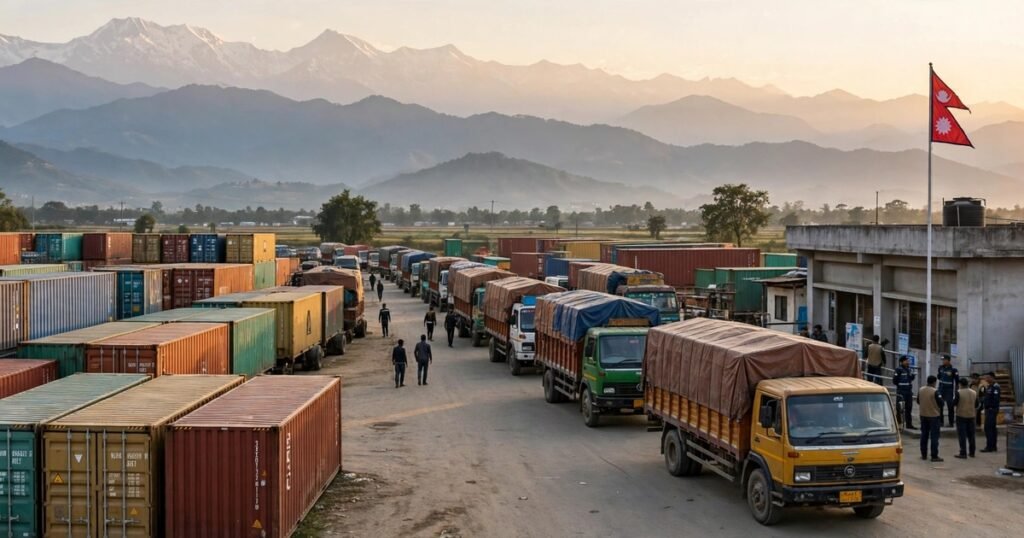
Customs duty Nepal explained in one sentence: it is the tax the government charges when goods cross Nepal’s border, and it is one of the main reasons an imported phone, car, or bottle of whisky costs far more here than it does abroad.
Almost everything Nepal uses arrives from somewhere else. In fiscal year 2025/26, Nepal imported goods worth Rs 2,096.38 billion and exported only Rs 315.29 billion worth, leaving a trade deficit of Rs 1,781.09 billion — the largest on record. Every one of those imports passed through customs, and most of them paid duty. This guide explains, in plain language, what customs duty is, how the rates work, what excise duty adds on top, how a shipment is actually cleared, what changed in the budget for fiscal year 2026/27, and why all of it matters to you even if you never import anything yourself.
Table of Contents
- Customs Duty Nepal Explained: What It Is
- Customs Duty Nepal Explained: The Rates and Slabs
- Customs Duty Nepal Explained: Excise Duty and the Other Charges
- Customs Duty Nepal Explained: How Clearance Works
- Customs Duty Nepal Explained: What Changed in FY 2026/27
- Customs Duty Nepal Explained: Why It Matters to You
- Frequently Asked Questions
Table of Contents
Customs Duty Nepal Explained: What It Is
Customs duty is a tax charged on goods when they enter Nepal. It is collected at the border — at customs offices such as Birgunj, Bhairahawa, Biratnagar, Tatopani, and Rasuwagadhi, and at Tribhuvan International Airport — before the goods are allowed into the Nepali market. In Nepali it is called bhansar shulka (भन्सार शुल्क).
The duty is charged on the value of the goods, known as the CIF value: the cost of the goods plus insurance and freight to the border. The rate depends on what the goods are, not on who is importing them. A shipment of medicines may pay nothing, while a luxury car may pay 80 percent of its value in duty alone. Customs duty Nepal explained for a first-time reader starts with that simple fact: the tax is charged before the goods enter the market, not after they are sold.
Three ideas explain why the duty exists. First, it raises money. The Department of Customs, which works under the Ministry of Finance, is one of the government’s biggest revenue collectors: it collected Rs 319.94 billion in the first eight months of fiscal year 2025/26, about 79 percent of its target for that period. Second, it protects Nepali producers. A high duty on imported finished goods makes locally made alternatives more competitive, while lower duty on raw materials keeps factory costs down. Third, it discourages things the state does not want more of — alcohol, tobacco, and luxury consumption — by making them expensive.
The legal framework is straightforward. The Customs Act, 2064 (2007) is the main law: it sets out how duties are assessed and collected, what procedures importers must follow, and what penalties apply for smuggling or misdeclaration. The Customs Regulations, 2083, issued in May 2026, replaced the old 2064 regulations and moved permits, risk checks, and audits onto electronic systems. The exact rate for each product is set every year in the annual Finance Act, in a document called the Nepal Customs Tariff. That is why a rate you paid last year may not be the rate this year — the tariff is rewritten with every budget.
Customs duty Nepal explained properly also needs one distinction: customs duty is only one of the charges collected at the border. VAT and excise duty are usually collected at the same time, by the same office, on the same shipment. They are different taxes, with different laws, and they stack on top of each other. The next sections take them one at a time.
Customs Duty Nepal Explained: The Rates and Slabs
Nepal’s customs tariff has thousands of lines — 6,340 of them — and every product has a code, called an HS code, that decides its rate. The rates are grouped into slabs. In fiscal year 2025/26 the slabs ran from zero to 80 percent. The budget for fiscal year 2083/84 (2026/27) cut the number of slabs from 11 to seven, simplifying the structure. Customs duty Nepal explained by the numbers is clearest in the table below, which uses the Department of Customs’ own figures for fiscal year 2025/26.
Here is what Nepal actually imported in fiscal year 2025/26 (2082/83), and what duty each band paid, according to the Department of Customs’ foreign trade statistics:
| Duty rate | Import value | Share of imports | Duty collected | Share of duty |
|---|---|---|---|---|
| Duty-free (0%) | Rs 167 billion | 8.0% | — | — |
| 1% | Rs 18.97 billion | 0.9% | Rs 173 million | 0.1% |
| 5% | Rs 424 billion | 20.2% | Rs 14.15 billion | 7.6% |
| 10% | Rs 620 billion | 29.6% | Rs 31.36 billion | 16.9% |
| 15% | Rs 262 billion | 12.5% | Rs 27.46 billion | 14.8% |
| 20% | Rs 148 billion | 7.1% | Rs 25.90 billion | 13.9% |
| 30% | Rs 140 billion | 6.7% | Rs 37.07 billion | 19.9% |
| 40% | Rs 21.92 billion | 1.0% | Rs 8.07 billion | 4.3% |
| 80% | Rs 9.69 billion | 0.5% | Rs 5.99 billion | 3.2% |
| Others | Rs 285 billion | 13.6% | Rs 35.69 billion | 19.2% |
Three things stand out in that table. First, the 10 percent band is the workhorse of the system: nearly three in every ten rupees of imports enter at 10 percent, covering everyday goods from machinery to consumer items. Second, the 30 percent band collects the most duty — Rs 37.07 billion, almost a fifth of all customs duty — even though it covers only 6.7 percent of import value. That is because the 30 percent rate falls on goods the government wants to discourage or protect against, such as alcohol, tobacco, and some luxury items. Third, about 8 percent of imports enter duty-free, including essential medicines and some educational materials. Customs duty Nepal explained through these numbers is a story of choices, not averages: the same border taxes a factory’s raw materials at 5 percent and a luxury car at 80 percent.
In total, customs duty collected in fiscal year 2025/26 came to roughly Rs 186 billion on imports worth Rs 2,096.38 billion.
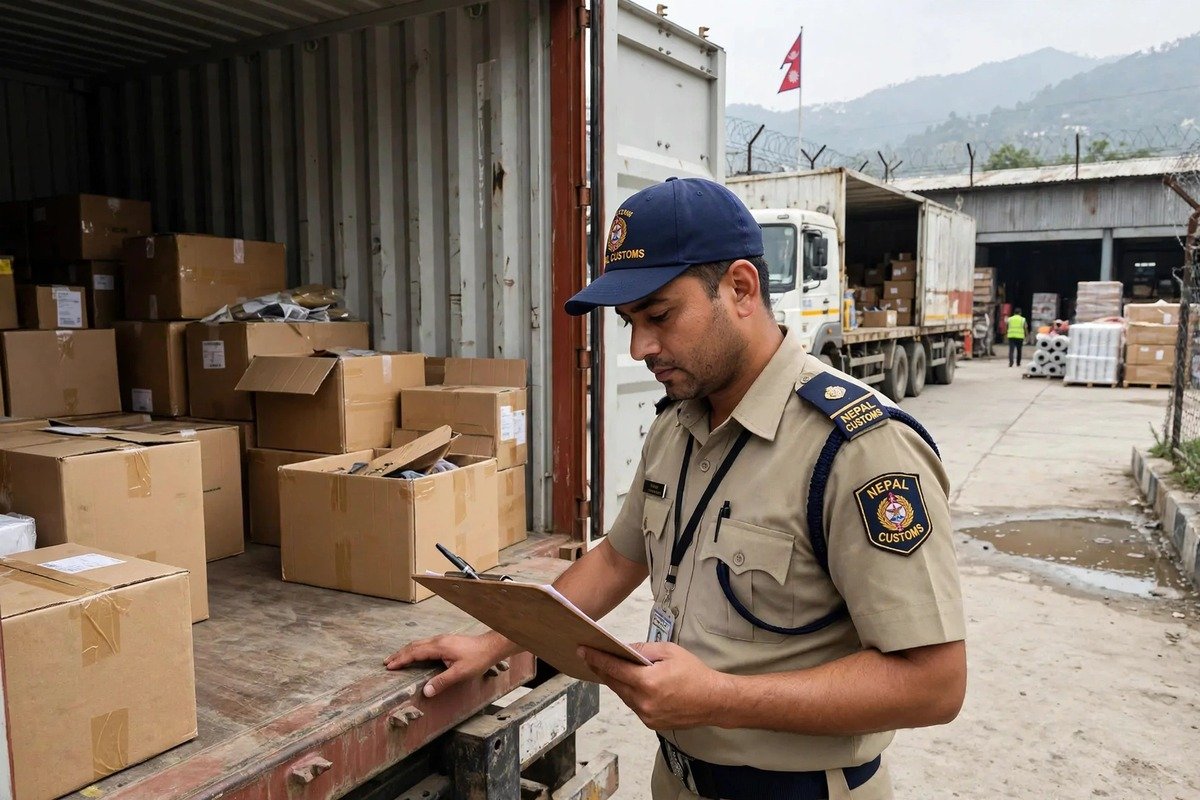
That works out to an average duty of under 9 percent — but the average hides the spread. A trader importing raw materials for a factory may pay 1 or 5 percent. A person importing a luxury car pays 80 percent. The rate is the policy: low where the government wants to encourage something, high where it wants to discourage it or raise money.
Two more features of the rate system are worth knowing. Goods imported from other South Asian countries can qualify for lower, concessional rates under the South Asian Free Trade Area (SAFTA) agreement, provided they meet the rules of origin — that is, they must genuinely be made in the exporting country. And the tariff is not only about the percentage: some goods pay a specific duty, a fixed rupee amount per litre or kilogram, rather than a percentage of value. That matters for goods whose price swings a lot, because a fixed duty does not fall when the price does. Customs duty Nepal explained for traders comes down to two skills: classifying goods correctly and keeping records for the post-clearance audit.
Customs Duty Nepal Explained: Excise Duty and the Other Charges
Customs duty is the first charge. Excise duty is often the second, and it is the one that makes some imports dramatically expensive. Customs duty Nepal explained without excise would be incomplete, because excise is what turns an expensive import into a very expensive one.
Excise duty — antahshulka (अन्तःशुल्क) — is governed by the Excise Duty Act, 2058 (2002). Unlike customs duty, which applies to almost everything that crosses the border, excise is a selective tax. It applies only to specific goods: alcohol and tobacco above all, plus motor vehicles, some luxury goods, and a few other items such as plastics and sugary drinks. The idea is partly fiscal and partly behavioural. Alcohol and tobacco raise a lot of money and cause a lot of harm, so the state taxes them heavily to do both jobs at once — a logic economists call a Pigouvian tax.
Excise is calculated in two ways. Some goods pay a specific rate — a fixed rupee amount per litre, per proof litre, or per thousand sticks of cigarettes. Others pay an ad valorem rate — a percentage of the value. For motor vehicles, the rate rises with engine size: under the Finance Bill for 2083/84, excise on petrol and diesel cars runs from 60 percent for small engines up to 105 percent for the largest ones. The schedule is updated every year in the Finance Act, so the exact figures change with each budget.
The charges stack in a fixed order, and the order matters because each tax is calculated on the value including the ones before it. Take a simple example. A business imports a machine with a CIF value of Rs 100,000, at a customs duty rate of 10 percent and with no excise:
- Customs duty: 10% of Rs 100,000 = Rs 10,000.
- VAT: 13% of (Rs 100,000 + Rs 10,000) = Rs 14,300.
- Total landed cost before transport and margin: Rs 124,300.
The machine that cost Rs 100,000 at the border costs Rs 124,300 by the time it reaches the buyer — a 24.3 percent increase from taxes alone. If excise applied, it would be added after customs duty and before VAT, pushing the total higher still. Customs duty Nepal explained without the stacking would understate the real bill — the duty is only the first layer, and VAT is charged on the duty-inclusive value.
Now apply the same logic to a car, and you see why showroom prices in Nepal shock first-time buyers. A petrol car pays customs duty of up to 80 percent of its CIF value, then excise of 60 to 105 percent depending on engine size, then a 10 percent road construction fee, then 13 percent VAT on the whole lot. The total import tax on a private petrol car can reach about 317 percent of its import value. A car that costs Rs 20 lakh at the border can cost more than Rs 80 lakh in a Kathmandu showroom — and most of the difference is tax.
Electric vehicles are taxed differently since the fiscal year 2026/27 budget. They pay a flat 20 percent customs duty, plus a Clean Infrastructure Investment Fee that rises with the car’s value — 2.5 percent for cars valued up to Rs 20 lakh, stepping up to 130 percent for cars above Rs 50 lakh — plus a 5 percent road fee and 13 percent VAT. The old system taxed EVs by motor power; the new one taxes them by price.
There are also smaller charges that used to be collected separately at the border, such as the infrastructure development tax and the road maintenance fee. The 2026/27 budget folded those scattered levies into a single unified green tax. And VAT, at 13 percent, is charged on almost every import, on the value including customs duty and excise — which is why the VAT article in this series matters for understanding the full bill. Our guide to VAT in Nepal explains how that tax works inside the country, and our explainer on Nepal’s trade deficit shows what the import bill looks like in total.
Customs Duty Nepal Explained: How Clearance Works
Knowing the rates is only half the story. The other half is the process — how a shipment actually gets through customs — because that is where delays, disputes, and extra costs appear. Customs duty Nepal explained as a process has six steps, and a mistake at any one of them costs time or money.
Step 1: Get an EXIM code. Any business that wants to import or export commercially must first register with the Department of Customs and obtain an EXIM (export-import) code. It is the business’s customs identity number, and it must be renewed before the fiscal year ends.
Step 2: Classify the goods. The importer, or a customs agent working for them, finds the correct HS code for each item. The code decides the duty rate, so getting it wrong means paying the wrong duty — and a wrong classification discovered later can mean back duty plus penalties.
Step 3: File the declaration. The importer submits a customs declaration through ASYCUDA World, the electronic system developed by UNCTAD that Nepal uses for customs processing. The declaration states the goods, their value, their origin, and the documents that support them: the invoice, the packing list, the transport document, and any permits the goods need. The system calculates the duty automatically from the tariff.
Step 4: Pay. Customs duty, excise, and VAT are paid at the customs office, increasingly through electronic payment. Goods are not released until the payment is made.
Step 5: Inspection — sometimes. Not every shipment is opened. ASYCUDA runs a risk-based system: low-risk shipments are cleared with little or no physical inspection, while high-risk ones are examined, sometimes in full. The Customs Regulations, 2083 also introduced electronic permits through the National Single Window, advance rulings (so an importer can ask in advance how goods will be classified), and authorised business person status for trusted traders.
Step 6: Post-clearance audit. Clearance is not the end of the story. Customs can audit a business’s records for up to four years after the goods were cleared, and if the audit finds undervaluation or misclassification, the importer owes the difference plus penalties. That is why keeping proper records matters as much as paying on time.
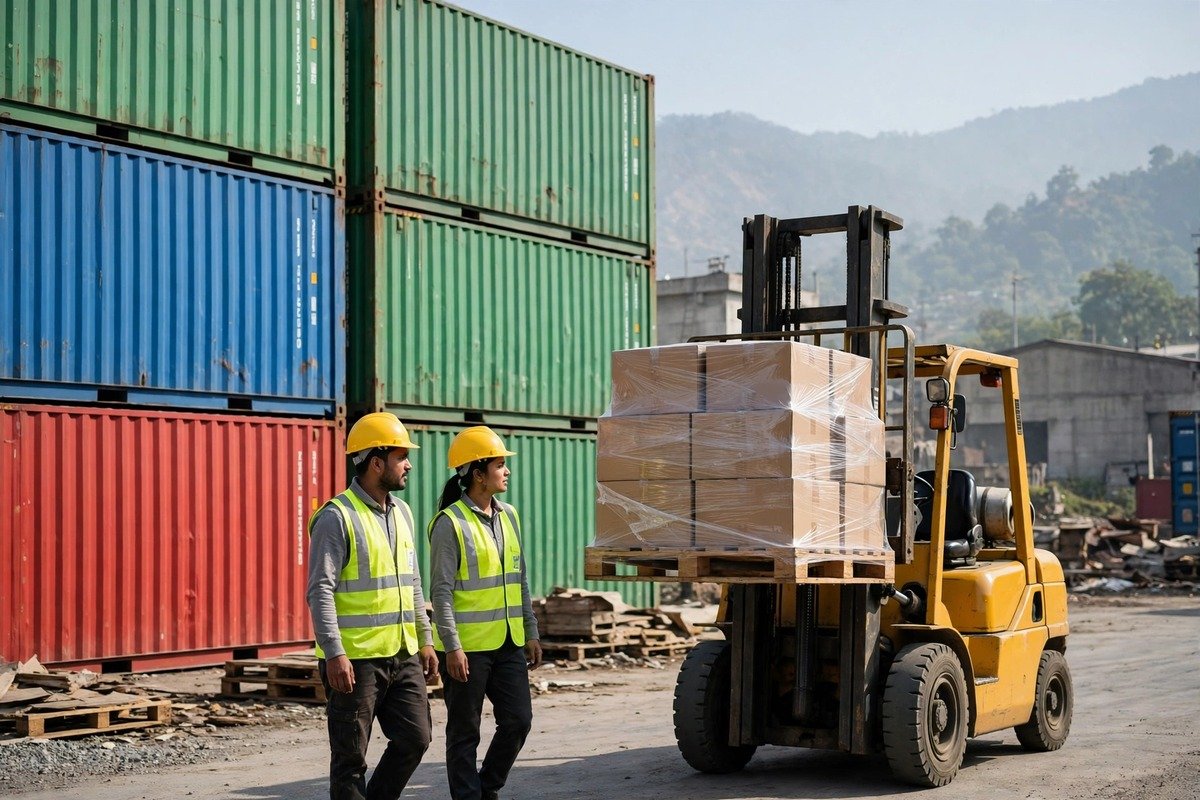
For ordinary travellers, the process is simpler. Passengers arriving by air go through the green channel if they have nothing to declare, and the red channel if they do. Personal effects are generally duty-free up to a limit set in the annual Finance Act, and the limits for items such as gold and electronics change from time to time — so it is worth checking the Department of Customs website before you travel, rather than relying on what a friend paid last year.
Customs duty Nepal explained through this process shows why the system feels slow even when the rates are simple. The duty itself is a calculation. The clearance is a chain of documents, checks, and inspections, and any weak link in the chain — a missing permit, a disputed valuation, a shipment selected for inspection — adds days and cost.
Customs Duty Nepal Explained: What Changed in FY 2026/27
The budget for fiscal year 2083/84 (2026/27), presented by Finance Minister Dr Swarnim Wagle on 29 May 2026, made the biggest changes to customs in years. Customs duty Nepal explained after these changes looks simpler on paper — seven slabs instead of eleven — but the rates for individual goods still need checking in the new tariff. Here are the ones that matter most.
Fewer slabs. The tariff was simplified from 11 duty slabs to seven. A simpler tariff means fewer borderline cases — fewer goods sitting between two rates while importers and officers argue about which one applies.
Cheaper raw materials. Customs duty was reduced on 273 items, mostly industrial raw materials, and the budget set a rule: raw materials must now sit at least one slab below the finished goods made from them. The aim is to make Nepali manufacturing cheaper relative to importing the finished product.
Excise scrapped on 360 items. The budget abolished excise duty entirely on 360 items, while raising it by around 10 percent on cigarettes, alcohol, and beer. The message is clear: excise is being concentrated on the goods it was designed for — alcohol, tobacco, and a few luxuries — and removed from everything else.
A unified green tax. The scattered levies collected at customs points — the infrastructure development tax, the road maintenance and improvement fee, and others — were merged into one green tax. Importers now face one charge instead of several small ones.
New rules, new systems. The Customs Regulations, 2083, published in the Nepal Gazette in May 2026, replaced the 2064 regulations. They brought in electronic permits through the National Single Window, risk-based clearance channels, advance rulings, authorised business person status, and the four-year post-clearance audit. The budget also announced digital excise stamps and a track-and-trace system to improve compliance on excisable goods.
A new deal for electric vehicles. As described above, EVs moved from a motor-power-based tax to a value-based one: flat 20 percent customs duty plus the Clean Infrastructure Investment Fee. The change was meant to make cheaper EVs more affordable while taxing expensive ones more heavily.
These changes sit inside a much larger budget — Rs 2,124.34 billion for fiscal year 2083/84 — and our guide to the budget for 2026/27 explains where that money goes. The customs changes are a small part of the total, but they touch every import, and therefore nearly every price in the country.
Customs Duty Nepal Explained: Why It Matters to You
You do not have to be an importer for customs duty to reach you. It reaches you through prices. Almost everything in a Nepali shop — the phone, the television, the cooking oil, the clothes — either crossed the border or was made from something that did. The duty paid at the border is baked into the price you pay at the counter. Customs duty Nepal explained to a shopper is simple: the tax you never see is already in the price you pay.
That is why the duty structure is a policy choice about what Nepal wants to be cheap and what it wants to be expensive. Low duty on raw materials and machinery is a bet on Nepali industry: cheaper inputs, more factories, more jobs. High duty on luxury cars and imported alcohol is a bet the other way: the state would rather those rupees went to the treasury than to an imported status symbol. Zero duty on essential medicines is a public health choice, not a revenue one.
It also matters because customs is where a large share of the government’s money is collected. When imports fall — during a recession, or when the government restricts imports to protect foreign exchange reserves — customs revenue falls with them, and the budget feels it immediately. In the first eight months of fiscal year 2025/26, the Department of Customs collected Rs 319.94 billion, about 79 percent of its target. When that number misses, the shortfall has to be made up from somewhere else: more borrowing, or less spending. Customs duty Nepal explained through the budget shows why import policy and fiscal policy are the same conversation in Nepal.
And it matters because the system is only as fair as its enforcement. Undervaluation — declaring a lower value than the goods are really worth — is the oldest trick at the border, and it is why customs runs post-clearance audits and why the new regulations tightened them. Every rupee of duty evaded is a rupee the honest importer effectively pays twice: once in the duty they pay, and once in the competition they lose to someone who did not.
Customs duty Nepal explained in full, then, is not just a list of rates. It is the tax that sits between Nepal and the rest of the world, deciding what comes in, at what price, and how much of that price goes to the state. The next time a price in a shop surprises you, there is a good chance the answer is at the border.
Frequently Asked Questions
What is the customs duty rate in Nepal?
Customs duty in Nepal ranges from 0 to 80 percent, depending on the product. Most imports fall in the 5, 10, or 15 percent bands. Essential medicines and some educational materials enter duty-free, while luxury cars pay up to 80 percent. The exact rate for each product is set in the annual Nepal Customs Tariff, which is updated with every budget. Customs duty Nepal explained in one line: the rate depends on the product, not the importer.
How is customs duty calculated in Nepal?
Duty is calculated on the CIF value of the goods — their cost plus insurance and freight to the border. The customs duty is the CIF value multiplied by the rate for the goods’ HS code. VAT at 13 percent is then charged on the CIF value plus customs duty and any excise duty, so the taxes compound. Customs duty Nepal explained this way is arithmetic — the disputes are almost always about classification or valuation, not the calculation.
What is the difference between customs duty and excise duty in Nepal?
Customs duty applies to almost everything that crosses the border and is governed by the Customs Act, 2064. Excise duty applies only to specific goods — mainly alcohol, tobacco, and motor vehicles — and is governed by the Excise Duty Act, 2058. Excise is charged after customs duty and before VAT, and it is calculated either as a fixed amount per unit or as a percentage of value.
Do I have to pay customs duty on things I bring home from abroad?
Personal effects are generally duty-free up to a limit set in the annual Finance Act, and the limits for items such as gold, electronics, and alcohol change from time to time. Passengers with goods above the limit must declare them at the red channel and pay the applicable duty. Check the Department of Customs website before you travel, because the limits change with each budget.
How much customs revenue does Nepal collect?
In fiscal year 2025/26, customs duty collected came to roughly Rs 186 billion on imports worth Rs 2,096.38 billion. The Department of Customs collected Rs 319.94 billion in total revenue — duty plus VAT and excise collected at the border — in the first eight months of the fiscal year. The 30 percent duty band collects the most duty, Rs 37.07 billion, even though it covers only 6.7 percent of import value. Customs duty Nepal explained through the revenue figures shows how much the budget depends on imports.
Where can I check the duty on a specific item?
The Department of Customs publishes the Nepal Customs Tariff on its website, and it runs an online duty calculator. For a binding answer before you import, the Customs Regulations, 2083 allow you to apply for an advance ruling on how your goods will be classified and taxed.
Sources
- Department of Customs, Nepal — Foreign Trade Statistics, FY 2082/83 (import values and duty collected by tariff band)
- Department of Customs, Nepal — full-year foreign trade figures, FY 2025/26 (imports Rs 2,096.38 billion, exports Rs 315.29 billion)
- Ministry of Finance — Budget Speech, FY 2083/84 (customs slabs cut from 11 to seven; duty reduced on 273 items; excise scrapped on 360 items; unified green tax)
- The Himalayan Times — “Govt cuts customs tariff slabs, scraps excise duty on 360 items” (29 May 2026)
- My Republica — “Govt slashes duties, boosts IT and EV sectors in bold budget push” (30 May 2026); “Increase in excise duty on cigarettes, alcohol” (Rising Nepal, 30 May 2026)
- Customs Act, 2064 (2007); Excise Duty Act, 2058 (2002); Customs Regulations, 2083 (May 2026)
- Ministry of Finance revenue data via Nepali media — Department of Customs collection, first eight months FY 2025/26
- Finance Bill, 2083 — vehicle excise and electric vehicle tax structure, as reported by the Kathmandu Post and Nepali business media