

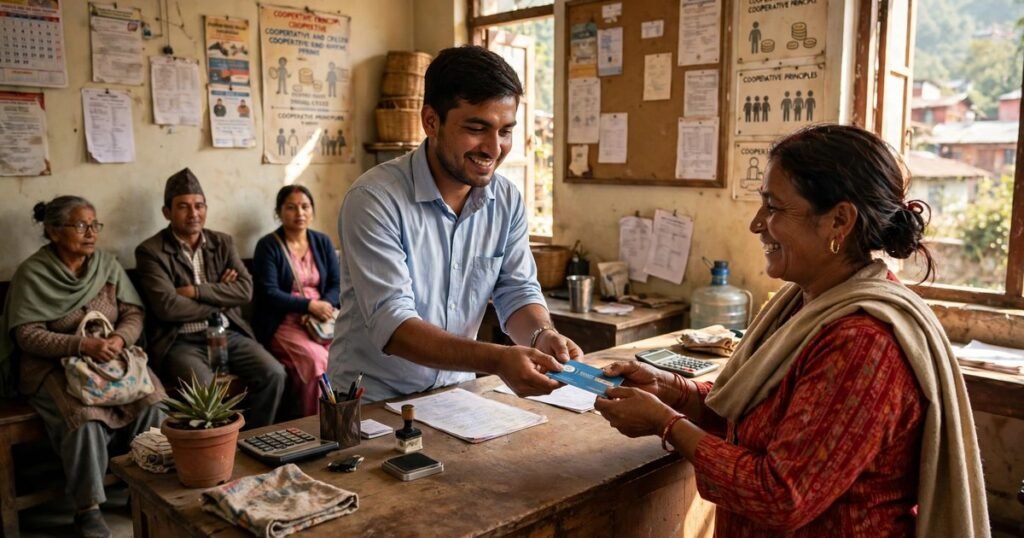
Cooperatives Nepal explained simply: a cooperative is a business owned and run by its own members, who pool their savings, lend to each other, and share the profits — and in Nepal, that simple idea now touches millions of households. There are more than 32,000 registered cooperatives in the country, holding over Rs 1 trillion of members’ savings. For many Nepalis, especially outside the big cities, a cooperative is the first — sometimes the only — financial institution they ever deal with.
That reach is exactly why the sector matters, and why its recent troubles matter too. Thousands of cooperatives ran into trouble in the last few years, and tens of thousands of depositors are still waiting to get their savings back. This guide explains how cooperatives work, how big the sector is, what went wrong, what the new rules change, and how to check a cooperative before you trust it with your money.
Table of Contents
- Cooperatives Nepal Explained: What a Cooperative Actually Is
- Cooperatives Nepal Explained: The Main Types You’ll Meet
- Cooperatives Nepal Explained: How a Savings and Credit Cooperative Works
- Cooperatives Nepal Explained: How Big the Sector Is
- Cooperatives Nepal Explained: What Went Wrong — the Savings Crisis
- Cooperatives Nepal Explained: The New Rules After the Crisis
- Cooperatives Nepal Explained: How to Check a Cooperative Before You Save
- Frequently Asked Questions
- Sources
Table of Contents
Cooperatives Nepal Explained: What a Cooperative Actually Is
A cooperative is a member-owned organisation. The people who use its services are also its owners. Each member buys at least one share, gets one vote regardless of how many shares they hold, and elects the board that runs the institution. Any surplus the cooperative earns is either reinvested or returned to members as a dividend or a better interest rate — not paid out to outside shareholders, because there are none.
That structure is the whole point. A bank exists to earn a profit for its shareholders; a cooperative exists to serve its members. In practice, that means cooperatives often lend to people banks turn away — small farmers, street vendors, daily-wage workers — and they do it at rates the members themselves approve.
Nepal’s Constitution treats the cooperative sector as one of the three pillars of the national economy, alongside the public and private sectors. The country’s first cooperative was set up in Bakhanpur, Chitwan, in 1956, when a group of farmers pooled their money to escape the grip of moneylenders. From that one small society, the movement grew into a nationwide network.
Cooperatives everywhere follow the same seven principles, set by the International Cooperative Alliance: voluntary and open membership, democratic member control, member economic participation, autonomy and independence, education and training, cooperation among cooperatives, and concern for the community. When a Nepali cooperative works well, you can see all seven in action. When it fails, it is usually because one or more of them was ignored — most often democratic control and autonomy, when a small group of directors runs the institution as a private business. That is the standard cooperatives Nepal explained guides measure a cooperative against: not its size, but whether its members genuinely control it.
Cooperatives Nepal Explained: The Main Types You’ll Meet
Not all cooperatives do the same thing. The Cooperative Act, 2074 recognises several kinds, and knowing which kind you are dealing with matters, because the risks are very different.
Savings and credit cooperatives (SACCOS) are the biggest and best-known type. They take deposits from members and lend the money back to members. There were more than 24,000 of them before the recent crisis — roughly two-thirds of all cooperatives — and they are the ones this article focuses on, because they are the ones that hold ordinary people’s savings.
Agriculture cooperatives help farmers buy seed, fertiliser and equipment together, and sell their produce together, so they get better prices on both sides. Dairy cooperatives collect milk from small farmers and sell it to processors — the milk you buy in Kathmandu often passes through one. Multipurpose cooperatives combine several activities, such as savings and credit plus agriculture or consumer goods.
There are also consumer cooperatives (members buy daily goods together at lower prices), health cooperatives, housing cooperatives, and transport cooperatives. The key distinction for savers is simple: only a savings and credit cooperative takes your deposits, so only that kind can lose your deposits. Cooperatives Nepal explained for savers really comes down to that one distinction.
Cooperatives Nepal Explained: How a Savings and Credit Cooperative Works
Joining a SACCOS is straightforward. You become a member by buying shares — usually a small amount — and opening a savings account. From then on, you can deposit money regularly, often daily or weekly, and the cooperative pays you interest on those savings. When you need a loan — for a shop, a child’s education, a house repair — you borrow from the cooperative at an interest rate set by its board, often with simpler paperwork and less collateral than a bank would demand. Cooperatives Nepal explained in practice means the members themselves set those rates, at the annual general meeting, rather than a distant head office.
The cooperative makes its money on the gap between the interest it pays savers and the interest it charges borrowers, just like a bank. The difference is what happens to the surplus. In a well-run cooperative, it goes back to members as dividends, lower loan rates, or higher savings rates. Members are supposed to approve the annual accounts and the dividend at the annual general meeting, and to elect the board that manages the money.
In practice, the model has real strengths. Cooperatives reach places banks do not: small towns and villages where opening a bank branch would never pay. They know their members personally, which can make lending decisions faster and fairer. And because members are owners, a cooperative has a built-in reason to keep its rates reasonable.
But the model has a built-in weakness too. A bank is supervised daily by Nepal Rastra Bank, with strict rules on capital, lending limits and audits. Until very recently, most cooperatives were supervised far more loosely — by the Department of Cooperatives at the federal level, or by provincial and local governments, many of which had neither the staff nor the expertise to check a cooperative’s books. That gap is where the trouble started.
Cooperatives Nepal Explained: How Big the Sector Is
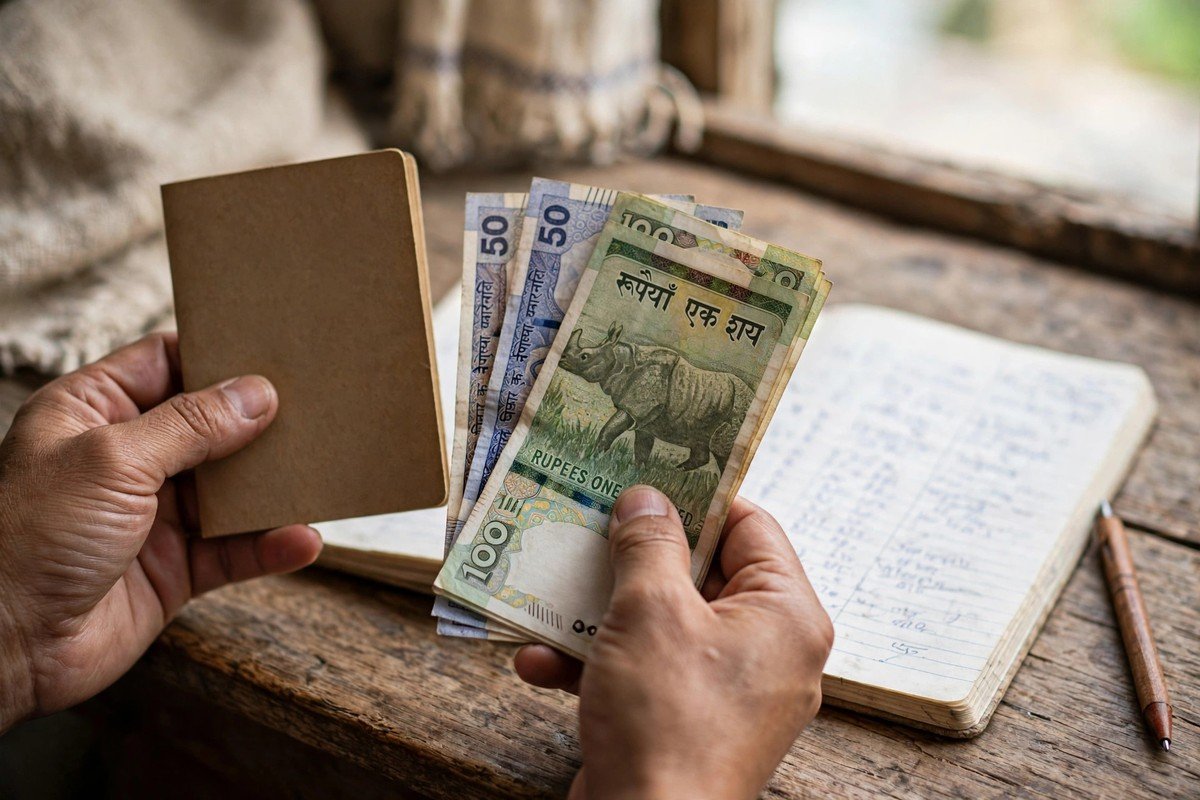
The numbers show just how deeply cooperatives are woven into Nepal’s economy. Cooperatives Nepal explained in numbers is a story of rapid growth. According to the Economic Survey for fiscal year 2025/26, published by the Ministry of Finance, there were 32,325 registered cooperatives in Nepal by mid-March 2026, holding Rs 1.029 trillion in members’ savings and providing direct employment to 82,216 people. Nearly 20,000 cooperatives had been brought into COPOMIS, the government’s cooperative information system, by the same date.
An earlier nationwide study by the Department of Cooperatives, published in January 2021, counted 29,886 operating cooperatives with 7.37 million members and share capital of Rs 94.10 billion. Those cooperatives had collected Rs 477.96 billion in deposits and lent out Rs 426.26 billion to their members. The scale has grown sharply since then — savings alone have more than doubled.
The distribution is uneven. Bagmati Province, which includes Kathmandu Valley, has the most cooperatives — 10,418 in the 2021 study — holding Rs 214.66 billion in deposits. Karnali Province has the fewest, with 1,967 cooperatives and Rs 8.86 billion in deposits. Before the crisis, the sector as a whole was estimated to contribute between 5 and 7 percent of Nepal’s gross domestic product.
That scale is the reason the crisis matters so much. When a sector holds more than a trillion rupees of ordinary people’s savings, a failure is not a private business problem. It is a public one.
Cooperatives Nepal Explained: What Went Wrong — the Savings Crisis
The cooperative crisis became visible from around 2020, when authorities began arresting cooperative operators over alleged misuse of deposits. Cooperatives Nepal explained honestly has to include this crisis, because it is the reason the rules changed. The pattern was repeated in case after case: a cooperative collected deposits by promising high interest rates, then lent the money — often to its own directors, their relatives, or their private businesses — without proper checks. When the loans were not repaid, the cooperative could not return members’ savings.
A slowdown in the real estate market between 2021 and 2023 made things worse, because many cooperatives had lent heavily against land and property. When prices fell, the collateral was worth less than the loans.
The scale of the damage is now documented. Before the crisis, Nepal had 34,512 registered cooperatives, including more than 24,000 savings and credit cooperatives, with over six million members. The number of active cooperatives has since fallen to an estimated 31,000 to 32,000, after closures, mergers and inactivity.
According to the Problematic Cooperative Management Committee — the government body set up to handle failed cooperatives — around 76,000 depositors are owed nearly Rs 46 billion by cooperatives under its jurisdiction. Across all phases of the claims process, 80,087 claimants have registered claims worth Rs 47.60 billion. The government has set up a revolving relief fund and, in its budget for fiscal year 2026/27, pledged to return deposits of up to Rs 500,000 to victims of problematic cooperatives, starting with the smallest depositors. So far, the relief has been slow and partial: about 11,000 depositors from cooperatives including Shivshikhar, Kantipur, Krishi Bikash and Gorkha have received relief worth roughly Rs 710 million, and the total refunded to victims so far stands at about Rs 2.54 billion — a small fraction of what is owed.
The legal process for a failed cooperative is set out in Chapter 18 of the Cooperative Act, 2074 (Sections 104 to 121). A cooperative can be declared problematic when it cannot return members’ savings, when its assets have been misappropriated, or when inspection reveals serious irregularity. Once declared, its board is suspended, a government-appointed management committee takes over, an inventory of assets and liabilities is prepared, and members are called on to submit their claims. Recovery then depends on selling assets and chasing the loans the cooperative made — a slow process, which is why depositors wait years.
Cooperatives Nepal Explained: The New Rules After the Crisis
The crisis forced the biggest overhaul of cooperative regulation in Nepal’s history. Cooperatives Nepal explained under the new rules looks very different from the sector of five years ago. In April 2026, the government issued the Cooperatives (First Amendment) Ordinance, 2083, which came into force on 30 April 2026. Its central change is to put savings and credit cooperatives under a proper licensing regime for the first time.
The ordinance replaces the old National Cooperative Development Board with a new National Cooperative Regulatory Authority (NCRA). Every cooperative whose main business is savings and credit must now register with the Authority and obtain an operating licence — and may only continue operating once it has one. By May 2026, around 11,600 savings and credit cooperatives were in the process of registering, and about 3,000 had already received licences. Cooperatives that fail to register face transaction freezes and eventual deregistration.
The ordinance also tightens the rules inside cooperatives:
- One member, one cooperative: a person cannot be a member of more than one cooperative of the same nature, to stop the same people controlling several institutions.
- Two-term limit: directors can serve a maximum of two terms, to break the grip of long-serving boards.
- Deposit and loan caps: a cooperative can take no more than Rs 1 million in deposits — and lend no more than Rs 1 million — per person if it operates in a single district; Rs 2.5 million if it operates in more than one district; and Rs 5 million if it operates in more than one province.
- Credit information: cooperatives must join the Credit Information Bureau, report loans above Rs 1 million, and report defaulters every three months.
- Deposit guarantee: cooperatives must become members of the Deposit and Credit Guarantee Corporation, which will guarantee the return of deposits of up to Rs 500,000 to depositors of troubled cooperatives.
- Stronger enforcement: the Authority has powers equivalent to those of a district court, can act on complaints about misappropriation of funds, and can impose fines of Rs 0.5 million to Rs 1.5 million. Cooperatives that breach the rules can be dissolved.
These are real changes, but they are new — and they only protect savers if they are enforced. The registration drive is still under way, and many cooperatives have been slow to comply, in part because registration requires full disclosure of their finances. For now, the safest approach for a saver is to check a cooperative yourself, rather than assuming the new system has already caught up with it.
Cooperatives Nepal Explained: How to Check a Cooperative Before You Save
Before you deposit money in any cooperative, run through these checks. Cooperatives Nepal explained as a checklist is short, and it is worth far more than the interest rate a cooperative promises.
- Check that it is licensed. Ask whether the cooperative has registered with the National Cooperative Regulatory Authority and holds an operating licence. A savings and credit cooperative operating without one is breaking the new rules.
- Ask for the audited accounts. A legitimate cooperative holds an annual general meeting, presents audited financial statements, and lets members ask questions. If the cooperative cannot show you a recent audit, or has not held a general meeting, walk away.
- Look at who runs it. Check how long the directors have served, whether the same family controls the board, and whether the directors have borrowed large sums from the cooperative themselves. Under the new rules, directors are limited to two terms — a board that has been in place for a decade is a warning sign.
- Be suspicious of very high interest rates. If a cooperative offers savings rates far above what banks pay — see how interest rates in Nepal are set — ask how it can afford them. High promised returns were the bait in many of the failed cooperatives.
- Keep your deposits within the guarantee. The deposit guarantee covers up to Rs 500,000 per depositor. Keeping your savings in one cooperative below that level limits your exposure if things go wrong.
- Spread your savings. Do not put your entire life savings in a single cooperative, however well it seems to be run. Splitting savings between a cooperative and a bank — or between two institutions — is simple insurance.
- Watch for pressure. A cooperative that pressures you to deposit quickly, discourages withdrawals, or delays returning your money when you ask for it is showing the earliest signs of trouble. Act on them immediately, and report the problem to the Department of Cooperatives or the NCRA.
Cooperatives remain an important part of Nepal’s financial system, and millions of members use them without any problem. The lesson of the crisis is not that cooperatives are bad — it is that a cooperative is only as safe as its governance. A member-owned institution only works when the members actually pay attention. That is the whole point of cooperatives Nepal explained: know what the institution is, check how it is run, and never hand over savings you cannot afford to wait for.
Frequently Asked Questions
What is a cooperative in Nepal?
Cooperatives Nepal explained in one line: a cooperative is a member-owned business in which the people who use its services also own it, vote for its board, and share its surplus. In Nepal there are more than 32,000 registered cooperatives, most of them savings and credit cooperatives.
Are cooperatives in Nepal safe?
It depends on the individual cooperative. Well-run cooperatives with audited accounts, regular general meetings and a licensed status are reasonably safe, and deposits of up to Rs 500,000 are now covered by a guarantee through the Deposit and Credit Guarantee Corporation. But the crisis showed that poorly governed cooperatives can lose members’ savings entirely, so savers should check a cooperative before depositing.
What is the difference between a cooperative and a bank?
A bank is owned by shareholders and supervised by Nepal Rastra Bank; a cooperative is owned by its members and, until recently, was supervised far more loosely. Banks also offer deposit insurance and wider services, while cooperatives are usually smaller, local, and more flexible about lending to members.
How much money do cooperatives in Nepal hold?
According to the Ministry of Finance’s Economic Survey for fiscal year 2025/26, cooperatives in Nepal held Rs 1.029 trillion in members’ savings by mid-March 2026, across 32,325 registered cooperatives.
What should I do if my cooperative will not return my savings?
First, demand your money in writing and keep a copy. Then file a complaint with the Department of Cooperatives or the National Cooperative Regulatory Authority. If the cooperative is declared problematic under the Cooperative Act, 2074, submit your claim to the Problematic Cooperative Management Committee when it calls for claims, and keep every receipt, passbook and deposit slip as evidence.
What is the National Cooperative Regulatory Authority?
The NCRA is the new regulator created by the Cooperatives (First Amendment) Ordinance, 2083, in April 2026. It replaces the old National Cooperative Development Board and is responsible for licensing and supervising savings and credit cooperatives, with powers equivalent to a district court.
Sources
- Ministry of Finance, Economic Survey FY 2025/26 — 32,325 registered cooperatives by mid-March 2026; Rs 1.029 trillion in savings; 82,216 direct jobs; 19,903 cooperatives in COPOMIS.
- Department of Cooperatives study (January 2021), via My Republica — 29,886 cooperatives; 7.37 million members; Rs 94.10 billion share capital; Rs 477.96 billion deposits; Rs 426.26 billion loans.
- My Republica, 30 October and 1 November 2026 — cooperative crisis: 34,512 cooperatives before the crisis; over 24,000 savings and credit cooperatives; over six million members; 5–7 percent of GDP; about 76,000 depositors owed about Rs 46 billion; about 11,000 depositors received about Rs 710 million in relief.
- Nepal News — 80,087 claimants, Rs 47.60 billion in claims; Rs 2.54 billion refunded to victims.
- Rising Nepal — Cooperatives (First Amendment) Ordinance, 2083: NCRA, licensing, two-term director limit, CIB and DCGC membership, Rs 500,000 deposit guarantee, deposit/loan caps.
- My Republica / Fiscal Nepal, May 2026 — NCRA registration: about 11,600 savings and credit cooperatives in process, about 3,000 licensed.
- Everest & Associates, July 2026 — Cooperative Act, 2074, Chapter 18 (Sections 104–121) on problematic institutions.
- Nepal Rastra Bank — see nrb.org.np for the central bank’s role in financial supervision; for how interest rates work, see Hamro Niti’s Nepal interest rate explained and Nepal social security fund explained.