

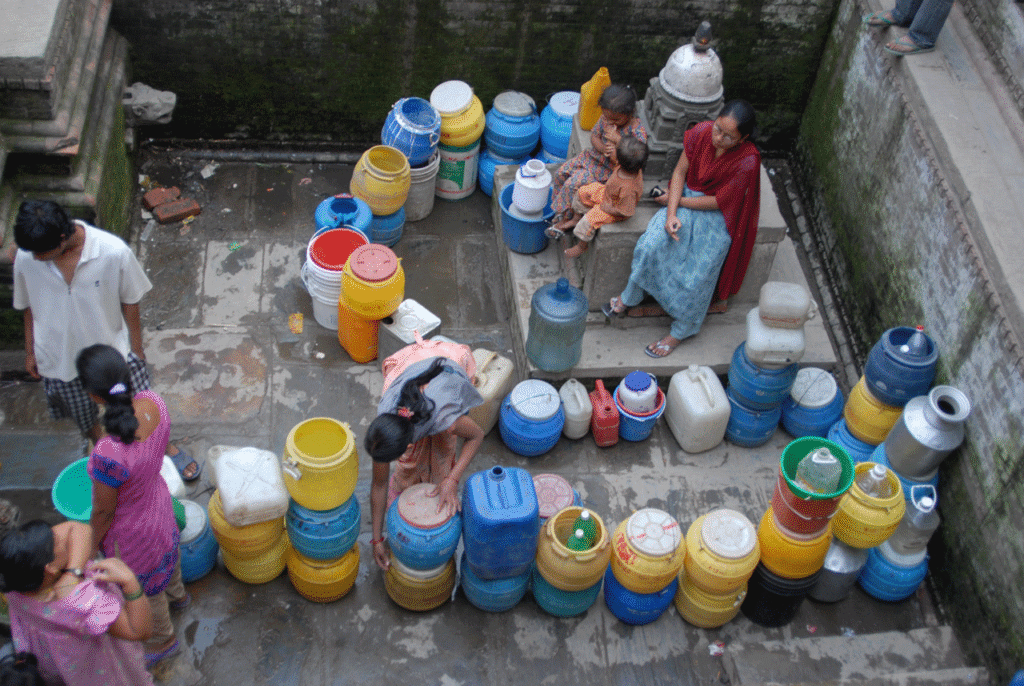
For many households in Kathmandu, running water remains a luxury rather than a guarantee. Families often wake before dawn to fill rooftop tanks, purchase expensive tanker water, or carefully ration every bucket they use. Although the completion of the Melamchi Water Supply Project raised hopes of ending the Valley’s chronic water shortage, the reality for many residents has changed little.
The question, therefore, is no longer whether Kathmandu has access to water, but why, despite decades of planning and billions of rupees in investment, so many taps still run dry.
Why Is This Happening?
Kathmandu’s water crisis is fundamentally a problem of supply, distribution, and governance. Rapid urbanization and population growth have significantly increased water demand, yet the city’s infrastructure has failed to keep pace. Every year, thousands of people migrate to the Valley, placing additional pressure on a water system originally designed for a much smaller population.
As a result, demand consistently exceeds supply, forcing many households to rely on private water tankers, groundwater wells, bottled water, and rooftop storage tanks. Even in areas connected to the piped water network, supply is often intermittent, leaving residents uncertain about when water will arrive—or whether it will be enough to meet their daily needs.
However, the crisis is not simply the result of insufficient water. Decades of inadequate planning, aging infrastructure, and weak maintenance have made the problem far worse. While the Melamchi Water Supply Project has increased the volume of water entering Kathmandu, bringing water into the Valley is only one part of the solution. Large quantities of treated water are lost through leaking pipelines before reaching consumers, while outdated distribution networks struggle to serve rapidly expanding urban neighborhoods.
Excessive groundwater extraction has further lowered water tables, making wells increasingly unreliable and threatening the Valley’s long-term water security. At the same time, climate change has intensified these challenges by increasing the frequency of floods and landslides that damage critical infrastructure, including the Melamchi system. Together, these factors have transformed Kathmandu’s water shortage into a persistent governance and infrastructure challenge rather than simply a problem of limited water resources.
What Happens If This Continues?
If Kathmandu’s water crisis persists, its consequences will extend far beyond household inconvenience. Families will continue spending a significant share of their income on tanker and bottled water, placing a disproportionate burden on lower-income households.
Meanwhile, continued over-extraction of groundwater will further deplete aquifers, increasing the risk of long-term environmental degradation. Intermittent water supplies also create public health risks, as residents are often forced to store water for extended periods or depend on unsafe sources, increasing the likelihood of contamination and waterborne diseases.
More broadly, unreliable access to clean water undermines economic productivity, reduces the quality of urban life, and deepens social inequality, as wealthier households are far better positioned to secure alternative water sources than poorer communities.
What Can Be Done?
Addressing Kathmandu’s water crisis requires a combination of infrastructure upgrades, stronger governance, and sustainable water management.
Repairing aging pipelines and replacing damaged distribution networks should be a top priority. Reducing leakage would allow significantly more treated water to reach households without increasing overall supply. At the same time, expanding and modernizing the distribution network would ensure that projects such as Melamchi benefit communities across the Valley more equitably.
Protecting existing water resources is equally important. This includes expanding wastewater treatment facilities to reduce river pollution, regulating excessive groundwater extraction, and promoting rainwater harvesting in homes, schools, and commercial buildings to supplement water supplies during the dry season.
Several water-scarce cities have demonstrated that long-term planning can dramatically improve water security. Singapore, for example, has successfully combined rainwater harvesting, wastewater recycling, desalination, and careful demand management to reduce its dependence on imported water. While Kathmandu faces different geographical and economic constraints, these examples illustrate the importance of building a diversified and resilient water management system.
Finally, water management must become proactive rather than reactive. As Kathmandu continues to expand, urban development should be planned alongside investments in water supply, wastewater treatment, and sanitation infrastructure so that essential public services can keep pace with the city’s growing population.
Conclusion
Kathmandu’s water crisis is not simply the result of insufficient water. It is the consequence of decades of rapid urbanization, aging infrastructure, fragmented governance, and inadequate long-term planning.
Projects such as the Melamchi Water Supply Project have provided much-needed relief, but they cannot solve a crisis rooted in inefficient distribution and weak management. Without sustained investment, stronger institutions, and better stewardship of existing water resources, water scarcity will remain one of the Valley’s most pressing urban challenges.
Ensuring reliable access to clean water is not only essential for public health and economic development but also a fundamental responsibility of a modern, resilient, and sustainable city.