

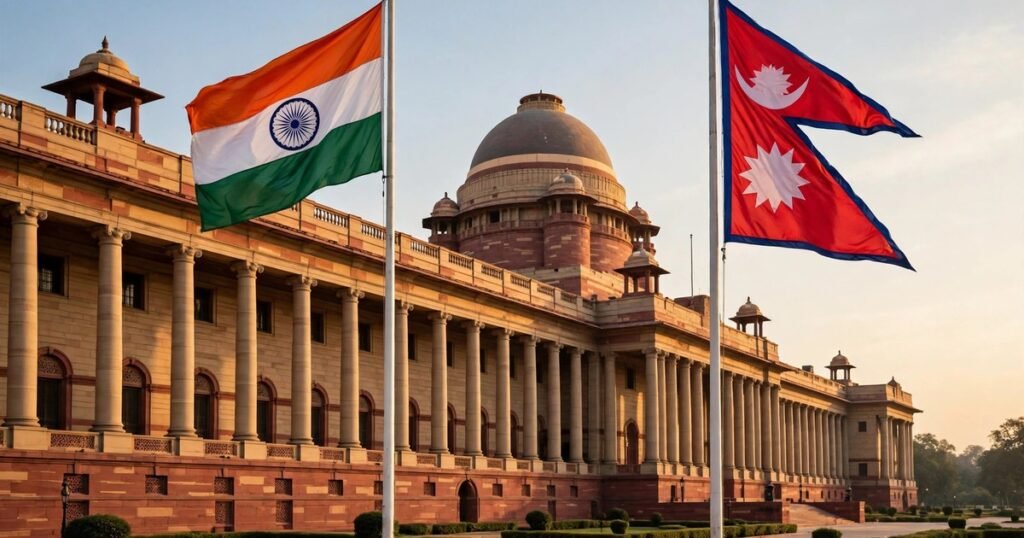
Balen Shah India visit outcomes are now official: after two days of talks in New Delhi, Prime Minister Balendra (Balen) Shah returned to Kathmandu on Monday, 23 November 2026, with a development package worth NPR 24,000 crore, eight signed agreements, a new train service, and a joint vision document — but less money than Nepal had asked for, and several big questions still open. The 24-point joint press statement released after the talks confirms what was agreed, what was only promised, and what was left for later.
The visit was Shah’s first to India since becoming prime minister in March 2026, and it was short — about 25 hours, cut down from an original three-day plan. He arrived in New Delhi on Sunday, 22 November, was received by Union Minister Jitin Prasada, and met External Affairs Minister S. Jaishankar that evening. On Monday morning he received a ceremonial welcome at Rashtrapati Bhavan, paid tribute at Rajghat, held one-on-one and delegation-level talks with Prime Minister Narendra Modi at Hyderabad House, and appeared with Modi at a joint press conference before calling on President Droupadi Murmu and flying home in the afternoon. This article explains the Balen Shah India visit outcomes in full: the money, the train, the energy deals, the eight agreements, and what was not settled.
Table of Contents
Balen Shah India visit outcomes: the package in numbers
Balen Shah India visit outcomes on rail and air
Balen Shah India visit outcomes on energy, trade and borders
Balen Shah India visit outcomes: the eight MoUs
What the Balen Shah India visit outcomes did not settle
What the outcomes mean for Nepal
Frequently asked questions
Sources
Table of Contents
Balen Shah India visit outcomes: the package in numbers
The headline of the Balen Shah India visit outcomes is the money — and the first thing to say about it is that it is smaller than what Nepal asked for. Nepal went to New Delhi asking for a development assistance package of about $2 billion. What Modi announced at the joint press conference was a development cooperation package of INR 15,000 crore, equal to NPR 24,000 crore — about $1.62 billion at the exchange rate used in international reporting. That is roughly four-fifths of the ask, and it is measured in rupees, not dollars.
The joint statement, released after the talks, settles the one detail that mattered most and was still unknown on Monday afternoon: how the package is split between grants and loans. The split is now official, and it replaces the two different breakdowns that were reported in the press before the visit. Those reported versions described Nepal’s request, not the deal, and they should no longer be treated as live possibilities. The official split is:
- Grant: INR 3,500 crore (NPR 5,600 crore) for post-disaster reconstruction and new infrastructure projects.
- Rupee-denominated line of credit: INR 11,500 crore (NPR 18,400 crore) for energy sector projects.
A grant does not have to be repaid. A line of credit is a loan by another name: money Nepal borrows and must repay, usually tied to buying goods and services from the lender country. So about 23 percent of the announced package is grant money, and about 77 percent is a loan for energy projects. That balance matters for Nepal’s public finances, because every rupee borrowed today becomes a repayment obligation tomorrow — and because the energy projects the loan will fund are the same projects that are supposed to earn Nepal money in the long run.
Two cautions belong with the headline figure. First, the package is not a cash transfer. The joint statement says the “specific projects as well as modalities” of the package “will be finalized through mutual consultations” — which means no project-by-project list exists yet, and no money moves until projects are agreed and prepared. Anyone publishing a list of projects the package will fund is inventing it. Second, the package is large by Nepal’s standards but not transformative on its own: NPR 240 billion is about 11 percent of Nepal’s federal budget for the current fiscal year, 2083/84, which is NPR 2,124.34 billion. It is real money, and it is welcome money, but it is not a substitute for Nepal’s own budget.
The reason the package takes the shape it does is the floods of 26 August 2026. Floods in the Bhotekoshi and Trishuli river basins killed around 1,500 people, with another 5,200 missing and presumed dead, and washed away roads, bridges, hydropower plants and homes across the hills. The World Bank has put the damage at about $1.66 billion, and the government’s own post-disaster needs assessment at about $4.77 billion. The joint statement records that Shah thanked India for its humanitarian and technical support after the floods, and that Modi reaffirmed India’s support for Nepal’s reconstruction. The grant portion of the package is the direct answer to that disaster; the energy loan is the longer-term bet. For the background to the $2 billion ask itself, see our explainer on the package Nepal asked for (https://hamroniti.com/nepal-india-2-billion-package-explained/).
Balen Shah India visit outcomes on rail and air
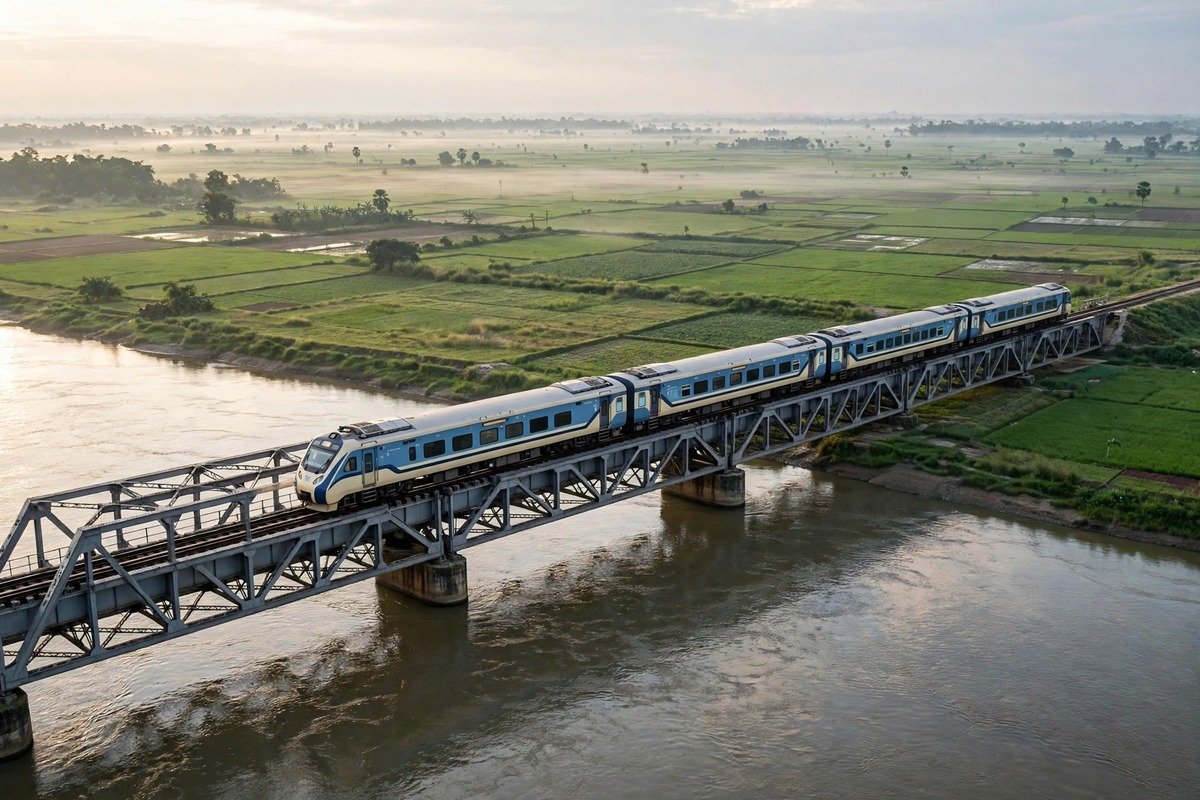
The most visible of the Balen Shah India visit outcomes is a train. The Sarayu-Kamala Express, running between Ayodhya in India and Janakpur Dham in Nepal, was flagged off on its inaugural run on Monday, 23 November. Regular service begins on 28 November, with one train a week in each direction, covering about 604 kilometres in roughly 19 hours. It is the first direct rail link of its kind between the two cities, and it connects two of the most important religious centres in the region — Ayodhya, the birthplace of Ram, and Janakpur, the birthplace of Sita. The two leaders also agreed to explore similar religious tourism circuits, including Buddhist and Shiv-Shakti circuits, which would link pilgrimage sites on both sides of the border.
The train is the finished, running part of the rail story. The longer-term part is the proposed Raxaul–Kathmandu electrified broad-gauge railway, which would finally connect the capital to India’s rail network. On that project, the joint statement records that the Field Location Survey has been finalised — the groundwork for choosing the route — and that both sides will collaborate on Nepal’s own East-West Railway. A finalised survey is real progress, but it is not a construction start, and no date for building the line was announced.
On air travel, the Balen Shah India visit outcomes include a change that regular flyers will notice if it goes through. The existing air route B345, which runs Kathmandu–Bhairahawa–Lucknow in one direction only, is to be made bidirectional, so aircraft can fly it both ways. The statement says technical consultations will finalise the modalities, which means the decision is agreed in principle but the details — altitudes, timings, coordination — are still to be worked out. No other air-route decision was claimed in the joint statement, and the long-running question of additional entry points for flights into Nepal was not settled here.
Balen Shah India visit outcomes on energy, trade and borders
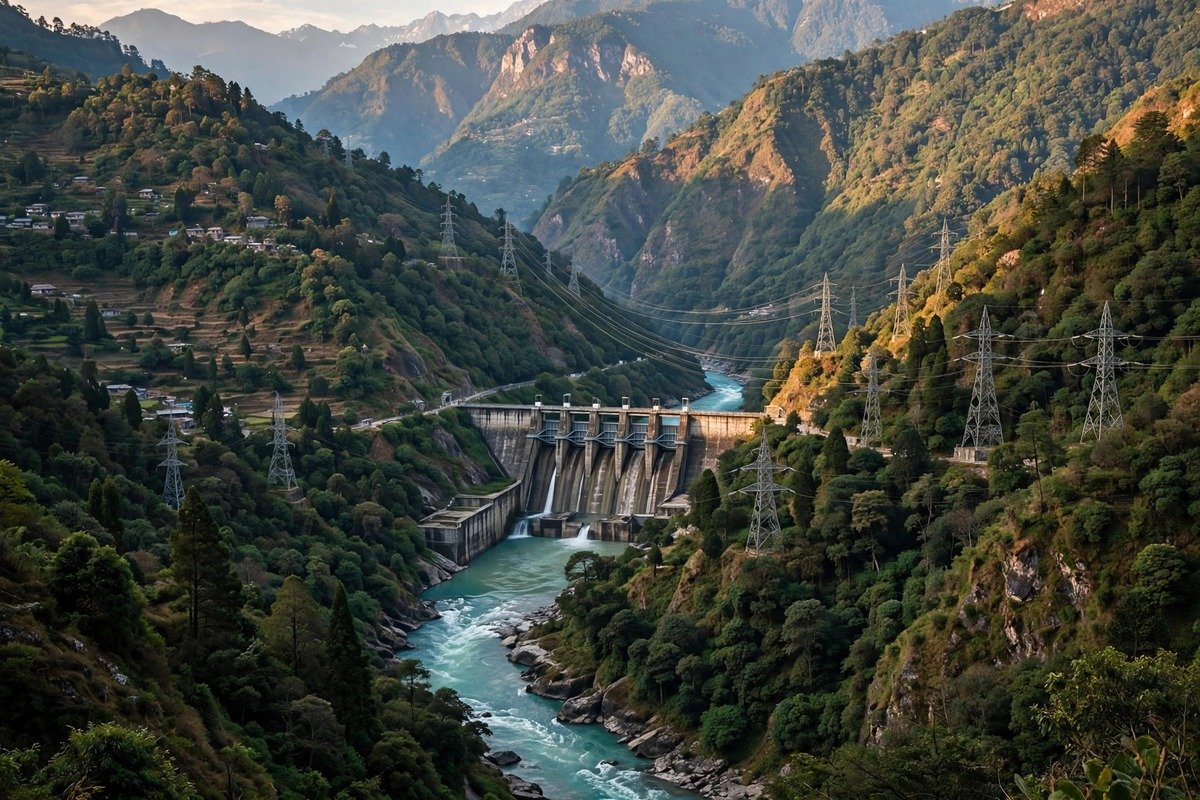
Energy dominates the Balen Shah India visit outcomes, which is consistent with where most of the package money is going. Three things were actually done or started during the visit. The second phase of the Motihari–Amlekhgunj petroleum pipeline was dedicated, extending the cross-border fuel pipeline that already supplies much of Nepal’s petroleum. The foundation stone was laid virtually for a petroleum terminal at Jhapa, in eastern Nepal. And the foundation stone was laid virtually for the 669 MW Lower Arun Hydro-Electric Project, a major new hydropower plant on the Arun river.
Beyond those three, the statement is a list of things to be done soon. Both sides emphasised the early commencement of the Siliguri–Jhapa petroleum pipeline, and agreed to explore gas pipelines as well. On the biggest and oldest energy question between the two countries, the Pancheshwar Multipurpose Project, the statement says its detailed project report is to be finalised expeditiously and work commenced — which is a commitment to move faster, not a claim that the project is agreed or built. The detailed project reports for the Saptakoshi and Sunkoshi multipurpose projects are to be accelerated. Joint ventures are progressing on two cross-border transmission lines, Inaruwa–New Purnea and Dododhara–Bareilly, which would carry Nepali electricity into India.
On trade and transit, the Balen Shah India visit outcomes open two new doors for Nepali goods. A new transit-trade route through Deendayal Port in Kandla, Gujarat, was agreed, giving Nepal another sea outlet besides Kolkata and Haldia. Access to Paradip Port in Odisha was also agreed, to take effect once the requisite infrastructure is in place. For a landlocked country, every additional port is a small reduction in dependence on a single route — but both of these depend on infrastructure and procedures that are not yet built, so neither changes a single shipment tomorrow.
On the border itself, the foundation stone was laid virtually for a new Integrated Check Post at Banbasa, and progress was noted on check posts at Bhairahawa, Sunauli and Dodhara-Chandani, with three check posts already operational. A new cross-border motorable bridge between Dharchula in India and Darchula in Nepal was inaugurated. These are the unglamorous parts of the visit — customs yards, bridges, paperwork — but they are the parts that decide how fast a truck actually crosses the border.
Balen Shah India visit outcomes: the eight MoUs
Eight memorandums of understanding were exchanged during the visit. They are not treaties and they do not move money by themselves, but they are the working-level agreements that the two governments will now have to turn into real programmes. The Balen Shah India visit outcomes in this area are:
- Forensic science: the National Forensic Sciences University of India and Nepal Police’s Central Investigation Bureau will cooperate on forensic science.
- Police training: Rashtriya Raksha University and Nepal’s National Police Academy will cooperate on police education and training.
- Civil service training: the National Centre for Good Governance of India and the Nepal Administrative Staff College will run capacity-building training for Nepali civil servants.
- Traditional medicine: cooperation on Ayurveda and traditional medicine.
- Space and communications: the Indian Space Research Organisation and Nepal’s Ministry of Communication and Information Technology will cooperate on a SATCOM network using the South Asia Satellite.
- Urban development: cooperation on sustainable urban development.
- Health: cooperation on health and medicine.
- Agriculture: cooperation on livestock and fisheries development.
Two of these stand out. The civil service training agreement is the one most likely to be felt inside Nepal’s government, because it puts Nepali officials into Indian training programmes. The satellite agreement is the most ambitious, because a SATCOM network using the South Asia Satellite could eventually improve connectivity in Nepal’s remote districts — though the MoU itself is only a framework, and the network does not yet exist.
The visit also produced two announcements that sit outside the MoUs. India will set up an offshore campus of an Indian Institute of Technology in Nepal — the first of its kind, and a significant step if it happens, though no location, timeline or funding details were announced. And an Agro-Industrial Park will be set up in Chitwan with grant assistance from India. Both were announced, not delivered, and both will be judged on whether anything is built.
Finally, the two leaders adopted a joint vision document titled “Viksit Bharat and Samunnat Nepal” — Developed India and Prosperous Nepal — as a roadmap for the relationship, covering economic and development partnership, connectivity, energy and water resources, and people-to-people ties, plus climate resilience, disaster mitigation, sports, start-ups, digital services, space and innovation. A vision document is a statement of direction, not a list of deliverables, and its value will be measured by whether the specific items in the joint statement actually happen.
What the Balen Shah India visit outcomes did not settle
A visit that announces this much also leaves things out, and the Balen Shah India visit outcomes should be read for their silences as well as their headlines. Four things were not settled.
The boundary. The joint statement notes progress on maintaining boundary pillars, and directs the two Foreign Secretaries to work on outstanding boundary issues. That is a decision to keep talking at official level. It is not a resolution of the boundary question, and nobody should report it as one.
The project list. As noted above, the specific projects the NPR 24,000 crore package will fund, and the modalities for spending it, are to be finalised through mutual consultations. Until that list exists, the package is a headline number with a split, not a programme.
The IIT campus and the Agro-Industrial Park. Both were announced without location, timeline or funding details. Announcements of this kind have been made before in Nepal–India relations and then moved slowly; the test is the first concrete step — land, a budget line, a foundation stone with a date attached.
The return visit. Prime Minister Shah invited Prime Minister Modi to visit Nepal, and Modi accepted. No date was given; dates are to be confirmed through diplomatic channels. A return visit matters because several of the items agreed in New Delhi — the package’s project list, the air-route modalities, the IIT campus — will need follow-up at the highest level.
What the outcomes mean for Nepal
Read together, the Balen Shah India visit outcomes are a solid, verifiable set of results from a very short visit — and a reminder of how much of Nepal–India relations is decided after the cameras leave. The train is running. The package’s grant-and-loan split is now official, which is more transparency than Nepal got before the visit. The energy loan is the bulk of the money, which means the package’s success depends on energy projects that are themselves still at the survey and report stage. The eight MoUs and the IIT campus announcement are promises to be kept, not things already delivered.
Three things are worth watching in the weeks ahead. First, the project list for the NPR 24,000 crore package: which reconstruction projects the grant will fund, and which energy projects the line of credit will fund, and on what terms the credit is lent. Second, the first concrete steps on the IIT campus and the Agro-Industrial Park in Chitwan — a location and a timeline would show these are real. Third, whether the regular Sarayu-Kamala Express service from 28 November runs on schedule and fills its seats, because a train that runs is the one outcome nobody can argue about. For the background to this visit — what Nepal asked for before the talks, and how the earlier prime ministers handled their own India visits — see our explainer on the visit (https://hamroniti.com/balen-shah-india-visit-explained/) and our history of earlier prime ministers’ India visits (https://hamroniti.com/nepal-pm-india-visit-history/).
Frequently asked questions
How much money did Nepal get from Balen Shah’s India visit?
Nepal got a development cooperation package of INR 15,000 crore, equal to NPR 24,000 crore — about $1.62 billion. It is split into a grant of INR 3,500 crore (NPR 5,600 crore) for post-disaster reconstruction and new infrastructure, and a rupee-denominated line of credit of INR 11,500 crore (NPR 18,400 crore) for energy projects. The specific projects have not yet been finalised.
Was the $2 billion package agreed?
No. Nepal asked for about $2 billion. India announced NPR 24,000 crore, which is about $1.62 billion — roughly four-fifths of the ask. Do not report the package as $2 billion agreed.
When does the Ayodhya–Janakpur train start?
The Sarayu-Kamala Express was flagged off on its inaugural run on Monday, 23 November 2026. Regular service begins on 28 November, with one train a week in each direction, covering about 604 kilometres in roughly 19 hours.
What is the Balen Shah India visit outcomes position on the boundary issue?
The joint statement notes progress on boundary-pillar maintenance and directs the two Foreign Secretaries to work on outstanding boundary issues. The boundary question was not settled during this visit.
Will India build an IIT campus in Nepal?
India will set up an offshore campus of an Indian Institute of Technology in Nepal, according to the joint statement. No location, timeline or funding details were announced, so the campus is an announcement, not yet a project under construction.
What were the eight MoUs signed during the visit?
Forensic science, police training, civil service training, Ayurveda and traditional medicine, a SATCOM network using the South Asia Satellite, sustainable urban development, health and medicine, and livestock and fisheries development.
Did Prime Minister Modi agree to visit Nepal?
Yes. Prime Minister Shah invited Prime Minister Modi to visit Nepal, and Modi accepted. No date was announced; dates will be confirmed through diplomatic channels.
Sources
- Joint Press Statement on the State Visit of Prime Minister Balen Shah to India, Ministry of Foreign Affairs, Nepal, 23 November 2026 (via Nepal News (https://english.nepalnews.com/s/diplomacy/joint-press-release-state-visit-of-pm-shah-to-india-reinforces-bilateral-ties-cooperation/)).
- DD India (https://ddindia.co.in/2026/11/india-to-extend-%e2%82%b915000-crore-assistance-to-nepal-pm-modi-balendra-shah-adopt-joint-vision-for-future-partnership/), “India to extend ₹15,000 crore assistance to Nepal”, 23 November 2026.
- The Times of India (https://timesofindia.indiatimes.com/india/ayodhya-janakpur-train-rs-15000-crore-package-8-mous-key-takeaways-from-pm-modi-and-balen-shah-meet/articleshow/136095624.cms), “Ayodhya–Janakpur train, Rs 15,000 crore package, 8 MoUs: Key takeaways from PM Modi and Balen Shah meet”, 23 November 2026.
- Hamro Niti, The $2bn question: what Nepal is asking India for, and why it matters (https://hamroniti.com/nepal-india-2-billion-package-explained/), 23 November 2026.
- Hamro Niti, PM Balen Shah’s India Visit, Explained (https://hamroniti.com/balen-shah-india-visit-explained/), 22 November 2026.