

Table of Contents
Introduction
In Nepal many young people are choosing between two career paths: working for the government through Lok Sewa or Public Service Commission and working abroad. Both of these options have their advantages, disadvantages and effects, on the individual and the countrys economy. Recently in the years 2025 and 2026 more and more young people have been leaving Nepal to work abroad. At the time hundreds of thousands of people are still applying for government jobs through Lok Sewa every year. This article will compare Lok Sewa and foreign employment based on the numbers economic trends, job security, pay and how they affect society.
Current Employment Scenario in Nepal
In Nepal, job openings are limited which directly affects resident workers’ ability to find skilled jobs within Nepal. The International Labour Organisation estimates that over 82% of Nepalis work informally demonstrating how few secure or stable jobs are currently available in Nepal; youth unemployment continues to be a very serious issue. With approximately 60% of the population under 30 years old there will also be an excessive number of competition amongst these individuals for existing job opportunities.
When it comes to employment opportunities for young Nepalis there are essentially two alternatives available; either pursue a job with Lok Sewa or leave Nepal and seek to work abroad.
Lok Sewa: Status, Opportunities, and Competition
The Lok Sewa Aayog, which is also known as the Public Service Commission is an important part of the government in Nepal. This organization is in charge of finding people to work in the government. The Lok Sewa Aayog has jobs in areas, such, as administration, engineering, education, health and security. People really want to get jobs through the Lok Sewa Aayog because these jobs are very respected. The Lok Sewa Aayog jobs are also very stable. Can last for a long time.
Applicant and Selection Data
The Lok Sewa is really tough to get into. I mean a lot of people try to get in. For example the time they had exams around 483,000 people applied for only about 3,675 jobs with the government. That is a small number of people who actually get the job. The Lok Sewa has a lot of competition. Another time they had exams and about 20,000 people passed out of approximately 172,000 people who applied. This shows that the Lok Sewa is extremely competitive. The competition, for the Lok Sewa is intense.
This means less than 5% of applicants successfully secure government jobs.
Advantages of Lok Sewa Jobs:
- Job Security:
Government jobs provide permanent employment with minimal risk of losing the job. - Regular Salary and Benefits:
Employees receive monthly salaries, allowances, pension, medical facilities, and retirement benefits. - Social Respect:
Government employees are highly respected in Nepali society. - Career Growth:
Civil servants can get promotions to higher positions like Section Officer, Under Secretary, and Secretary. - Work-Life Balance:
Government jobs typically offer stable working hours and holidays.
Disadvantages of Lok Sewa Jobs:
- Extremely competitive and difficult to pass.
- Requires years of preparation.
- Limited number of vacancies.
- Lower initial salary compared to foreign employment.
Foreign Employment: Current Trends and Economic Importance
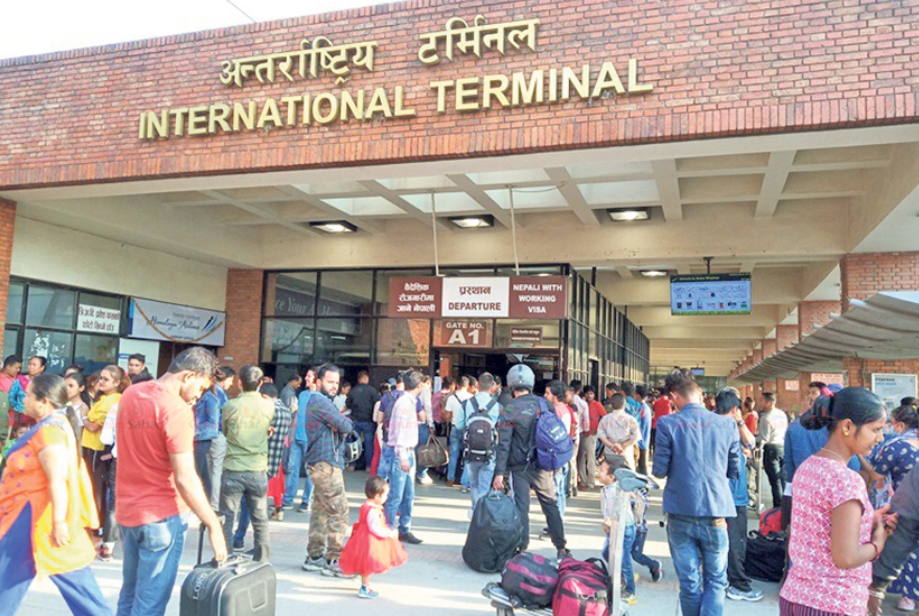
Nepals economy is really dependent on people working in countries. The thing is, there are not good job opportunities in Nepal so thousands of young people from Nepal go to other countries to work every year. This is a thing for Nepals economy foreign employment is very important. Many young people from Nepal have to leave the country to find work because they cannot find jobs in Nepal. Foreign employment is, like the backbone of Nepals economy.
Migration and Employment Data (2025/26)
Recent data shows:
- 839,266 Nepalis left for foreign employment in the last fiscal year alone.
- Over 358,000 new labor approvals were issued in 2024/25.
- Nepal received over NPR 1,723 billion in remittance in FY 2024/25.
- Remittances reached NPR 1,356.6 billion by mid-May 2025.
Remittances have an important impact on Nepal’s economy, making up approximately 27 percent or more of the GDP within the last several years.
The above numbers/methods demonstrate how greatly foreign employment affects people’s income and also supports the Nepali economy.
Advantages of Foreign Employment:
- Higher Income:
Foreign workers earn significantly more compared to domestic jobs. Even unskilled workers can earn NPR 50,000 to NPR 200,000 monthly depending on the country. - Immediate Employment:
Unlike Lok Sewa, foreign employment does not require years of preparation. - Financial Improvement:
Workers can support families, build houses, and invest in businesses through remittance. - Skill Development:
Workers gain technical skills, language skills, and international experience. - Economic Contribution:
Remittances strengthen Nepal’s economy and improve foreign exchange reserves.
Disadvantages of Foreign Employment:
- Job Insecurity:
Foreign jobs are temporary and dependent on contracts. - Physical and Mental Risks:
Workers often face harsh working conditions, exploitation, and health risks. - Family Separation:
Workers remain away from family for many years. - No Pension or Long-Term Security:
Unlike government jobs, foreign employment usually lacks retirement benefits. - Social and Emotional Challenges:
Isolation and cultural adjustment difficulties are common.
| Factor | Lok Sewa Job | Foreign Job |
| Salary | Moderate(NPR 30000-80000 initially) | High(NPR 50000-200000+) |
| Job Security | Very high | Low |
| Pension | Yes | No |
| Competition | Very Hign | Moderate |
| Social Respect | Very Hign | Moderate |
| Family Life | Stable | Difficult |
| Risk Level | Low | High |
| Career Stability | Lifetime | Temporary |
Foreign jobs provide higher income in the short term, but Lok Sewa offers better long-term security.
Social and National Impact
Nepal’s economy benefits from workers who are employed abroad; however, this also presents challenges. The emigration of Nepalese youth causes labor shortages in the home country due to an ongoing brain drain. Over 6.8 million Nepalese have been approved to work abroad over the years, showing a seemingly unlimited flow of labor from this country.
At the same time, Lok Sewa supports the governance system in Nepal by providing qualified personnel in various areas, including health, administration, and public service.
Which is Better in 2025/26?
The answer depends on individual goals.
Choose Lok Sewa if:
- You want job security and stability.
- You prefer staying in Nepal.
- You want a respected career.
- You can dedicate time for preparation.
Choose foreign employment if:
- You need immediate income.
- You want financial growth quickly.
- You are willing to work abroad.
- You can accept physical and social challenges.
Conclusion
Presently, there are ample opportunities for employment through Lok Sewa and foreign employment to help address Nepal’s current economic situation in 2025/26. While foreign employment creates additional remittance income (helping to stimulate the Nepalese economy), it also holds risks, such as job instability, the separation of families, and other negative consequences. Conversely, Lok Sewa provides long-term job security (including pensions and social respect) but requires a high level of preparation and competition to gain employment.
The youth of Nepal would most benefit from pursuing a career in the Lok Sewa system to establish long-lasting wealth and success; however, those seeking to improve their immediate financial situation may be inclined to pursue work in foreign countries. In all cases, personal priorities, economic conditions, and career objectives will determine the best fit for each individual.