

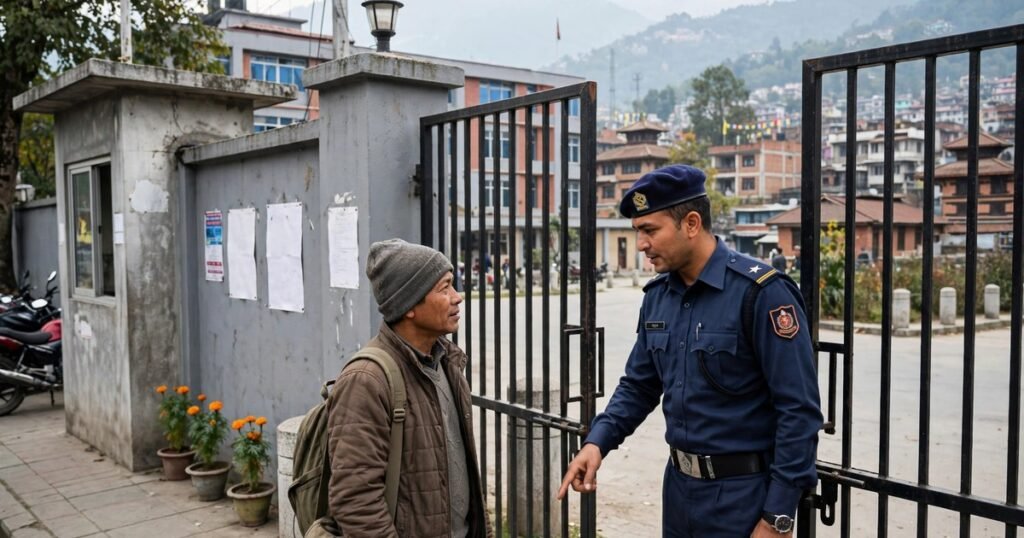
Nepal police explained in one sentence: Nepal Police is the country’s main law-enforcement body, and any citizen can walk into a police station and report a crime — the written record of that report, called an FIR, is what starts an investigation.
Most people only deal with the police in a bad moment: a phone is stolen, a neighbour threatens them, a road accident happens, or a family member is picked up. In that moment, not knowing the process makes everything harder. This guide — Nepal police explained in plain language — covers how Nepal’s police are organised, what an FIR is, how to file one step by step, what happens afterwards, and what rights you have if you are the one being arrested.
Table of Contents
- Nepal Police Explained: What Nepal Police Is
- Nepal Police Explained: The Structure, From Headquarters to Your Local Post
- Nepal Police Explained: What an FIR Is — and When You Need One
- Nepal Police Explained: How to File an FIR, Step by Step
- Nepal Police Explained: What Happens After You File an FIR
- Nepal Police Explained: Your Rights If the Police Arrest You
- Nepal Police Explained: What to Do If the Police Refuse Your FIR
- Nepal Police Explained: The Special Units You Might Deal With
- Frequently Asked Questions
Nepal Police Explained: What Nepal Police Is
Nepal police explained from the beginning: Nepal Police was formed in 1955 AD (2012 BS) under the Police Act, 2012 BS, and it works under the Ministry of Home Affairs. Its headquarters is in Naxal, Kathmandu, and it is headed by an Inspector General of Police (IGP), who is appointed by the Government of Nepal.
The Constitution of Nepal 2015 recognises Nepal Police as one of the country’s federal police organisations, alongside the Armed Police Force and the National Investigation Department (Article 268). That is an important distinction: Nepal Police is the general, day-to-day police — the one that patrols streets, registers complaints, investigates crimes and keeps public order. The Armed Police Force is a separate, paramilitary-style force for border security and armed situations, and it is not the place to report an ordinary crime.
The scale of the force is large. Nepal Police has around 79,554 personnel and 2,344 permanent and 507 temporary police offices and units across the country. Nepal police explained by the numbers means a police presence in every district, but also a force stretched thin — which is why knowing the process yourself matters. Its motto is “Satya, Seva, Surakshanam” — truth, service and security. In practice, that means the police station in your district is part of one national organisation with one chain of command, not a local body that makes up its own rules.
Nepal Police Explained: The Structure, From Headquarters to Your Local Post
Nepal police explained through its structure is easier to navigate when you know where to go. The organisation has three layers that matter to an ordinary citizen.
At the top is Police Headquarters in Naxal, Kathmandu, led by the IGP. Below it are seven Provincial Police Offices, one in each province, each led by a Deputy Inspector General. Below those are District Police Offices in all 77 districts, and under them Area Police Offices and local police posts — the small stations most people actually visit. In the Kathmandu Valley, the Metropolitan Police looks after the capital’s three districts.
Alongside this general structure, Nepal Police runs specialist bureaus for crimes that need expert investigation. The Central Investigation Bureau (CIB) handles serious and organised crime. The Cyber Bureau investigates online fraud, hacking and digital abuse. The Narcotics Control Bureau deals with drug offences, and the Anti-Human Trafficking Bureau handles trafficking cases. Traffic Police, a separate visible arm, manages road traffic and accidents.
Ranks run from Police Constable at the bottom to the Inspector General at the top, passing through Inspector, Deputy Superintendent, Superintendent, Senior Superintendent, Deputy Inspector General and Additional Inspector General. You do not need to know the ranks to file a complaint — the duty officer at any station will take it — but knowing that every station reports upward matters if your complaint is ignored, because you can always go one level up.
Nepal Police Explained: What an FIR Is — and When You Need One
Nepal police explained in legal terms starts with the FIR. FIR stands for First Information Report — in Nepali, a jaheri darkhasta. It is the first official record that a crime has happened, and it is what sets the whole investigation in motion.
The Muluki Criminal Procedure Code, 2074 (2017) defines an FIR in Section 4 as the initial information about a criminal incident given to the police, recorded in the format set out in the Code. Section 18 of the same Code requires the police to register it when the complaint concerns a cognizable offence — a serious offence where the police can arrest without a warrant, such as theft, assault, robbery or murder. For less serious, non-cognizable offences, the police may record the information differently and the matter may need a court’s direction before investigation begins.
Anyone can file an FIR. The victim can file it, and so can a family member, a relative, an eyewitness, or any person who knows a cognizable offence has happened. Nepal police explained this way is simple on purpose: the law wants the first report to come from whoever knows, not only from the victim. The police themselves can also register one on their own initiative — for example, after learning of a crime from the media or during patrol. You do not need a lawyer to file an FIR, and filing one costs nothing.
File as soon as you can. The law does not set a hard deadline for most offences, and a delay does not automatically stop you from filing — but a late report can weaken the case, because evidence disappears and memories fade. If you are reporting something that happened long ago, explain the delay honestly in the complaint.
One warning matters: a false FIR is itself a crime. Section 203 of the Muluki Criminal Code, 2074 punishes filing a false report with a fine and imprisonment of up to two years. Report what happened, as accurately as you can, and do not add details you are not sure about.
Nepal Police Explained: How to File an FIR, Step by Step
Nepal police explained as a practical process, filing an FIR takes five steps.
Step 1: Go to the nearest police station. Go to the station that covers the area where the crime happened. In an emergency, call Police Control on 100 first — the police toll-free number is 16600141516. For a crime in progress, do not wait to write anything down; call and let the police come to you.
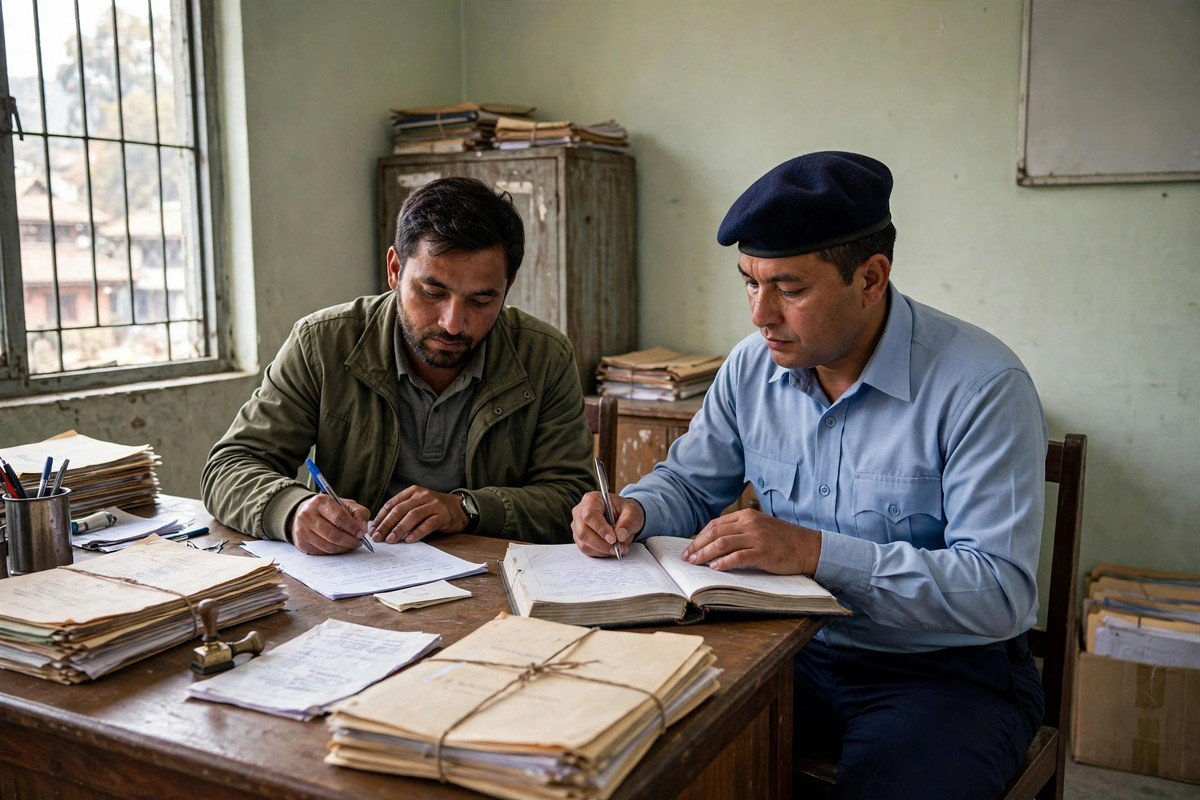
Step 2: Tell the duty officer what happened. You can give the information in writing or verbally. If you give it verbally, the officer must write it down, read it back to you, and take your signature. Before you sign, check that the written version matches what you said. Ask for corrections if anything is wrong — it is your right, and it is much harder to fix later.
Step 3: Include the essential details. A good FIR answers the basic questions: your full name and address; the name and description of the accused, if known; what happened, in the order it happened; the date, time and exact place; the names of any witnesses; and any evidence you have, such as photos, messages, medical reports or documents. If you do not know who did it, say so — “unknown person” is a valid entry, and it does not stop the police from investigating.
Step 4: Get your copy and registration number. Once the information is received, the police must register the FIR and give you a receipt and registration number. The police must also give you a copy of the registered FIR immediately and free of charge. Keep this copy safe — it is your proof that the complaint exists, and you will need the number for every follow-up.
Step 5: Note the investigating officer’s name. After registration, the police assign an investigating officer to the case. Ask for that officer’s name and contact number before you leave, so you know who to call for updates.
For some offences there are dedicated routes. Victims of domestic violence can complain directly to the police, a court or the National Women’s Commission under the Domestic Violence (Offence and Punishment) Act, 2066. Online fraud and cybercrime can be reported to the Cyber Bureau as well as to your local station.
Nepal Police Explained: What Happens After You File an FIR
Nepal police explained beyond the complaint desk: registration is the start, not the end. Once the FIR is registered, the police must begin investigation without delay.
First, the police secure the scene of the crime, prevent evidence from being destroyed, and stop the accused from escaping if they are present. The investigating officer visits the scene, records witness statements, collects evidence and prepares reports of any searches and seizures. If the offence is in another district, the FIR is forwarded to the police office that has jurisdiction over that area.
If the investigation finds enough evidence, the case goes to the government attorney, who decides whether to file a charge sheet in the District Court. The police do not decide guilt — the court does. Nepal police explained to the end of the process means the police investigate and the court judges, and keeping those two jobs separate is what protects both the complainant and the accused. The trial then runs in the District Court, with appeals to the High Court and the Supreme Court, as explained in our guide to how Nepal’s courts work.
How long does this take? The Criminal Procedure Code sets time limits for investigation, and the police cannot sit on a case indefinitely. If the accused is arrested, the police must produce them before a court within 24 hours, and any further detention — called remand — needs a court order, for a limited period set by the Code. In practice, complex cases can still take months, and the complainant’s best tool is regular, polite follow-up with the investigating officer, using the FIR number.
Victims also have a separate protection. The Crime Victim Protection Act, 2075 gives victims of crime rights to protection, information about the case, and compensation in certain circumstances. If you are a victim, ask the investigating officer what protection and support apply to your case.
Nepal Police Explained: Your Rights If the Police Arrest You
Nepal police explained from the other side of the desk: being arrested does not remove your rights. The Constitution of Nepal 2015 protects anyone who is arrested, in Article 20 and Article 22, and these are fundamental rights — the same rights explained in our guide to fundamental rights under the Constitution.
You have the right to be told, as soon as possible, why you are being arrested. No person can be detained without being informed of the grounds for the arrest. You have the right to consult a legal practitioner of your choice from the moment of arrest, and that consultation is confidential. If you cannot afford a lawyer, Article 20(10) of the Constitution provides for free legal aid as set out by law.
You must be produced before a judicial authority within 24 hours of arrest, excluding the time needed to travel from the place of arrest to the court. You cannot be kept in custody beyond that period without a court order. You are presumed innocent until proven guilty, you cannot be forced to testify against yourself, and you cannot be punished for an act that was not a crime when it happened.
Torture is banned outright. Article 22 of the Constitution says no person in custody shall be subjected to physical or mental torture, or to cruel, inhuman or degrading treatment, and any act done in contravention is punishable by law, with compensation to the victim. If you are arrested, you also have the right to have your family informed. If any of these rights is violated, the remedy is a habeas corpus writ in the High Court or the Supreme Court — a court order requiring the police to produce you and justify the detention.
These rights apply to everyone in Nepal, citizen or not, and they apply from the first minute of arrest. Nepal police explained from the rights side is the same system as the FIR side: the law gives the police power to investigate, and gives every person limits on that power. Knowing them in advance is the best protection, because the first hours of custody are when they matter most.
Nepal Police Explained: What to Do If the Police Refuse Your FIR
Nepal police explained honestly includes the cases where the system fails. Sometimes a station refuses to register an FIR — saying the matter is civil, that it happened in another area, or simply telling the complainant to go away. Refusal to register a complaint about a cognizable offence is not lawful, and you have options.
First, ask for the refusal in writing, or at least note the officer’s name, rank and the time. Then go one level up: the District Police Office, or the Provincial Police Office above it. You can also approach the Chief District Officer (CDO), who is the district’s chief administrator and can direct the police to act. If that fails, the District Court can be approached to order the registration of the FIR.
Other doors exist too. The National Human Rights Commission can receive complaints about police misconduct, and its offices take complaints in person and online. Nepal police explained through its accountability channels means the force answers to more than itself: the courts, the Commission, and the CIAA each watch a different part of it. If the refusal involves a demand for money, that is corruption, and it can be reported to the Commission for the Investigation of Abuse of Authority (CIAA). Keep copies of everything — your written complaint, any receipts, and the names of every officer you spoke to — because a paper trail is what makes a complaint about the police provable.
And remember the emergency line: if you are in danger right now, call 100. A refusal at a desk is a problem to solve later; immediate danger is a problem for the emergency number.
Nepal Police Explained: The Special Units You Might Deal With
Nepal police explained in full means knowing which door to knock on, because not every crime goes to the same desk.
The Central Investigation Bureau takes on serious and organised crime — major frauds, organised theft rings and high-profile cases — and the police can forward your FIR to the CIB when the case needs it. The Cyber Bureau is the right place for online fraud, fake social media accounts used to cheat people, hacking and digital blackmail; keep screenshots and transaction records, because digital evidence is the core of these cases. The Anti-Human Trafficking Bureau handles trafficking and related exploitation, and Women, Children and Senior Citizen Service Centres operate in district police offices for cases involving women, children and older people, where complainants may prefer to speak to specially trained officers.
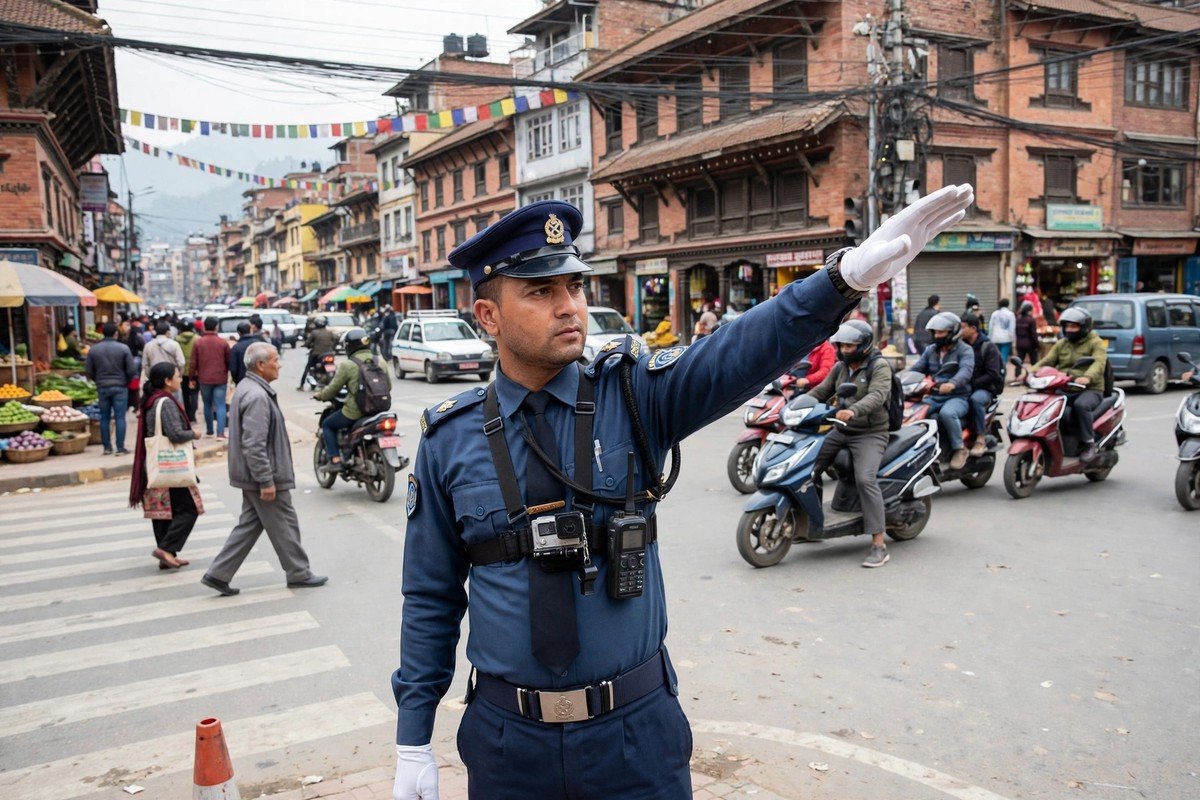
Traffic Police handle road accidents and traffic offences. If you are in a road accident, call 100 or the traffic police, do not move the vehicles until the police arrive unless someone needs urgent medical help, and get the other driver’s details and the vehicle number. The traffic police report becomes the basis for any insurance claim or court case.
You do not need to work out the right unit yourself. The local station is always the correct first stop, and it is the police’s job to forward the case to the specialist unit if one is needed. Nepal police explained in one practical rule: report at the nearest station, get your copy, and follow up. What matters is that you report, you get your copy, and you follow up.
Frequently Asked Questions
Nepal police explained: the questions people ask most, answered briefly.
Can anyone file an FIR in Nepal?
Yes. The victim, a family member, an eyewitness, or any person who knows a cognizable offence has happened can file an FIR. The police can also register one on their own initiative. You do not need a lawyer, and filing is free.
What is the difference between an FIR and a general complaint?
An FIR is the formal first record of a cognizable offence — a serious crime the police can investigate and arrest for without a warrant. A general complaint or information report covers lesser matters, and the police may need a court’s direction before investigating. The FIR is what starts the criminal process.
How long does the police investigation take after an FIR?
The Criminal Procedure Code sets time limits, and the police must begin investigation without delay. Simple cases can be charged within days or weeks; complex cases take longer. If the accused is arrested, they must be produced before a court within 24 hours, and further detention needs a court order.
Can I file an FIR online in Nepal?
Nepal Police runs its official website at nepalpolice.gov.np, and the police control room can be reached on 100 and the toll-free number 16600141516. For most crimes, however, the FIR itself is still registered at a police station, in person or through a written complaint — call first if you are unsure which station covers your area.
What if the police refuse to register my FIR?
Go to the District Police Office or the Provincial Police Office above the station, approach the Chief District Officer, or ask the District Court to order registration. You can also complain to the National Human Rights Commission. Keep a written record of the refusal, including the officer’s name and the time.
What are my rights if the police arrest me?
Under Article 20 of the Constitution, you must be told why you are arrested, you can consult a lawyer of your choice from the moment of arrest, and you must be produced before a court within 24 hours, excluding travel time. You are presumed innocent, cannot be forced to testify against yourself, and cannot be tortured. Free legal aid is available if you cannot afford a lawyer.
Sources
- Constitution of Nepal 2015, Articles 20, 22 and 268
- Muluki Criminal Procedure Code, 2074 — Sections 4 and 18 (FIR); investigation and remand provisions
- Muluki Criminal Code, 2074 — Section 203 (false FIR)
- Police Act, 2012 BS; Nepal Police, nepalpolice.gov.np (Police Control 100; toll-free 16600141516)
- Crime Victim Protection Act, 2075
- Domestic Violence (Offence and Punishment) Act, 2066, Section 4