

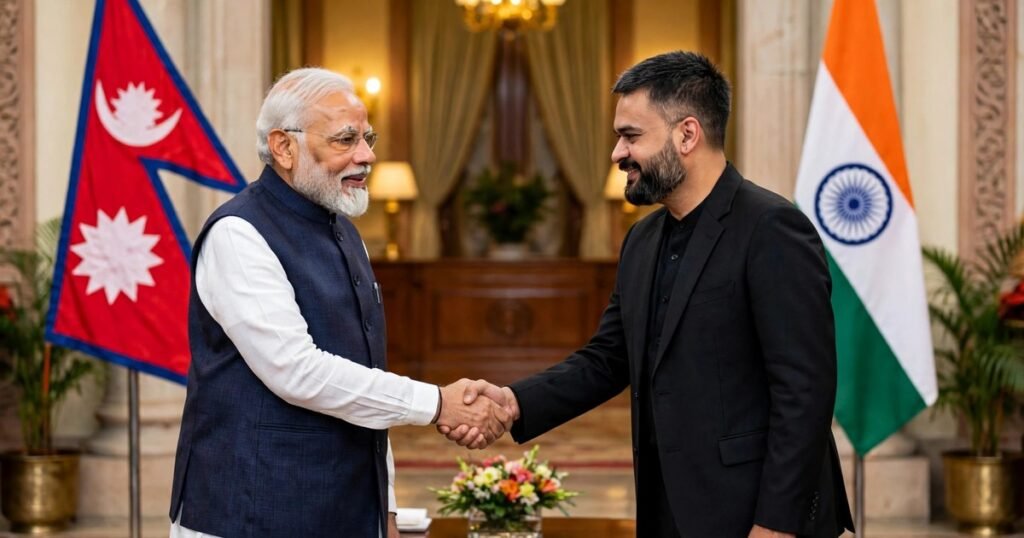
Nepal India 2 billion package explained in plain terms: Nepal went to New Delhi asking for about $2 billion in Indian help — and came home with a headline package worth NPR 24,000 crore, roughly $1.62 billion, announced by Prime Minister Narendra Modi at a joint press conference on Monday, 23 November 2026. The number is real, the announcement is confirmed, and the money is meant for post-flood reconstruction and long-term development. But the details that matter most — how much is a grant, how much is a loan, and when the money actually arrives — have not been made public yet.
This article is the Nepal India 2 billion package explained in full: what Nepal asked for, what India announced, why the two numbers are different, what the money is meant to pay for, and what is still undecided. The full outcomes of the visit — the joint statement, the agreements, and the 10-point vision document — are covered separately in our outcomes piece, which follows the visit as the details are published.
Table of Contents
- Nepal India 2 billion package explained: what Nepal asked for
- Nepal India 2 billion package explained: what Modi announced
- Nepal India 2 billion package explained: the two reported splits
- Why Nepal needs the money: the floods and the $4.8bn bill
- Nepal India 2 billion package explained: what the money would pay for
- How the package compares with past Indian aid
- Nepal India 2 billion package explained: what is still not decided
- What happens next
- Frequently asked questions
- Sources
Table of Contents
Nepal India 2 billion package explained: what Nepal asked for
Prime Minister Balendra (Balen) Shah arrived in New Delhi on Sunday, 22 November 2026, on his first bilateral visit abroad since becoming prime minister in March 2026 (see our explainer on the visit). The visit was short — about 25 hours, cut down from an original three-day plan — and its centrepiece was economic: Nepal was asking India for a development assistance package of about $2 billion.
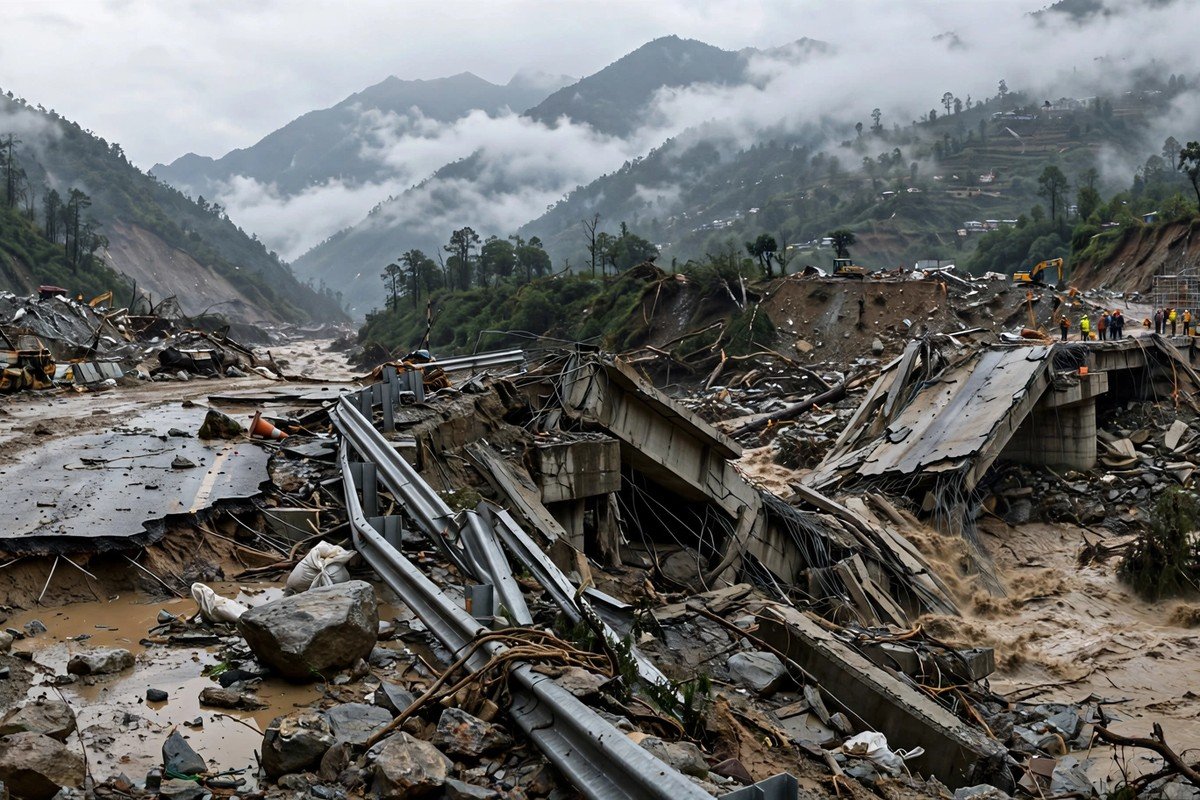
The request had two parts. The first was flood reconstruction. On 26 August 2026, floods in the Bhotekoshi and Trishuli river basins killed around 1,500 people, with another 5,200 missing and presumed dead, according to reports from the time. Roads, bridges, hydropower plants and homes were washed away across the hills. The second part was long-term development: new highways, energy transmission lines, and other infrastructure that Nepal’s own budget cannot fund on its own.
Nepal’s ask was not a surprise. Before the visit, Indian media reported that Delhi was “favourably considering” the proposal, and that Prime Minister Modi might make a “surprise announcement” during the visit. The Nepal India 2 billion package explained from Delhi’s side was never going to be a simple yes or no to a round number — it was always going to be a negotiated package, in rupees, tied to projects. Nepal’s Finance Minister, Swarnim Wagle, who travelled with the 34-member government delegation, said he hoped the visit would be historic. Whether it was historic, he said, would depend on what the leaders announced on Monday afternoon.
The $2 billion figure itself was a round number from the Nepali side — a headline ask, not a costed list of projects. That matters, because the package India eventually announced is measured in rupees, not dollars, and it is smaller than the ask. The Nepal India 2 billion package explained here is therefore a story of two numbers: the $2 billion Nepal requested, and the NPR 24,000 crore India announced.
Nepal India 2 billion package explained: what Modi announced
At the joint press conference after the talks at Hyderabad House on Monday, Prime Minister Modi announced “a development cooperation package worth 24,000 crore (240 billion) Nepalese rupees” to give fresh impetus to Nepal’s reconstruction and long-term development.
In the terms most Nepali readers will recognise, that is NPR 240 billion. Converted at the rate used by international reporting, it is about $1.62 billion — roughly four-fifths of the $2 billion Nepal had asked for. In Indian rupees, it is about INR 15,000 crore, because one Indian rupee equals 1.6 Nepali rupees.
Modi’s own words, delivered with Prime Minister Shah standing beside him, were: “We express our deep condolences for the loss of lives caused by the devastating floods in Nepal in August. Today, we announce a development cooperation package of 24,000 crore Nepali rupees to give fresh impetus to Nepal’s reconstruction and long-term development. Our commitment will be to help affected families get their lives back on track, create new opportunities, and further strengthen Nepal’s capacity to deal with future disasters.”
Three things about the announcement deserve care. The Nepal India 2 billion package explained in the terms India announced it is a rupee figure, not a dollar figure, and a cooperation package, not a cheque.
First, it is a development cooperation package, not a cash transfer. The money will be tied to specific projects — reconstruction, roads, energy — and released as those projects are prepared and built. It is not money that lands in Nepal’s treasury on Monday.
Second, the announcement does not by itself say how much is a grant and how much is a loan. That split is the single most important detail for Nepal’s public finances, and as of this article’s publication on Monday afternoon, neither government has published it. The two breakdowns reported before the visit were about Nepal’s request, not about the announced package, and they should not be read as the terms of the deal.
Third, the package is large by Nepal’s standards. The Nepal India 2 billion package explained in budget terms is about 11 percent of Nepal’s annual federal budget. Nepal’s federal budget for the current fiscal year, 2083/84, is NPR 2,124.34 billion. The announced package of NPR 240 billion is equal to about 11 percent of that entire annual budget. It is also nearly a tenth of the remittances Nepal received in the whole of last fiscal year — NPR 2,363.13 billion in 2025/26, according to Nepal Rastra Bank.
Nepal India 2 billion package explained: the two reported splits
Before the talks, two different breakdowns of Nepal’s $2 billion request were reported in the Indian and Nepali press. Both were widely carried. Neither was ever confirmed by either government. The Nepal India 2 billion package explained properly must show both, because picking one as settled would mislead readers — and because our own earlier coverage of the visit leaned towards one of them.
Version A, reported by The New Indian Express and the Kathmandu Post, put the request at $1 billion in lines of credit for energy and infrastructure, plus $500 million in grants for upgrading the Siddhartha Highway, plus $500 million for flood reconstruction. That adds up to exactly $2 billion.
Version B, reported by IANS and The Economic Times, put the request at $1 billion in grants — $500 million for the Butwal–Pokhara highway and $500 million for flood rebuilding — plus $1.15 billion in concessional loans from the Export-Import Bank of India for energy transmission. That adds up to $2.15 billion, not $2 billion.
The difference between the two versions is not a rounding error. It is the difference between a package that is mostly loans and a package that is mostly grants — and for Nepal, that difference is worth billions of rupees in future debt repayments. A grant does not have to be repaid. A concessional loan does, even at low interest. A line of credit is a loan by another name: money Nepal borrows and must repay, usually tied to buying goods and services from the lender country.
As of Monday afternoon, neither version has been confirmed as the terms of the announced NPR 24,000 crore package. The Nepal India 2 billion package explained through these two versions is a reminder that pre-visit reporting describes the ask, not the deal. The honest position is that the split is not yet public. When it is published — in the joint statement, the Ministry of External Affairs’ list of outcomes, or Nepal’s Ministry of Foreign Affairs briefing — we will update this article and cover it in the outcomes piece.
Why Nepal needs the money: the floods and the $4.8bn bill
The floods of 26 August 2026 are the reason this package exists in this form, and understanding their scale explains why Nepal asked for so much.
The World Bank estimated the physical damage from the floods at about $1.66 billion. But physical damage is only part of the bill. Nepal’s government carried out a Rapid Disaster Needs Assessment, which put the total reconstruction and recovery need at about $4.77 billion — roughly $4.8 billion. The gap between those two numbers is the difference between what was destroyed and what it will cost to rebuild it properly: not just replacing what was there, but building back roads, bridges and power lines that can survive the next flood.
The floods killed around 1,500 people, with another 5,200 missing and presumed dead. More than 84,000 people were affected. The Nepal India 2 billion package explained against that need is only a partial answer. The damage was concentrated in the river valleys that carry Nepal’s main highways and hydropower plants — the same corridors that connect Kathmandu to the rest of the country and to India.
Set against that need, even the announced NPR 24,000 crore — about $1.62 billion — covers only about a third of the estimated $4.8 billion recovery bill. The Nepal India 2 billion package explained as a share of the need is therefore a partial answer, not a complete one. The rest will have to come from Nepal’s own budget, from other donors, and from loans. That is why the grants-versus-loans split matters so much: every rupee of the package that arrives as a loan adds to Nepal’s public debt, which already stood at NPR 2.788 trillion before the floods.
Nepal India 2 billion package explained: what the money would pay for
The package is described as being for “reconstruction and long-term development”. The projects named in the reporting around the visit give a picture of where the money is likely to go, though the final project list has not been published.
Flood reconstruction comes first. Homes, roads and bridges in the Bhotekoshi and Trishuli valleys need rebuilding, and the government has said it wants to build back stronger — wider bridges, better drainage, and power lines routed away from the most flood-prone banks. The $500 million flood-reconstruction figure in both reported versions of the request reflects that priority.
Highways come second. The Siddhartha Highway, which links the Terai to Pokhara and the western hills, and the Butwal–Pokhara highway were both named in the pre-visit reporting as candidates for grant funding. These are the roads that carry goods from India into Nepal’s hills, and their condition affects the price of almost everything transported on them.
Energy transmission comes third. Nepal now exports electricity to India — about 1,200 MW under the long-term arrangement, with net power export earnings of roughly NPR 18 billion in fiscal year 2025/26 — and it needs transmission lines to carry more. The $1.15 billion concessional-loan figure in Version B was specifically for energy transmission. That is the part of the Nepal India 2 billion package explained in energy terms: transmission lines are what turn export deals into export earnings. The 10,000 MW, 10-year power trade deal agreed in January 2024 is the backdrop: Nepal can only sell the power it can transmit.
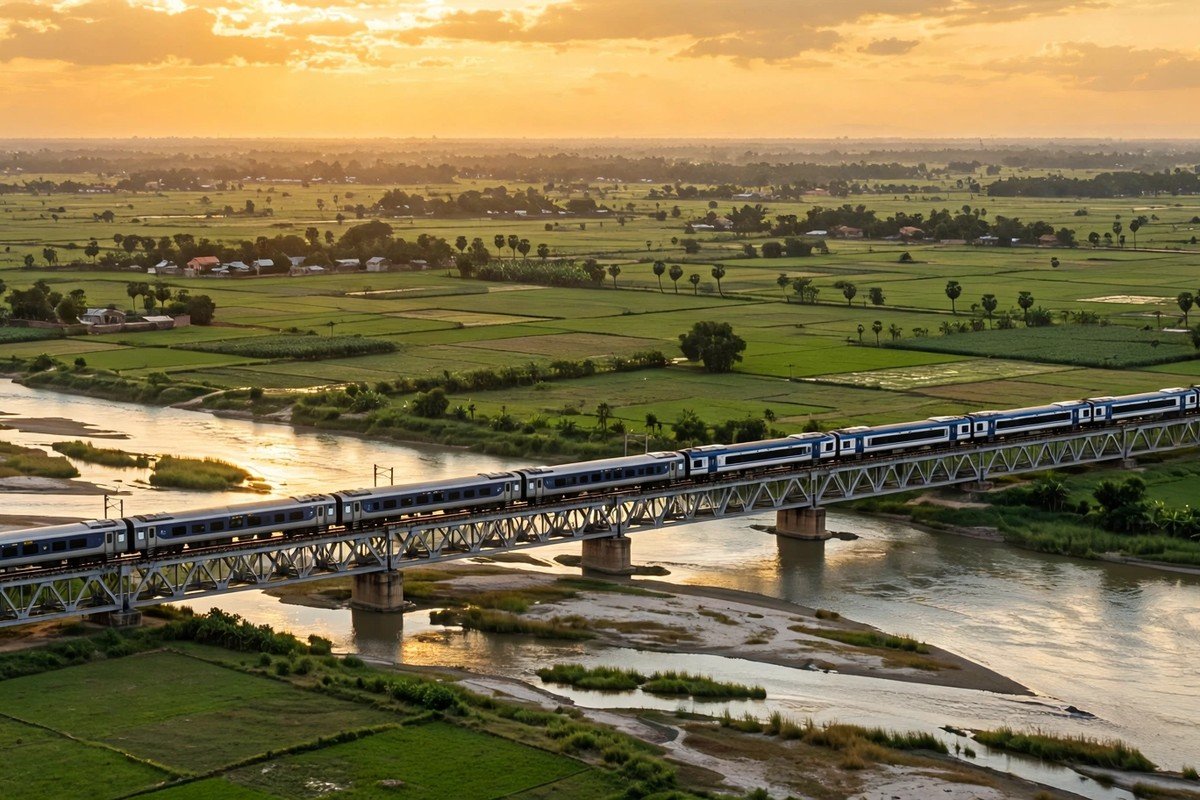
The visit also produced concrete projects alongside the package. The two prime ministers jointly flagged off the Saryu-Kamala Express, a weekly train linking Ayodhya in Uttar Pradesh with Janakpur Dham in Nepal — about 604 kilometres in roughly 19 hours, with regular services from 28 November 2026. They laid the foundation stone for the 669 MW Lower Arun hydroelectric project, dedicated Phase II of the Motihari–Amlekhgunj petroleum pipeline, and inaugurated a motorable bridge linking Dharchula in India with Darchula in Nepal. Eight agreements were signed, covering satellite communication, policing and forensic sciences, civil service training, health and traditional medicine, sustainable urban development, and livestock and fisheries.
How the package compares with past Indian aid
The announced package is big by the standards of India–Nepal development cooperation. The Nepal India 2 billion package explained against past aid shows a step-change in scale: India has previously extended four lines of credit to Nepal, totalling $1.65 billion — $100 million, $250 million, $500 million and $750 million. The single package announced on Monday, at about $1.62 billion, is roughly equal to all four of those lines of credit combined.
That comparison needs a caveat. Lines of credit are loans, and the announced package is a mix of grants and loans whose proportions are not yet public. If most of the NPR 24,000 crore turns out to be loans, the package will add substantially to Nepal’s debt. If most of it is grants, it will be the largest single Indian grant commitment to Nepal in years. Until the split is published, the comparison is about size, not about generosity.
There is also a pattern worth noting. Earlier prime ministers’ visits to India produced headline numbers too: in February 2016, K.P. Sharma Oli’s visit produced a $250 million post-earthquake grant; in 2023, Pushpa Kamal Dahal’s visit produced the 10,000 MW power trade deal. The pattern of these visits, as our earlier piece on past prime ministers’ India visits explains, is that trains, power and roads deliver agreements, while the oldest disputes — the 1950 treaty, Kalapani, Lipulekh and Limpiyadhura, and the Pancheshwar project — keep being referred to officials and stalling. This visit followed the same pattern: concrete announcements on money, trains and power, and no public movement on the border or the treaty.
Nepal India 2 billion package explained: what is still not decided
Five questions remain open in the Nepal India 2 billion package explained here, and each of them matters more than the headline number.
First, the grants-versus-loans split. This is the most important unanswered question, and it will determine how much of the NPR 24,000 crore Nepal must eventually repay.
Second, the project list. Which roads, which transmission lines, which reconstruction projects — and in what order — has not been published. India has said funds would need detailed project reports and would be released in tranches tied to progress and utilisation. That is normal for development aid, but it means the money will arrive over years, not weeks.
Third, the air routes. Nepal has long asked for additional air entry routes through Indian airspace — via Bhairahawa, Nepalgunj, Mahendranagar and Janakpur — and the issue was on the table in Delhi. As of Monday afternoon, Nepal’s demand for additional air routes remains unresolved, according to Nepali reporting from the visit.
Fourth, the 10-point joint vision document, “Prosperous Nepal, Developed India”, and the joint communiqué. Both were expected to be published alongside the press conference. The Ministry of External Affairs has published a list of 19 outcomes from the meeting; the full text of the vision document and the communiqué will show whether the package is tied to wider commitments on trade, transit and energy.
Fifth, the border and the 1950 treaty. These were background issues for the visit, not its centrepiece, and nothing in the announcements so far suggests they were resolved. The outcomes piece will cover whatever the joint statement says about them.
What happens next
The package now moves from announcement to paperwork. The Nepal India 2 billion package explained in this article will be updated when the split and the project list are published. Nepal’s government will need to prepare detailed project reports for the reconstruction and infrastructure projects it wants funded, and India will release the money in tranches as those projects are approved and built. Past experience — with lines of credit and with Indian-funded projects in Nepal — suggests this process takes months for the first disbursements and years for the full package.
For readers, the things to watch are simple. First, the publication of the grants-versus-loans split. Second, the project list: which districts and which roads get the money. Third, the first actual disbursement — the date money starts flowing is more meaningful than the date it was announced. And fourth, the joint statement, which will show whether the visit produced anything on the long-standing issues of trade, transit and the border.
This visit was Prime Minister Shah’s first bilateral trip abroad, and it was his first formal meeting with Prime Minister Modi (see how this visit differs from every PM before him). It produced a large headline package, a new train, eight agreements and a foundation stone for a major hydropower project. Whether it is remembered as a historic visit will depend less on the number announced on Monday and more on how much of that number reaches Nepal’s flood-affected districts, and how quickly. The outcomes piece, published after the joint statement, will carry the full record of what was agreed.
Frequently asked questions
What is the Nepal India 2 billion package?
The Nepal India 2 billion package is the development assistance Nepal asked India for during Prime Minister Balen Shah’s visit to New Delhi on 23 November 2026 — about $2 billion in grants and concessional loans for flood reconstruction and infrastructure. India announced a package of NPR 24,000 crore, about $1.62 billion, which is roughly four-fifths of what Nepal asked for. That, in short, is the Nepal India 2 billion package explained.
How much did India actually announce?
Prime Minister Modi announced a development cooperation package of NPR 24,000 crore — NPR 240 billion, about INR 15,000 crore, or roughly $1.62 billion — at the joint press conference on 23 November 2026. The announcement is confirmed; the grants-versus-loans split has not yet been published.
Is the $2 billion a grant or a loan?
Neither — or rather, both. The package is a mix of grants and concessional loans, but the split has not been made public. Two different breakdowns were reported before the visit, and neither has been confirmed as the terms of the announced package. That is the Nepal India 2 billion package explained as it stands on Monday afternoon.
What will the money be spent on?
Flood reconstruction in the Bhotekoshi and Trishuli valleys, highway upgrades including the Siddhartha Highway and the Butwal–Pokhara highway, and energy transmission lines. The final project list has not been published, and funds will be released in tranches as detailed project reports are approved. The Nepal India 2 billion package explained in spending terms is a project list that has not yet been published.
How big is the package compared with Nepal’s budget?
NPR 240 billion is about 11 percent of Nepal’s federal budget for fiscal year 2083/84, which is NPR 2,124.34 billion. It is roughly equal to all four of India’s previous lines of credit to Nepal combined, which totalled $1.65 billion.
What else did the visit produce?
Eight agreements covering satellite communication, policing, forensic sciences, civil service training, health, traditional medicine, sustainable urban development, and livestock and fisheries; the Saryu-Kamala Express train between Ayodhya and Janakpur, running weekly from 28 November 2026; and the foundation stone for the 669 MW Lower Arun hydroelectric project.
Sources
- The Straits Times, 23 November 2026: “India to give $1.62 billion economic package to flood-hit Nepal” — https://www.straitstimes.com/asia/india-to-give-1-62-billion-economic-package-to-flood-hit-nepal
- The Times of India, 23 November 2026: “Ayodhya-Janakpur train, Rs 15,000 crore package, 8 MoUs: Key takeaways from PM Modi and Balen Shah meet” — https://timesofindia.indiatimes.com/india/ayodhya-janakpur-train-rs-15000-crore-package-8-mous-key-takeaways-from-pm-modi-and-balen-shah-meet/articleshow/136095624.cms
- The New Indian Express, 20 November 2026: “From $2 billion package to Gorkha recruitment, what’s on agenda as Nepal PM visits Delhi”
- The Hindu BusinessLine, 22 November 2026: “Nepal PM visit: India weighs $2 billion development package for Kathmandu”
- Nepal News, 23 November 2026: “Balen’s Delhi visit puts economic ties on a new track, but old disputes remain”
- Hamro Niti: PM Balen Shah’s India Visit, Explained — https://hamroniti.com/balen-shah-india-visit-explained/
- Hamro Niti: How Balen Shah’s India Visit Is Different From Every PM Before Him — https://hamroniti.com/balen-shah-india-visit-different/
- Hamro Niti: How Nepal’s Earlier Prime Ministers Handled India — https://hamroniti.com/nepal-pm-india-visit-history/