

Nepal, one of the South Asian countries, is rich in hydropower, tourism, and natural resources; however, it heavily relies on remittances, as thousands of its citizens leave in search of opportunities elsewhere. Meanwhile, recurring floods and natural disasters, political instability, corruption, and regulatory uncertainty raise an uncomfortable question: why should investors put their money into an economy where uncertainty often outweighs opportunity? The government, constrained by limited financial resources, institutional inefficiencies, and weak project implementation, cannot shoulder the country’s growing infrastructure demands alone. Yet, the private sector, despite possessing capital, technology, and expertise, remains an underutilised partner in public development. Perhaps the question is no longer whether Nepal needs more investment, but whether it needs a different approach to development.
In our postmodern Nepal, individuals have seen different phases of development: from then-leader Dahal’s call to make Nepal a Switzerland to today’s Prime Minister Shah’s call to make Nepal- Nepal, not Switzerland. Different governments and regimes have different policy plans and styles of governance; these reflect different approaches to development. On the other hand, the government is not the sole actor or beneficiary of the state’s development; there is also the existence of the private sector.
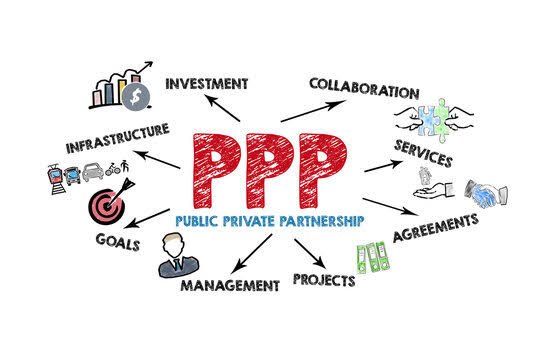
The World Bank defines PPPs as “a long-term contract between a private party and a government entity, for providing a public asset or service, in which the private party bears significant risk and management responsibility, and remuneration is linked to performance”. The concept of Public-Private Partnership (PPP) emerged as a product of globalization and liberalization, gaining prominence worldwide, across advanced, emerging, and developing economies, since the 1990s. It has evolved into a key public policy instrument, fostering collaboration between public and private entities.
In the Nepalese context, to further incentivize investment, the Government of Nepal has introduced three PPP modalities: Solicited Proposals (government-initiated projects), Unsolicited Proposals (private sector-initiated projects), and Direct Negotiation (for strategic projects). The concept of Public-Private Partnership (PPP) was first introduced in Nepal during the Eighth Five-Year Plan. The Fifteenth Periodic Plan (FY2019/20-2023/24) emphasizes fostering “productive and employment-oriented economic growth through PPP” to strengthen PPP initiatives. Similarly, the Sixteenth Periodic Plan (FY2024/25-2028/29), as part of the transformative strategy for “effective public finance management and increased capital expenditure,” underscores the significance of PPP projects in national development.
Now, before going on to why Nepal should consider adopting a public-private partnership model (PPPs), it is essential to understand their potential benefits:
- Public sector: (1) better public service delivery; introduces private-sector technology, innovation, and managerial expertise to improve the quality and efficiency of public services; (2) efficiency and accountability; cost efficiency and performance-based service delivery through contractual obligations, encouraging timely project completion; (3) strengthens public institutions through technology transfer, technical expertise, and exposure to professional management practices.
- Private Sector: (1) growth of domestic enterprise; creates opportunities for local business through ventures and subcontracting in various fields; (2) investment and business opportunities; private enterprises have opportunities to participate in large-scale infrastructure projects and public service delivery; (3) technology and Knowledge transfer; facilitates access to advanced technologies, international expertise, and modern management practices through partnerships with established firms.
With this knowledge, the general aspect of how the public-private partnership model benefits the nation as a whole can be seen, but in Nepal particularly, to what extent this model can create potential benefits in a landlocked country where remittances are considered a major source of state revenue. Public-Private Partnership (PPP) model has to be seen form 3 lens that can be considered beneficial for Nepal:
- Promoting Economic Growth and Employment: PPPs can stimulate economic growth by generating employment and encouraging economic activity through infrastructure development, construction, operation, and maintenance. Increased private-sector participation can also stimulate related industries and contribute to broader economic development.
- Improving Efficiency and Service Quality: Private-sector expertise, technology, and managerial resources can improve the efficiency, quality, and accessibility of public services. Allowing private partners to participate in the design, financing, construction, operation, and maintenance of infrastructure can improve project performance and potentially reduce long-term costs.
- Mobilising Private Investment for Infrastructure Development: Nepal faces significant infrastructure financing and development gaps, particularly in transportation, energy, water supply, and waste management. PPPs can help bridge these gaps by mobilising private capital, technical expertise, and operational capacity, reducing exclusive reliance on limited government resources and accelerating infrastructure development.
Similarly, what we need to understand is that Nepal’s ambitions towards development cannot be sustained through public financing alone. According to the World Bank, the country’s capital expenditure declined from 11.4% of GDP in FY2021 to 7.8% in FY2024, while closing its infrastructure gap requires an estimated annual investment of 10-15% of GDP. At the same time, remittances accounted for 33% of GDP in 2025, reflecting Nepal’s continued dependence on overseas employment rather than sufficient domestic economic opportunities. These data and figures highlight a fundamental challenge: Nepal needs greater investment, stronger infrastructure and productive domestic industries, but its public resources and implementation capacity remain constrained.
Embracing Public-Private Partnerships (PPPs) can help close this gap by mobilising domestic and foreign capital, bringing private-sector technology and expertise, improving service delivery, and generating employment. More than an alternative financing mechanism, PPPs can become a strategic instrument for Nepal to convert its economic potential into productive investment and sustainable development while retaining the government’s responsibility for public welfare, regulation, and accountability.
This article mainly explores why Nepal should embrace Public-Private Partnerships (PPPs), while questioning whether it has the institutional capacity to uphold the responsibilities they demand. Despite their potential to boost economic growth and infrastructure development, PPPs face significant barriers in Nepal: (i) bureaucratic inefficiency, (ii) corruption, (iii) weak institutional commitment, and (iv) political instability. One of the latest trends and barriers that PPP’s face in Nepal is that (i) frequent changes in government, (ii) shifting political ideologies, and (iii) competing priorities often disrupt long-term projects, (iv) creating uncertainty for investors. These are very realistic and practical scenarios for Nepal. Due to this, delays in implementing internationally funded projects can discourage investment and undermine economic progress. Therefore, Nepal must strengthen institutional accountability, ensure policy continuity, and establish a stable environment to make PPPs effective and sustainable.