SG
Saksham Ghimire
Feb 25, 2026 • 6 min read
As Nepal heads into the 2026 elections, 1,143 independent candidates are challenging the traditional party-dominated political landscape. Coming from diverse professional backgrounds such as science, entrepreneurship, journalism, policy, and medicine, these candidates share a common motivation rooted in frustration with systemic inertia and a desire to bring accountability, expertise, and purpose-driven leadership into Parliament. Represented collectively by 84 election symbols, their participation reflects a widening democratic space beyond party lines. Below is a closer look at five prominent independent candidates and what they represent.
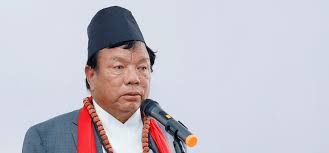
Mahabir Pun’s entry into electoral politics marks a significant moment in Nepal’s democratic evolution. Educated in the United States, with degrees in science education and educational administration from the University of Nebraska, Pun is best known as the founder of the National Innovation Center and the Nepal Wireless Networking Project, which connected over 175 remote villages across 15 districts using innovative, low-cost technology. His work enabled distance learning, telemedicine, and digital connectivity in some of Nepal’s most isolated Himalayan regions.
Pun entered formal politics not through party structures but via appointment, serving as Minister of Education, Science and Technology in the interim government formed after the Gen-Z protests. However, his resignation in January 2026, just before nominations, revealed deeper systemic issues. He cited repeated failures to pass education and science-related policies, despite preparing concrete reform frameworks. Contesting as an independent from Myagdi, his campaign focuses on amending impractical policies, creating innovation-driven jobs, and securing at least 1% of the national budget for research and development.
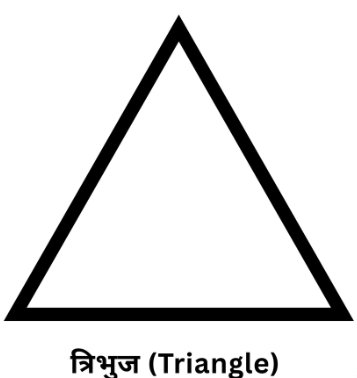
Widely regarded as a symbol of integrity and simplicity, Pun is a Ramon Magsaysay Award recipient and an inductee of the Internet Hall of Fame. His candidacy represents a model of evidence-based leadership rooted in decades of grassroots impact rather than electoral rhetoric. His Election symbol is Triangle.
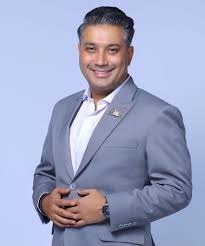
Assisman Singh, co-founder and Managing Director of Pathao Nepal, brings the perspective of Nepal’s startup and gig economy into the political arena. With academic training in tourism, business administration, and conflict, peace, and development studies, Singh’s professional journey reflects both global exposure and local problem-solving. His decision to contest Kathmandu-1 marks his first formal entry into politics.
Singh’s campaign theme, “Taking Responsibility,” emphasizes legal recognition of the gig economy, startup-friendly policies, and tax reforms that support not only tech startups but also small and informal businesses. He argues that Nepal’s youth lack not ambition but an enabling environment and that outdated regulations actively discourage innovation and job creation.
Rather than positioning himself as an anti-establishment figure, Singh advocates for bridging experience with new leadership, merging institutional knowledge with modern innovation. His stated goal is employment generation through entrepreneurship, creating conditions where young people believe they can build sustainable futures within Nepal. His election symbol, the triangle, reflects vision, hard work, and people as the core pillars of development.

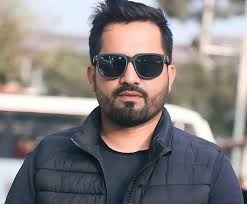
Diwakar Kumar Sah’s candidacy from Dhanusha-3 represents a direct transition from watchdog journalism to legislative politics. A 33-year-old journalist associated with HTP Khabar and a graduate of Tribhuvan University, Sah rose to national prominence through fearless reporting, particularly his on-the-ground investigations exposing corruption within local and state-level government offices.
During the Gen-Z protests, Sah gained wider recognition for critically highlighting both government failures and protest shortcomings, earning credibility across political lines. His decision to run independently stems from a belief that party politics restricts the ability to raise citizens’ real issues in Parliament. A turning point in his life was a severe physical attack in Mahottari linked to his reporting, an incident that resulted in no legal justice and ultimately pushed him toward political participation.
Sah’s campaign focuses on education, healthcare, employment, and good governance. He frames his candidacy as becoming the “voice of the people” rather than a party representative, funding his campaign through public support both votes and voluntary contributions. His election symbol is Mango.

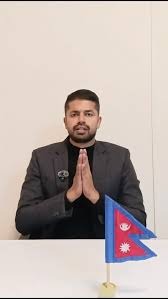
Rupesh Shah’s campaign in Lalitpur-3 blends policy expertise with grassroots political learning. A 36-year-old entrepreneur and former think-tank researcher, Shah holds academic degrees in business administration, rural development, and is currently pursuing a master’s in political science. His decision to enter politics followed years of observing how policy gaps and bureaucratic inefficiencies obstruct local development.
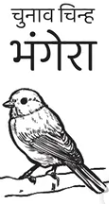
His election symbol, the bhagera (sparrow), is a metaphor for the declining space for independent voices in Nepali politics. Shah argues that just as sparrows are disappearing from urban environments, independent candidates are being pushed out by entrenched party systems. His core agenda includes economic reform, bureaucratic restructuring, and social welfare improvement, with a strong emphasis on youth development.
One of his more unconventional proposals is a lottery-based social welfare model, where locally collected funds are transparently redirected toward healthcare, education, and community development. Funding his campaign through local donations, Shah emphasizes a “people and policy first” approach, advocating for evidence-driven lawmaking rather than populist promises.

Dr. Archan Shumse Rana brings a medical professional’s perspective into the political space as he contests Kathmandu-4 for the second time. A senior nephrologist educated at Kathmandu University and Bangabandhu Sheikh Mujib Medical University in Bangladesh, Rana currently serves as Chairman and Chief Consultant at Mark International Kidney Centre.
Rana frames his political philosophy through public service, often stating that treating patients has taught him the value of dignity, access, and systemic care. His central political demand is universal free healthcare in Nepal, alongside broader commitments to education and youth development. He also focuses on simplifying construction and housing regulations to make it easier for young people to build homes and infrastructure.
Additionally, Rana emphasizes religious tourism management, particularly improving systems and facilities around the Pashupatinath area. Actively involved in free health camps and volunteer-based medical outreach, his campaign highlights governance rooted in service rather than ideology.

Whether they win or not, these independent candidates have already altered the election’s meaning by forcing real conversations on policy, performance, and public responsibility. In a system long shaped by party loyalty, their rise measures voter fatigue and the demand for competence over slogans.
Do Follow Us On: