

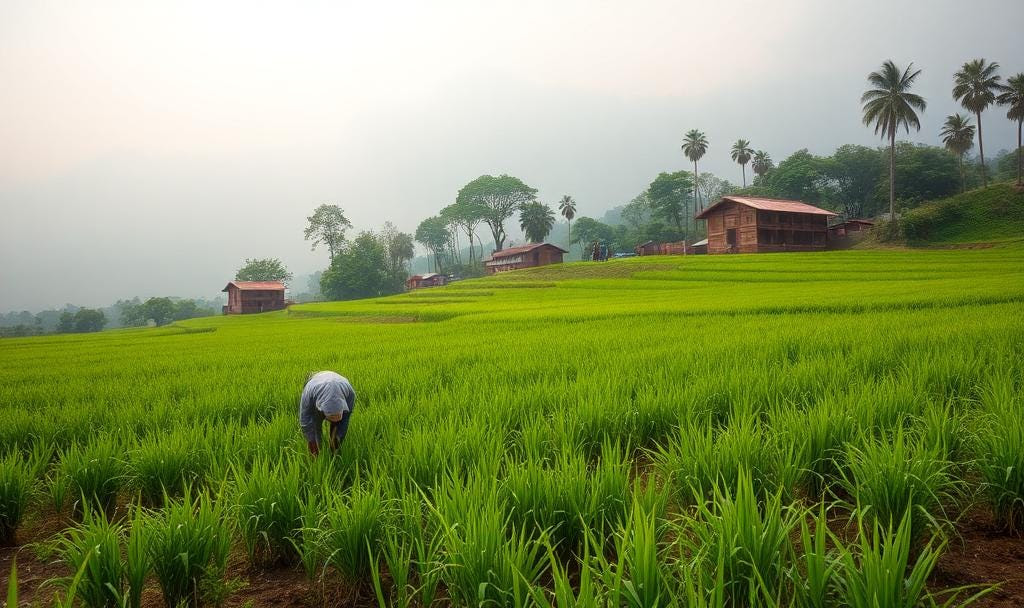
Nepal’s increasing reliance on food imports, with 80% of grain now imported and a 62% rise in food import spending in the last five years [1], has negatively impacted its foreign exchange reserves, GDP, and employment. In this article, I explored how Nepal can increase self-sufficiency in cereal products like rice, wheat, maize, etc. This is crucial for implementing effective nepal-food self sufficiency-policies.
Implementing nepal-food self sufficiency-policies is essential for enhancing local food production.
Recognizing the importance of nepal-food self sufficiency-policies can help improve the agricultural sector.
Adopting nepal-food self sufficiency-policies can lead to sustainable farming practices.
Nepal is one of the countries whose economy is mainly dependent on the service sector, agriculture and remittances. While every sector has its importance, similarly Nepal’s agriculture plays a vital role in government revenue, livelihood to millions of people in the rural regions, significantly supporting livelihoods and contributing approximately 27% to 30% to Nepal’s GDP. In contrast, the global average contribution of agriculture to GDP in developed countries is around 4%, while in developing countries, it often exceeds 25%[2].
Despite the large number of people involved in agriculture, Nepal still imports large quantities of agricultural commodities. Historically, Nepal used to export products such as paddy, lentils, and legumes to India and other countries, but this trend has reversed in the last decade, leading to an unhealthy and imbalanced trade situation[3].
The role of nepal-food self sufficiency-policies is pivotal for boosting agricultural productivity.
Moreover, nepal-food self sufficiency-policies can help alleviate poverty in rural areas.
The majority of the population involved in agriculture is engaged in subsistence farming. A total of 25.1% of farmers engage in commercial farming, which not only provides jobs for many but also employs modern methods. In contrast, the remaining 74.9% focus on subsistence farming, primarily growing food to feed themselves. The reason behind this is that a significant barrier preventing farmers from pursuing commercial farming is land fragmentation. The average landholding for Nepalese individuals is 0.6 hectares.
According to a 2016 report, 51.1% of households have landholdings of less than 0.5 hectares[3]. This has led to less food production and productivity in Nepal and hence contributed to increased reliance on imports, making the economy more susceptible to price fluctuations and foreign exchange risks.
Employment and GDP Impact
To achieve these goals, the adoption of nepal-food self sufficiency-policies is crucial.
Implementing effective nepal-food self sufficiency-policies can also support local economies.
In 2012, around 66.47% of Nepal’s workforce was employed in agriculture, but this number had declined to 61.39% by 2022 [2]. This shift reflects broader changes in employment patterns, with more people moving to other sectors.
Trade imbalances have also impacted GDP growth. Persistent trade deficits-where outflows exceed inflows-have led to increased foreign debt, currency depreciation, and reduced investment in domestic infrastructure and industry [4].
Future initiatives should focus on reinforcing nepal-food self sufficiency-policies for greater impact.
In summary, nepal-food self sufficiency-policies are vital for enhancing food security.
Nepal’s Import-Export Trends
By prioritizing nepal-food self sufficiency-policies, we can help ensure a stable food supply.
Long-term success hinges on effective nepal-food self sufficiency-policies and sustainable practices.
Recent statistics show that imports are about ten times greater than exports. Over the past two decades, imports have consistently increased, while exports have declined, resulting in a substantial trade deficit. India, being Nepal’s biggest trade partner, mainly imports agro and food, which has risen significantly over the past few decades.
The country shifted from being a net food exporter in the 1980s to becoming an importer, with average annual import rates increasing by 39% for rice, 26% for maize, and 126% for wheat [5].
Exchange Rate and Foreign Reserve Challenges
Nepal is a landlocked country, making it heavily reliant on imports for various goods, which makes it very sensitive to fluctuations in exchange rates. A declining Nepalese rupee raises import costs, increases the trade deficit, and depletes foreign reserves as it uses dollars to purchase from foreign markets. This could lead to exchange rate fluctuations, which may also discourage foreign investment and create uncertainty for exporters. [5].
However, research shows that Nepal could achieve self-sufficiency in cereal production by improving farming practices and prioritising affordable fertiliser access and organic fertilisation over large-scale irrigation projects [5].
Policy Alternatives for Food Self-Sufficiency
Nepal-Food Self Sufficiency-Policies and Their Implementation
1. Status Quo: Agriculture Development Strategy (ADS) and Prime Minister’s Agriculture Modernisation Project (PMAMP)
Investing in nepal-food self sufficiency-policies will yield long-term benefits for the economy.
Nepal’s Ministry of Agriculture Development has implemented the Agriculture Development Strategy (ADS) to transform the sector. This strategy focuses on boosting productivity through better fertiliser use, expanding irrigation, and improving animal breeds, while also focusing on sustainability and climate resilience [5].
Short-Term Outcomes:
- Improved fertiliser supply
- Access to improved animal breeds and mechanisation
- Increased climate resilience and adoption of sustainable practices
Long-Term Outcomes:
- Agricultural self-reliance and sustainability
- Enhanced competitiveness and inclusion
- Improved livelihoods and food security
Challenges:
- Uneven implementation across regions
- Funding and resource constraints
- Weak extension services and technological gaps
- Bureaucratic delays and coordination issues
2. Public-Private Partnerships (PPPs) and Multi-Stakeholder Collaboration
PPPs offer a collaborative approach in which the government, private sector, NGOs, and farmers collaborate to address challenges in productivity, market access, and climate vulnerability.
Short-Term Outcomes:
- Increased investment in infrastructure and technology
- Knowledge sharing and job creation
Long-Term Outcomes:
- Sustainable agricultural growth
- Improved market access for farmers
Challenges:
- Coordination complexity among stakeholders
- Risk sharing and regulatory barriers
- Capacity gaps and equity concerns
Mitigation Strategies:
- Develop clear legal frameworks for PPPs
- Build capacity among farmers and local institutions
- Focus on including smallholder farmers and marginalised groups.
- Establish robust monitoring and pilot collaborative models
Conclusion
Nepal’s journey toward food self-sufficiency is complex but achievable. By strengthening existing policies and embracing innovative public-private partnerships, the country can reduce its reliance on imports, improve food security, and foster sustainable economic growth. Addressing implementation challenges and ensuring inclusive participation will be crucial for realising these goals and securing a resilient agricultural future for Nepal.
Ultimately, the success of these initiatives will depend on strong nepal-food self sufficiency-policies.