

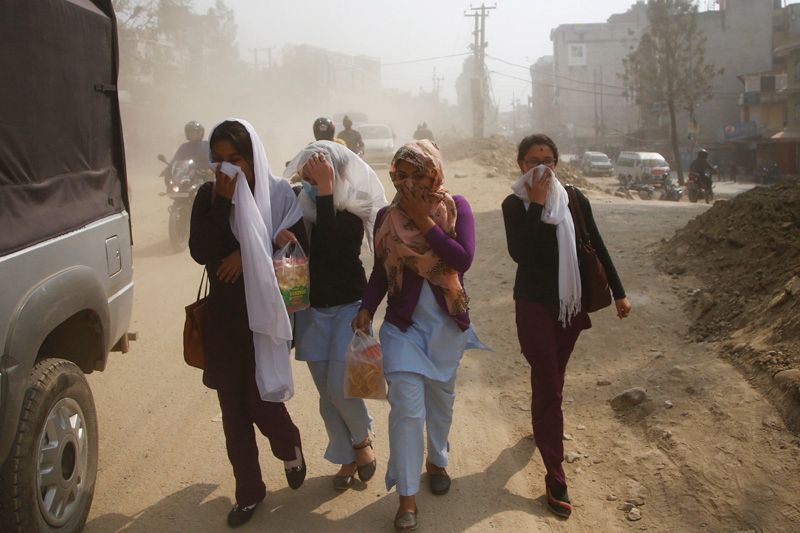
Kathmandu livability crisis is no longer an abstract policy concern, it is a daily reality for ordinary citizens. Every day, public services in Kathmandu are becoming increasingly inaccessible. Facilities meant to be reliable and freely available, such as safe roads, clean air, efficient transport, and basic urban amenities, have turned into daily struggles. What should be simple acts of living in a capital city now demand immense patience and constant compromise. Hours lost in traffic and growing health risks from pollution and poor infrastructure are steadily making Kathmandu unlivable.
This Kathmandu livability crisis is not because services do not exist, but because they function poorly, unevenly, and unreliably placing the greatest burden on citizens who have the fewest alternatives.
Traffic and Mobility in the Kathmandu Livability Crisis
A major driver of the Kathmandu livability crisis lies in its traffic and mobility systems. Road expansion has failed to keep pace with rapid population growth and rising vehicle ownership. With a population of around 2.5 million and growth exceeding four percent annually, Kathmandu’s infrastructure is under immense strain. Vehicle registrations have increased from about 24,000 in 2000 to over 800,000 today, worsening congestion and air pollution.
Public buses, which should form the backbone of urban mobility, are overcrowded and unreliable. Students, daily wage workers, and low-income commuters often endure unsafe and uncomfortable conditions. Instead of convenience, public transport has become an exhausting necessity, reinforcing inequality within the Kathmandu livability crisis.
Poor regulation, irregular schedules, and lack of safety standards further discourage public transport use, forcing even those without private vehicles to suffer daily inconvenience.
Air Pollution and Public Health in the Kathmandu Livability Crisis
The Kathmandu livability crisis is most visible in the city’s air quality. Kathmandu consistently ranks among the most polluted cities in the world. In late 2025, it ranked fifth globally, with PM2.5 levels far exceeding safe limits. In 2024, average PM2.5 concentration stood at approximately 45 micrograms per cubic meter, nine times higher than WHO guidelines.
Such pollution significantly increases the risk of respiratory and cardiovascular diseases. Long-term exposure reduces life expectancy and worsens chronic illnesses, turning air pollution into a serious public health emergency within the Kathmandu livability crisis.
Vehicle emissions, construction dust, waste burning, and forest fires all contribute to the problem. Kathmandu’s bowl-shaped geography traps polluted air, intensifying the crisis.
Public Spaces and Infrastructure in the Kathmandu Livability Crisis
Another overlooked dimension of the Kathmandu livability crisis is the condition of public spaces and pedestrian infrastructure. Footpaths are frequently blocked by construction or poorly maintained, forcing pedestrians onto busy roads. Even light rainfall results in waterlogged streets due to weak drainage systems.
Pedestrian crossings are scarce, bus stops lack shelter, and parks are poorly maintained. For women, children, elderly citizens, and people with disabilities, these conditions represent a daily erosion of safety and dignity are the core indicators of livability.
What Needs to Change to Address the Kathmandu Livability Crisis?
Addressing the Kathmandu livability crisis requires coordinated action from both the government and citizens.
The state must prioritize functional public transport, pedestrian-friendly urban design, and strict environmental regulation. Urban development should be measured not by concrete expansion alone, but by whether people can move safely, breathe clean air, and access services without undue hardship.
Citizens also play a role through responsible use of shared spaces and environmental awareness. However, individual effort cannot substitute for systemic failure.
Public dissatisfaction continues to grow as services remain unreliable. When public systems fail to deliver efficiency and dignity, civic trust erodes—deepening the Kathmandu livability crisis.
Conclusion: The Future of the Kathmandu Livability Crisis
The Kathmandu livability crisis is ultimately a crisis of access. A city becomes unavailable when systems exist but fail the people who rely on them most. Without meaningful reform in infrastructure, governance, and public accountability, Kathmandu risks becoming a city where ordinary citizens can no longer live or work comfortably.
Sustainable change depends on shared responsibility. If basic urban needs continue to be ignored, Kathmandu’s growth will come at the cost of its livability and its people.
Every day, public services in Kathmandu are becoming increasingly inaccessible. Facilities that are meant to be reliable and freely available, such as safe roads, clean air, efficient transport, and basic urban amenities, have become daily struggles for ordinary citizens. What should be simple acts of living in a capital city now demand immense patience and constant compromise. Hours lost in traffic and growing health risks from pollution and poor infrastructure are turning Kathmandu into a city that is not merely inconvenient but steadily becoming unlivable.
This growing unavailability is not because services do not exist. It is because those services function poorly, unevenly, and unreliably, placing the greatest burden on those who have the fewest alternatives.
Traffic and Mobility
A key failure in urban management in Kathmandu lies in its traffic and mobility systems. Road expansion has not kept up with rapid population growth and vehicle ownership. As of the most recent data, the population of the Kathmandu Valley is around 2.5 million and has been growing at more than four percent per year. The number of vehicles registered in the valley increased dramatically from about 24,000 in 2000 to over 800,000 in recent years, contributing to severe congestion and pollution.
Public buses, which should serve as the backbone of urban movement, are frequently overcrowded. Many commuters including students and daily wage workers face conditions where there is barely enough space to stand. Instead of convenience, public transport has become an exhausting necessity. Research shows that only a small fraction of vehicles in the city are part of formal mass transit and most buses are older and poorly maintained, adding to discomfort and safety risks.
Despite this demand for service, public transport remains poorly regulated and often unsafe. Irregular schedules and lack of basic safety measures discourage its use. As a result even those who cannot afford private transport must endure conditions that degrade their physical comfort and daily productivity.
Air Pollution and Public Health
Kathmandu frequently ranks among the most polluted cities in the world. In late 2025 it was ranked fifth most polluted city globally based on air quality data, with fine particulate matter consistently far above safe levels. On average in 2024 Kathmandu’s PM2.5 concentration was measured at around 45 micrograms per cubic meter, roughly nine times higher than the World Health Organization annual guideline of 5 micrograms per cubic meter.
Air pollution in the city often reaches hazardous levels especially in winter and the dry pre-monsoon period. PM2.5 particles are small enough to enter the lungs and bloodstream and are strongly linked to respiratory illnesses and cardiovascular disease. Long-term exposure to such pollution can reduce life expectancy and exacerbate chronic health conditions.
Transportation is a major contributor to poor air quality but it is not the only cause. Dust from construction, road traffic, burning of waste, and seasonal forest fires also add to the problem. Kathmandu’s geographic bowl shape traps polluted air, preventing it from dispersing.
Public Spaces and Basic Infrastructure
Another pressing issue in Kathmandu concerns public spaces, especially pedestrian infrastructure. Construction work across major parts of the city often blocks footpaths, forcing pedestrians to walk on roads used by vehicles. Poor urban planning means that even moderate rainfall results in waterlogging of streets and walkways, making it difficult and unsafe for pedestrians to move around.
Footpaths may exist in name but many are uneven, flooded, or obstructed. Proper pedestrian crossings are often absent. Public spaces such as bus stops and parks are poorly maintained and lack basic amenities such as seating and shelter. For children, the elderly, and women, these daily struggles reflect a broader neglect of infrastructure that should prioritize human safety and dignity.
What Needs to Change?
Improving Kathmandu’s livability requires action from both the state and its citizens.
The government must put in place and enforce effective public safety and urban planning policies. Urban development should not be judged only by wider roads or taller buildings but by whether people can move safely, breathe clean air, and access basic services without extreme effort. Functional transport systems, pedestrian-friendly infrastructure, and strict environmental regulation should be priorities.
Citizens also have a role to play. Practices such as avoiding littering, safely using pedestrian paths, and respecting shared spaces are important. However individual responsibility cannot compensate for dysfunctional public systems.
Public satisfaction with government services is declining because many public amenities fail to deliver comfort, efficiency, or reliability. Even when services are theoretically inexpensive or available, the time and effort required discourage use. Without public services that work well, people have little incentive to engage responsibly.
Conclusion
Kathmandu’s crisis of livability is ultimately a crisis of access. A city becomes unavailable when systems exist but fail to serve those who depend on them most. Without collective effort to improve infrastructure and public behavior, daily life in Kathmandu will continue to be a struggle for ordinary citizens.
Sustainable change depends on shared accountability. If Kathmandu continues to neglect basic urban needs, the city risks becoming a place where ordinary citizens can no longer comfortably live and work even as it grows in size and ambition.