

Table of Contents
During the first four months of the Nepalese Fiscal year 2025/26, the total public debt has increased rapidly by NPR 55.37 billion compared to the last fiscal year. As of mid-November 2025, the total outstanding public debt is calculated to be NPR 2.788 Trillion (approximately USD $20 billion).
You must have heard people saying, “each Nepali is under NPR 60,000 debt” a few years back.
This number is NPR 93,600 today.
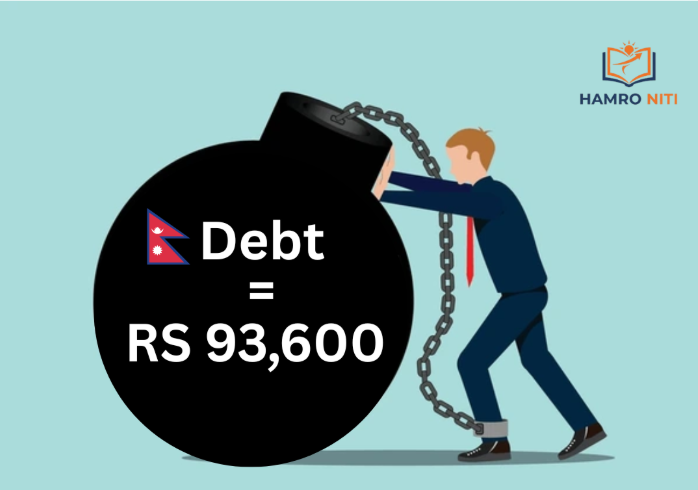
Figure 1: RS 93,600 Debt representation, shuttlestock
Public Debt and what it means
Public Debt is the total amount of money owed by the government to the lenders to fund its budget deficit. In other words, when tax revenues aren’t enough to cover spending on infrastructure, healthcare, or government administration, the government takes loans and owes debt to the lenders. The borrowed money is then allocated through the national budget, spreading it into various essential sectors throughout the economy.
Nepal’s public debt can be divided into two major types:
- External Debt: The government borrows from foreign lenders, typically in a foreign currency. The debt owed to foreign lenders stands at NPR 1,453.45 billion, accounting for 53.25% of the total debt.
- Domestic Debt: The government also borrows money from within the country. For this, Nepal borrows from its own people, banks, and financial institutions. Unlike directly borrowing from external lenders, domestic debt is usually built upon bonds and treasury bills. Currently, the domestic debt of Nepal accumulates 46.75% of the total national public debt, totaling NPR 1,275.96 billion.
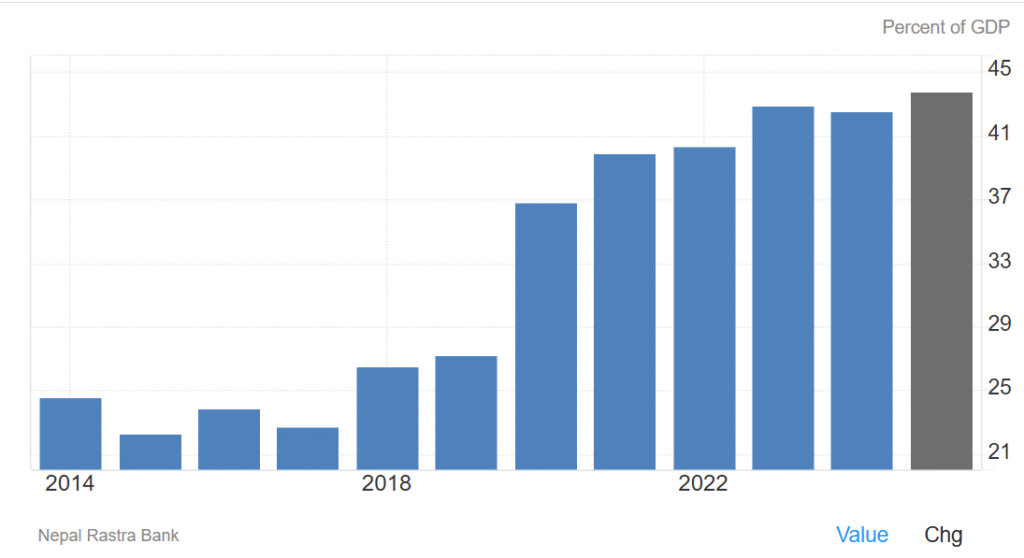
Figure 2: Nepal’s outstanding public debt, bar diagram, Nepal Rastra Bank
The following bar diagram represents Nepal’s outstanding public debt as a % of GDP (Nepal Rastra Bank). In early 2025, public debt was 43.8% of the national gdp of Nepal; it has now risen 44.61% as of December 2025. It sounds concerning that 44.6% of our nation’s worth is just debt.
With this, the public debt of Nepal currently stands at 2.788 trillion. A fun way to imagine this debt is dividing it by the number of Nepalese citizens. Dividing 2.788 trillion by approx 30 million population gives us the value ~NPR 93,000. Each one of us Nepalese has a national debt per capita of NPR 93,600 on our heads.
Of course, every Nepali is expected to pay NPR 93,000 individually, but it is a fun, interesting conceptual tool that can help us understand the national debt at an individual level.
But Who Does Nepal Owe NPR 2.788 Trillion To?
Foreign Lenders
The majority of external foreign debt comes from international organizations and banks. The International Development Association (IDA) holds the largest share of foreign debt at 48.94%. The Asian Development Bank (ADB) also holds 33.54% of the foreign debt. This debt has been accumulated throughout the years of borrowing for financing budget deficits, projects, and infrastructure development in Nepal, with a deadline of multiple years or even decades for payment.
Figure 3: Logos of the International Development Association and the Asian Development Bank alongside the Ministry of Finance, Nepal.
Similarly, 9.57% of the foreign debt is associated with direct loans from foreign countries.
Domestic Lenders
While external loans and foreign debts are easy to understand, the remaining 46.75% of domestic debt is shrouded in little more complexity.
Domestically, the government raises funds through Development Bonds and Treasury Bills.
A government bond is a debt security issued by the government to support its public spending and obligations (Financial Edge). In simple words, it is a loan from the investor, the general public, or institutions within the country to the issuer, the government.
When a bond is bought, the buyer is lending money to the government in exchange for periodic interest payments and return of the initial purchase principal when the bond matures.
This means that the government promises to pay back the borrowed money through bonds and pay a certain interest every year.
Treasury Bills (or T-Bills) are short-term securities that mature within a few weeks up to one year, and are often sold at a discount and redeemed at face value (Treasury Direct). I.e the treasury bills are sold at a certain discounted value, and after their maturity, the full value of the bill is paid by the government, which is basically the interest. For example, A Treasury Bill of 10,000 rupees was sold at a discounted price of 8,000 rupees. After the maturity, the government then returns the T-Bill of 8,000 rupees with an additional 2,000 rupees (reaching the full value) as interest.
Treasury Bills have a short-term maturity date and are often sold at lower monetary levels. Government Bonds are structured with long-run interest payments and a maturity date of multiple years, and commonly decades.
In Nepal, Government Bonds are generally sold as Development Bonds, which are issued for financing development projects and budget deficits, with interest paid to holders (Fiscal Nepal).
The Dangers of Public Debt
When we hear about growing public debt, it sounds alarming. Going into debt is frowned upon and thought of as a negative. While it can be in normal scenarios, Public Debt is actually strategic and not that scary.
High public debt doesn’t mean the country will go bankrupt. In fact, it’s very common and a part of strategic economic policies in giant economies.
The United States has the largest public debt in the world.
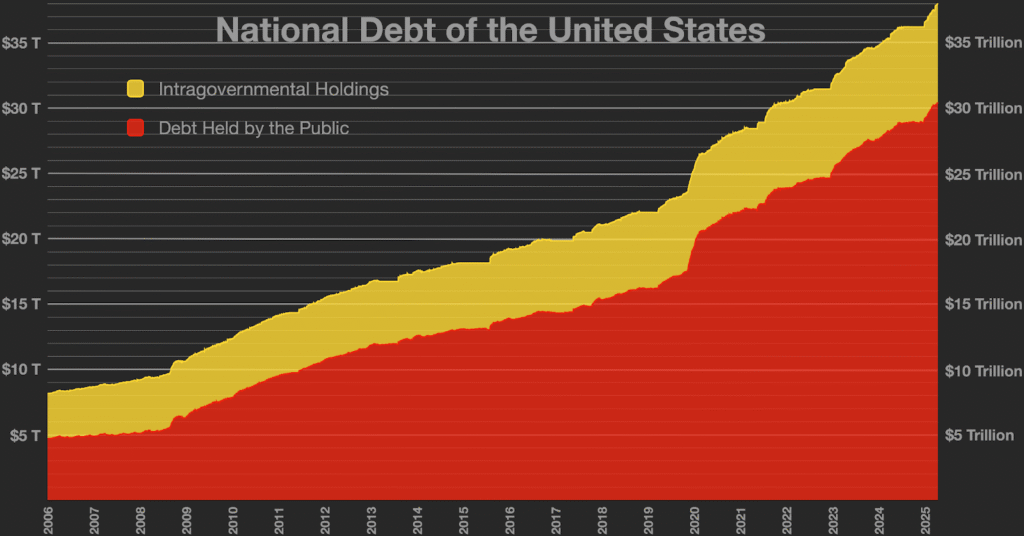
Figure 4: U.S.A outstanding public debt 2006-2025 (fiscaldata.treasury.gov, retrieved August 13 2025)
In 2024-2025, its public debt was 121%-126% of the entire GDP. In numbers, this debt amount was $38.40 trillion USD, $8 trillion higher than their nominal GDP of 2025. Additionally, the U.S. public debt per capita was $105,820 (Department of the Treasury). Yet, the US is the largest economy in the world as of 2025.
Comparing the debt-to-GDP and public debt per capita, Nepal’s ratio is at 45%, and a NPR 93,000 debt per capita looks like a haven. Economists consider debt-GDP ratios lower than 60% to be moderate and safe. Higher Levels can also be safe and sustainable, but it varies from country to country.
High levels of public debt are very normal, but it is still essential that it is managed efficiently. The U.S public debt is extremely high, but the U.S manages it. It is possible because:
- The U.S.A. issues all debts, foreign and domestic, in its own currency, the USD$. Other countries, such as Nepal or even India, have their foreign debt in the form of USD$, as it is a widely accepted and officialized form of currency for lending and borrowing. This creates pressure in countries with high foreign debt, as it also pressures these countries to maintain a strong foreign reserve and trade surplus.
- It has a strong liquid financial market, i.e assets can quickly be sold and bought at their actual prices.
- Investors from all over the world treat the U.S government bonds as a safe method of increasing monetary value in the long-run without taking much risks, i.e bringing investments from all over the world.
These perks are only available to the U.S.A, and with its unfair advantage, the U.S is capable of spending more than its budget by a large amount.
The Positives of National Debt
In cases of other countries with high debt-to-GDP ratios, like China, with an approx 80% ratio, they are pressured to maintain a big foreign reserve balance and maintain a trade surplus to finance the debt and budget deficits. Regardless, moderate levels of Debt, such as in Nepal, are not a negative aspect or a poor decision planning by the government; instead, it can be used strategically.
Budget Deficits exist in every country, where the annual fiscal budget might not be able to cover all expenses or plans of the government. Large-scale projects, such as hydropower, metros, and airports, require massive investments from the fiscal budget. To do this, the government must increase its capability in terms of spending. The simplest way of increasing revenue for the government is to increase taxes, which may harm consumption spending and investors’ confidence in the nation, alongside other harmful impacts. This is not viable or economically possible.
Instead, increasing spending capability through national debt through borrowing and loans can allow governments to bridge the deficit and fund large-scale development. Additionally, this can help spread the cost of development in the long-run through government bonds and long-term loans. Simultaneously, it can help accelerate development by financing funds easily instead of accumulating and saving the budget specifically for spending.
Similarly, during times of economic stagnation and regression, increasing borrowing and public debt can improve investments and keep the economy moving.
The positives of national debt are clear: it allows a nation to employ strategic borrowing, enabling investments in crucial sectors, infrastructure, and resource development without burdening or impacting the citizens or businesses financially. Long-term loans from multilateral organizations such as the Asian Development Bank and the International Development Association come with relatively low interest rates and long repayment periods. This makes them a strategic financing option for long-term development.
Conclusion
In essence, public debt itself isnt inherently positive or negative. Public Debt alone doesn’t correlate to any impacts, and differs situation-wise. In Nepal’s scenario, it is sustainable today. With healthy foreign reserves, remittances, concessional financing, and a relatively low ratio, it can be converted into a strategic tool if managed prudently by the government. Improving and diversifying exports, increasing productive investments, and maintaining sustainable levels of imports can aid infrastructural development and growth if done right. If these aspects aren’t looked into, and the government only depends on external financing, public debt risks becoming a larger burden in an already import-dependent economy running on remittances.
With visionary fiscal policies and continued structural reforms ongoing in the current economy, Nepal can definitely keep its public debt levels sustainable and provide a prosperous future for all citizens.