

Table of Contents
Executive Summary
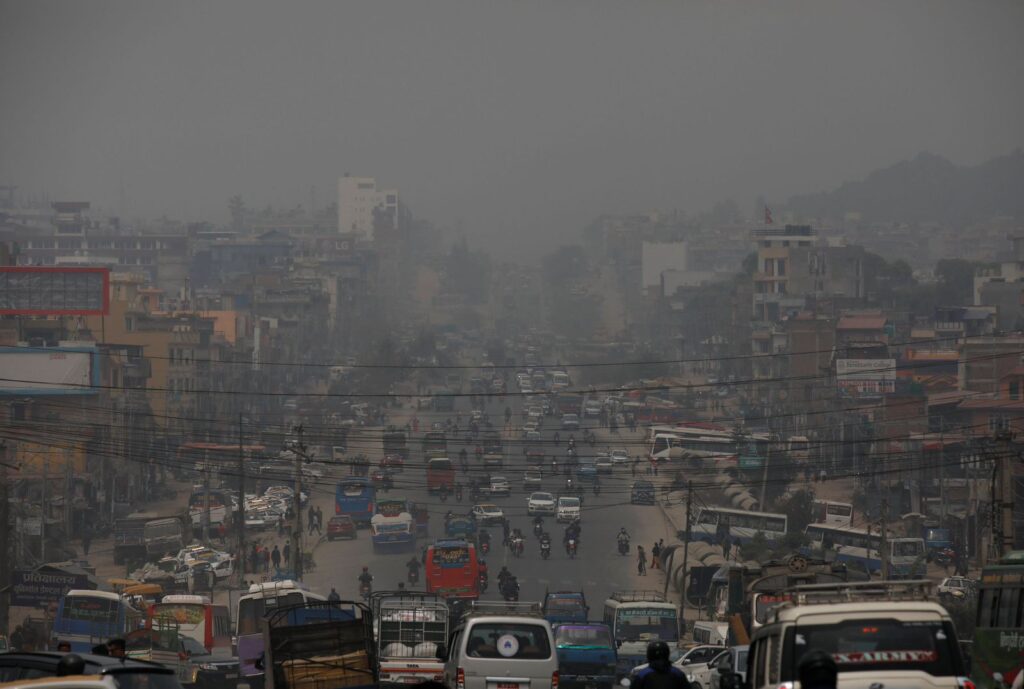
Air pollution in Kathmandu Valley is a growing public health, environmental, and economic crisis. Due to rapid urbanization, increased vehicle numbers, unmanaged construction, brick kilns, and its bowl-shaped geography, the valley often experiences hazardous air quality: especially during winter. PM2.5 concentration regularly exceeds national and WHO standards, increasing risks of respiratory and cardiovascular diseases. Effective reduction requires strict vehicle emission enforcement, dust control, regulation of brick kilns, expansion of electric mobility, and real-time monitoring. Combined action from government, communities, and individuals is critical for improving air quality and protecting public health.
1. Introduction
Air pollution is one of today’s most serious environmental challenges. Cities with rapid population growth and unmanaged urbanization face severe air quality deterioration. Kathmandu Valley is one of those cities. During winter and early spring, it often ranks among the most polluted cities in the world due to its bowl-shaped geography, dust, industries, and traffic (DoE, 2023). Understanding what air pollution is and how it affects our health is important for creating a cleaner and healthier future.
2. What Is Air Pollution?
Air pollution is the presence of harmful substances in the air that make it unsafe for humans, plants, animals, and the environment (WHO, 2021). These harmful substances are called pollutants, and they include dust, smoke, chemicals, gases, and tiny particles that enter the air from natural or human-made sources.
Some major air pollutants are:
PM2.5 – very tiny particles that can enter the lungs and bloodstream
PM10 – dust and larger particles
Carbon monoxide (CO), Nitrogen oxides (NOx), Sulfur dioxide (SO₂), Ozone (O₃)
These pollutants affect air quality and make the air unhealthy to breathe.
3. How Does Air Pollution Happen?
Air pollution occurs when pollutants are released into the atmosphere in amounts higher than what the environment can naturally clean.
Key contributors:
- Burning fossil fuels (diesel, petrol, coal, firewood)
- Dust from roads and construction
- Industrial smoke
- Open waste burning
- Household fuel use (firewood, poorly managed LPG)
Seasonal effects such as winter temperature inversion and pre-monsoon dust intensify the problem. When these pollutants mix with air, they reduce visibility, create smog, and damage human health.
4. Causes of Air Pollution in Kathmandu
Kathmandu Valley faces unique challenges because of its geography and human activities. Key causes includes
4.1 Vehicle Emissions
The number of vehicles in Kathmandu has increased rapidly. Many vehicles are old, poorly maintained, and run on low-quality fuel, producing high levels of PM2.5, CO, and NOx (DoTM, 2022).
4.2 Road Dust and Construction Activities
Unmanaged road construction, open soil, and heavy traffic create huge amounts of dust. This becomes worse during dry seasons.
4.3 Brick Kilns and Industries
Kathmandu has many brick kilns that burn coal and wood. These release smoke, sulfur dioxide, and particulate matter (ICIMOD, 2020).
4.4 Household Emissions
Some households still use firewood, LPG leakage, and poor ventilation, which increases indoor and outdoor pollution.
4.5 Geographical Structure
Kathmandu is a bowl-shaped valley. Polluted air gets trapped and cannot escape easily. During winter, temperature inversion keeps pollution close to the ground, worsening AQI.
5. Problems Caused by Air Pollution
5.1 Health
Air pollution affects people of all ages. Common health impacts include:
- Breathing difficulties, asthma
- Eye irritation, headaches
- Chronic bronchitis, lung and heart diseases
- Increased risk of cancer
Children, elderly, and pregnant women are most vulnerable.
5.2 Environmental
- Reduced visibility
- Damage to crops
- Acid rain
- Harm to wildlife
5.3 Economic Impacts
Air pollution reduces productivity, increases hospital visits, and affects tourism. Nepal loses billions of rupees each year due to poor air quality (World Bank, 2022).
6. Air Quality Index (AQI) of Kathmandu
The Air Quality Index (AQI) is a system that shows how clean or polluted the air is. It helps people understand the health risks of current air quality.
AQI Categories:
0–50: Good
51–100: Moderate
101–150: Unhealthy for sensitive groups
151–200: Unhealthy
201–300: Very unhealthy
301+: Hazardous
Kathmandu’s Situation
During winter months (December–February), Kathmandu’s AQI often reaches 200–300, making it among the most polluted cities in the world (DoE, 2023). Major pollution hotspots include Putalisadak, Ratnapark, Balkumari, Bhaktapur, Kirtipur, Lubhu, Bhaisepati
Most of the time, PM2.5 levels are far above Nepal’s national standard of 40 µg/m³ (MoFE, 2012).
7. National Rules & Regulations
- National Environmental Policy (2019): Focus on air quality improvement and clean energy.
- NAAQS (2012): Sets particulate matter and gas standards.
- Vehicle Emission Standards: Euro III for new vehicles; emission tests required.
- Brick Kiln Regulation: Promotion of cleaner technologies like zig-zag kilns.
- Solid Waste Management Act (2011): Bans open burning.
- Kathmandu Valley Air Quality Action Plan (2020): Dust control and promotion of electric transport.
Enforcement remains a major challenge.
8. International Guidelines on Air Pollution
8.1 WHO Air Quality Guidelines (2021)
WHO recommends:
PM2.5 annual: 5 µg/m³
PM10 annual: 15 µg/m³
These are much stricter than Nepal’s standards, showing that Kathmandu’s pollution is far from safe levels.
8.2 United Nations Sustainable Development Goal (SDG 3.9 & SDG 11.6)
Focuses on reducing deaths from air pollution and improving urban air quality.
8.3 Clean Air Policies in Other Countries
Countries like China, Japan, and the USA have strict emission rules, cleaner transport systems, and strong enforcement.
9. Learning from China: How Air Pollution Can Be Reduced
China once had some of the world’s worst air pollution, especially in Beijing. However, over the last decade, China reduced its PM2.5 levels by 35% through strict action (UNEP, 2020). Kathmandu can learn from the following strategies:
9.1 Promoting Electric Vehicles
China is the world’s leader in electric vehicles (EVs). Nepal can also expand charging stations and provide subsidies.
9.2 Moving Industries Away from Cities
China relocated polluting industries to controlled zones. Kathmandu can shift brick kilns and factories to regulated industrial areas.
9.3 Strict Dust Control Measures
In China, construction sites must cover soils, sprinkle water, and follow standards. Kathmandu can apply the same.
9.4 Monitoring and Public Reporting
China uses real-time air quality apps and strong enforcement. Nepal should strengthen monitoring stations and make data public.
9.5 Clean Energy Use
China promoted LPG, electricity, and renewable energy to reduce coal and wood burning. Kathmandu can reduce household pollution by supporting clean cooking technologies.
10. Solutions for Reducing Air Pollution in Kathmandu
10.1 Government-Level Solutions
· Enforce strict vehicle emission checks
· Promote electric buses and bikes
· Manage road dust and construction safety
· Relocate and regulate brick kilns
· Install more air quality monitoring stations
· Strengthen waste management to avoid open burning
10.2 Community-Level Solutions
· Use public transport or carpooling
· Avoid burning garbage
· Plant trees at community levels
· Report illegal activities like waste burning and black-smoke vehicles
10.3 Individual-Level Solutions
· Use masks during high-pollution days
· Reduce use of motorcycles for short trips
· Choose cleaner cooking methods
· Stay indoors during high AQI hours
· Support eco-friendly local initiatives
11. Priority Policy Actions
- Expand real-time air monitoring and public alerts
- Strict vehicle inspection & introduce scrappage incentives
- Enforce dust control and upgrade brick kiln technology
12. Conclusion
Air pollution in Kathmandu is a growing public health and environmental challenge. Understanding AQI, causes, and impacts helps people make informed decisions. Nepal has policies and standards, but stronger enforcement and public participation are needed. Learning from China’s success, Kathmandu can improve air quality through electric mobility, strict regulations, better urban planning, and public awareness. With combined efforts from the government, communities, and individuals, Kathmandu can move towards cleaner air and a healthier future.